THE new transgender guidelines for sports from the International Olympic Committee (IOC), which were originally planned for publication three years ago, have been delayed yet again due to “very conflicting opinions”.
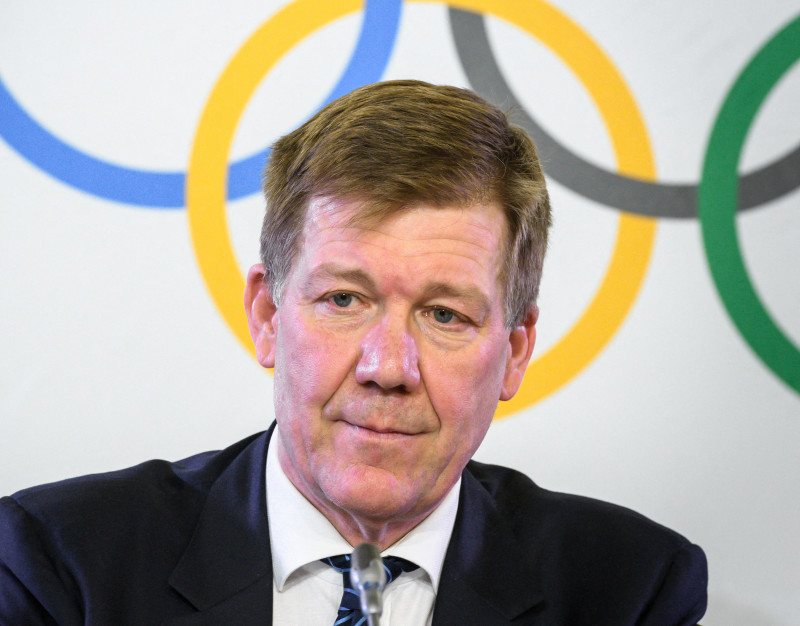
The news was revealed by IOC science and medical director, Dr Richard Budgett, who said that the forthcoming advice for international sports federations would “prioritise inclusion” and “avoidance of harm”.
Speaking to a Council of Europe conference on protecting and promoting the human rights of intersex and transgender athletes in sport competitions, Richard says that the IOC’s approach would shift from the current stand that trans women should be allowed to compete in the women’s category if they reduce their testosterone for 12 months.
“There’ll be broad high-level guidelines – more like a framework,” said Richard to The Guardian. “It’s the international federations who will determine the specific rules for their sports and their events.
“The particular changes from 2015 are the emphasis on the priority of inclusion, and on the avoidance of harm, but always bearing in mind the importance of fair and meaningful competition. We still have to agree on the framework. It’s challenging. But it will be published in a few months’ time – at the latest just after the Beijing Olympic Winter Games.
“We’re very aware that sex, of course, is not binary. It’s a continuum. The sectors overlap and so the solutions are not essentially going to be binary.”
Richard revealed the IOC would move away from the one‑size‑fits‑all approach in the current guidelines issued in 2015, which state that trans women should be able to compete in the women’s category without gender reassignment surgery as long as they keep their total testosterone level in serum below 10 nanomoles per litre, as recent scientific papers have shown that anyone who undergoes male puberty retains significant advantages in power and strength even after taking medication to suppress their testosterone.
“Transgender women are women,” Richard said. “But we also have to separate gender from eligibility. And eligibility needs to be sport-specific in order to have this fair and meaningful competition at all levels, but especially at the elite level where the stakes are that much higher.
“There’s going to be different criteria for different sports. If you compare archery to hockey to rowing, they require very different skills. And an elite athlete from one is unlikely to be an elite athlete in another. And we have to determine what really is a disproportionate or insurmountable advantage.” – Agencies, September 22, 2021