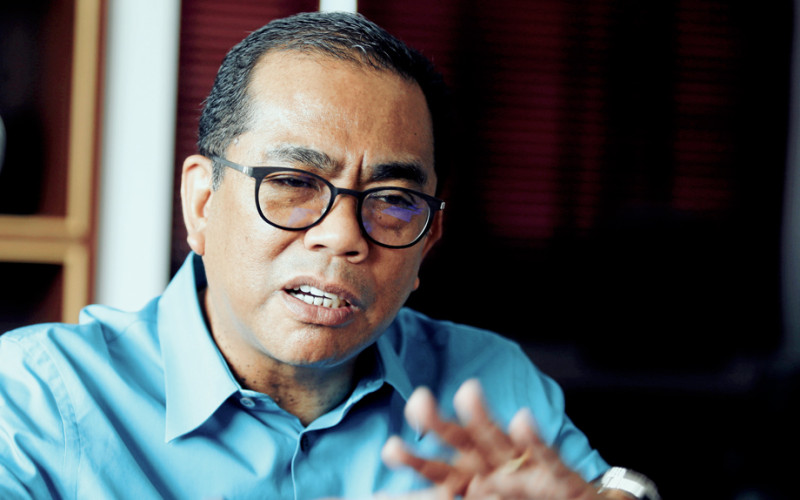
A united ASEAN will be better equipped to tackle the region's evolving geopolitical landscape, ensuring that it remains peaceful, resilient, and prosperous, according to Malaysia's Defence Minister Datuk Seri Mohamed Khaled Nordin.
In his opening speech at the ASEAN Defence Ministers’ Meeting (ADMM) retreat, Khaled emphasized that the growing complexity of both traditional and non-traditional security threats requires regional unity and cooperation.
He pointed out that security challenges have become more intricate and often transcend national borders, making it clear that no single country could tackle these challenges on its own.
"The region faces a range of security threats, both traditional and non-traditional, which no single nation can address in isolation," Khaled stated. "It is critical that we enhance our collective capacity to respond effectively and proactively to these threats."
As Malaysia assumes the chairmanship of ADMM and ADMM-Plus for this year, the country is introducing the theme: "ASEAN Unity for Security and Prosperity."
This theme underscores Malaysia’s belief that regional security is the foundation for economic growth, stability, and the well-being of ASEAN's people.
Khaled highlighted that this theme aligns perfectly with Malaysia's broader ASEAN chairmanship focus on "Inclusivity and Sustainability."
He added, "A truly resilient ASEAN must be inclusive, ensuring that all member states are equally equipped to address security threats."
The Defence Minister explained that ASEAN’s security strategies must be sustainable, emphasizing long-term, forward-thinking approaches to defence cooperation that ensure regional stability for future generations.
As Malaysia assumes its role as ADMM chair, Khaled outlined several key defence priorities to address both current and emerging security threats.
These priorities include advancing the use of artificial intelligence (AI) and enhancing cybersecurity in the defence sector, bolstering maritime security, and improving humanitarian assistance and disaster relief (HADR) mechanisms, including search and rescue (SAR) operations.
Other priorities also cover defence industry cooperation, addressing security threats posed by non-state actors, and managing biosecurity risks.
Regarding biosecurity, Khaled underscored the global interconnectedness that has made pandemics and biological threats a pressing security concern. He noted how the COVID-19 pandemic exposed vulnerabilities in security governance and infrastructure across the ASEAN region.
With rapid population growth and the ongoing challenges of climate change, he warned that more infectious diseases, such as avian influenza and the Nipah virus, are likely to emerge, increasing the region’s vulnerability.
"In an interconnected world, pandemics and biological threats are no longer just health concerns—they are significant risks to ASEAN's overall security readiness," he explained.
"We witnessed firsthand how the COVID-19 pandemic could undermine economies and expose weak points in security governance."
Given these challenges, Khaled stressed the urgent need to incorporate health and medicine into ASEAN's defence policies, particularly in relation to biological warfare. "This integration is an immediate necessity for our collective security," he said.
Khaled also highlighted the persistent threat of illegal activities that continue to challenge ASEAN’s borders, which have long been a major non-traditional security issue in the region.
He warned that such activities, often perpetrated by non-state actors, are likely to increase in the future, further disrupting ASEAN's open trade policies and undermining public confidence in the association.
"These illegal activities pose a significant threat to ASEAN's free trade and openness policies, and if left unchecked, they could erode the trust our citizens place in ASEAN," he said.
"Therefore, we must give this issue the critical attention it deserves and adopt a unified, strategic approach to safeguard ASEAN's security and prosperity."
The Defence Minister also addressed the rapid development of AI, recognizing its dual nature—offering both opportunities and challenges for the defence sector.
He urged ASEAN to collaborate on harnessing AI’s potential, while ensuring its ethical and responsible use in defence.
"As AI continues to transform the defence landscape, ASEAN must work together to leverage its capabilities while ensuring its responsible and ethical application," Khaled said.
"We encourage ADMM-Plus Experts' Working Groups (EWGs) to integrate AI into their discussions and initiatives."
Khaled concluded by reaffirming Malaysia's commitment to advancing these key defence priorities throughout its year of chairmanship, underscoring the importance of ASEAN unity in facing the growing security challenges of today’s world. - February 26, 2025