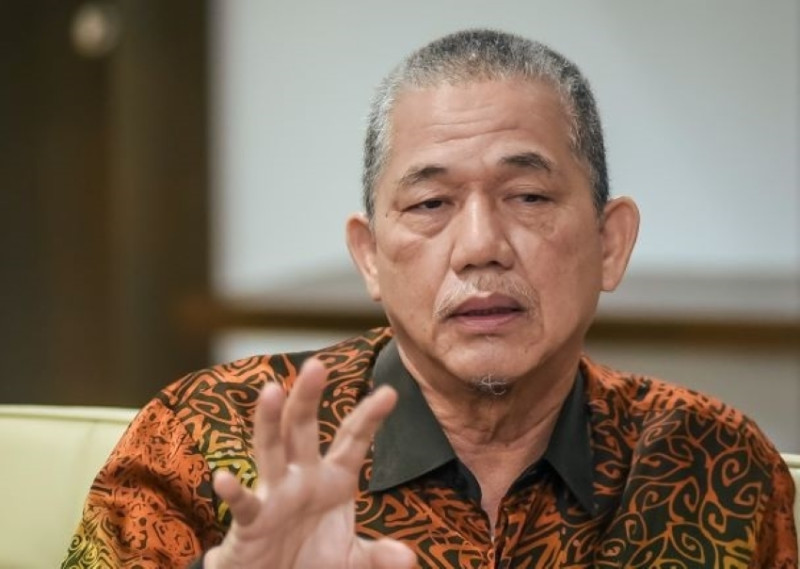
MALAYSIA is asserting its regional leadership in climate resilience and sustainable finance through a comprehensive green transition strategy, Deputy Prime Minister II and Minister of Energy Transition and Water Transformation, Datuk Seri Fadillah Yusof, said in his closing keynote address at the 2025 Climate Finance Summit in Kuala Lumpur.
Speaking at the Securities Commission under the theme “Financing Climate Resilience for a Green Transition”, Fadillah emphasised the urgency of deploying finance at scale to support not only emissions reduction but also adaptation and resilience-building, particularly in developing economies.
“The theme of this year’s summit is not only timely but deeply resonates with the global urgency we all face. It aligns closely with Malaysia’s priorities in building a low-carbon economy, strengthening climate resilience and ensuring an inclusive energy transition,” he said.
“Climate finance is now a necessity and plays a pivotal role in empowering Malaysia’s green agenda and energy transition journey,” he said.
Fadillah said achieving equitable climate resilience would depend on unlocking innovative financial tools, enabling strong collaboration between the public and private sectors, and anchoring policies in science and global frameworks.
He noted that while climate investment globally had reached USD 1.46 trillion in 2022, it fell well short of the estimated USD 7.5 trillion needed annually by 2030 to limit global warming to 1.5°C.
“The urgency is real, and the financing gap remains wide. This calls for swift, bold and quick actions, especially in emerging economies like Malaysia.”
He reiterated the government’s commitment to climate action, pointing to the National Energy Transition Roadmap (NETR) launched in 2023 as a key national instrument.
The roadmap sets a 45 per cent reduction in greenhouse gas intensity by 2030, with long-term aims including 70 per cent renewable energy installed capacity by 2050 and a full coal phase-out by 2044.
He highlighted ongoing investment in energy storage systems, co-firing using biogas and hydrogen, and carbon capture and storage as indicators of Malaysia’s readiness to adopt next-generation solutions.
“These breakthroughs signify our readiness to adopt next-generation solutions and to position Malaysia as a leader in green transition initiatives.”
The government estimates that RM1.85 trillion will be required to finance the transition through 2050, with around 18 per cent earmarked for renewable energy and green transport. Projections also indicate an RM13 billion annual GDP boost and the creation of more than 207,000 green jobs by 2040.
“Green zones and clean energy projects are being actively championed as catalytic growth drivers,” Fadillah added.
Regionally, he underlined Malaysia’s strong backing of the ASEAN Power Grid (APG), which he described as a transformative regional initiative rather than merely a piece of infrastructure.
“The APG is expected to enhance cross-border electricity trade, improve energy security and fast-track renewable deployment across ASEAN. But adequate climate finance is essential to realise this.”
He urged the mobilisation of both conventional and innovative financial mechanisms to support the development of regional infrastructure and integration of renewables.
On Malaysia’s capital market potential, Fadillah underscored the country’s global leadership in Islamic finance and Green Sukuk.
By mid-2024, Malaysia had issued 262 of the world’s 291 Green Sukuk, with a total value of RM27.3 billion, representing a quarter of all green and sustainable sukuk and bonds in ASEAN.
“As of mid-2024, Malaysia has issued 262 of the world’s 291 Green Sukuk, valued at RM27.3 billion. We now account for 25 per cent of all green and sustainable sukuk and bonds in ASEAN,” he said.
He said Malaysia’s established Islamic finance credentials, mature capital markets, and enabling regulatory environment make it well-placed to become a regional green finance hub.
He also stressed that a successful energy transition must be just and inclusive. Clean technologies must be made accessible to lower-income groups, and public subsidies should ensure broad participation in the shift to cleaner systems.
“Our transition is envisioned to create 310,000 new green jobs by 2050. From solar engineers to EV technicians, sustainability consultants to green finance professionals, this shift represents new economic opportunities.”
Fadillah also highlighted ongoing integration of social protections, including flood-resilient infrastructure and climate-smart agricultural tools for farmers, as part of a holistic national climate strategy.
“A just energy transition can bring us together through nation-building, climate action and social justice. No one must be left behind.”
Reflecting on remarks made the previous day by Datuk Wan Kamaruzaman Wan Ahmad, Chairman of MBSB Group, Fadillah said the observation that “Finance is the oxygen of transition” had left an impression.
“That was a timely reminder that the path to net zero is not just about policy or technology—it is fuelled by finance. Without strategic capital mobilisation, even the boldest ambitions will fall short.”
He called on government, investors, and multilateral institutions to align behind Malaysia’s roadmap and translate climate ambition into meaningful investment and action.
“Capital markets must remobilise to not only price climate risk accurately but to actively reward low-carbon innovation. This is our moment to turn ambition into action, and strategy into real, lasting impact.”
He urged ASEAN nations to collaborate on new financial instruments including region-wide green bond standards, renewable energy corridors, and climate insurance mechanisms rooted in transparency and trust.
“This transition is a defining moment. I am confident Malaysia is ready to lead by example. Our vision is clear—to achieve a prosperous, climate-resilient nation powered by clean energy and inclusive growth.”
Fadillah applauded the summit organisers and participating stakeholders, stressing that climate finance had become an indispensable pillar in advancing the national and regional sustainability agenda, adding, “Let us rise to this challenge not just as policymakers or financiers, but as stewards for our future generations.” - August 7, 2025