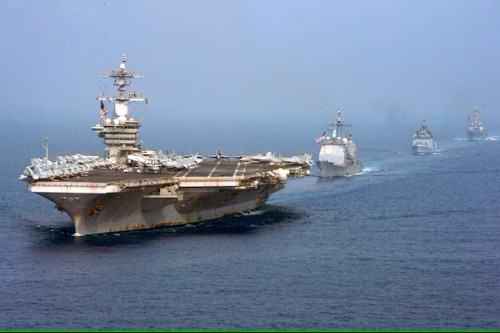
U.S. lawmakers on Sunday introduced the annual National Defense Authorization Act (NDAA), proposing a record US$901 billion in national security spending for the fiscal year 2026.
The legislation, exceeding President Donald Trump’s US$892.6 billion request, includes US$400 million in military aid to Ukraine and a 4% pay increase for enlisted service members.
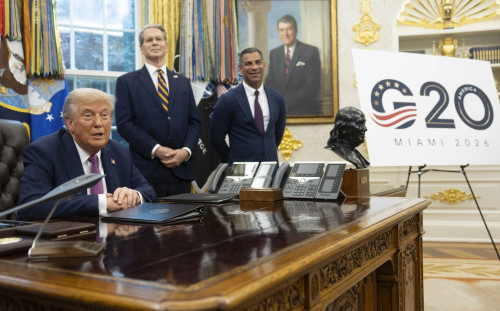
House Speaker Mike Johnson, a Republican from Louisiana, described the bill as a step toward advancing Trump’s agenda.
In a statement, he said the legislation aims to “end woke ideology at the Pentagon, secure the border, revitalise the defence industrial base, and restore the warrior ethos.”
The 3,000-page measure represents a compromise between earlier versions passed by the Republican-controlled House and Senate, with the latter having authorised US$925 billion.
While the NDAA sets out defence priorities and authorises Pentagon programmes, actual funding requires a separate congressional appropriations bill for the fiscal year ending September 2026.
Beyond routine provisions on military equipment procurement and competitiveness with strategic rivals such as China and Russia, the bill reflects Trump-era policy priorities.
It seeks to eliminate diversity, equity, and inclusion initiatives within the Department of Defense and directs troops to the U.S. southwest border to counter undocumented immigration and drug trafficking.
The bill also repeals two authorisations for the use of military force in Iraq, dating back to 1991 and 2002.
Considered a “must-pass” measure, the NDAA is one of the few major pieces of legislation passed annually by Congress for more than six decades.
However, this year’s legislative process has been notably partisan. Some Democrats threatened to delay the bill over Trump’s domestic deployment of military personnel, prompting Republican Senator Roger Wicker, chairman of the Armed Services Committee, to agree to hold hearings on the matter.
Earlier in 2025, Republicans successfully blocked Democratic attempts to restrict military deployments within U.S. cities and to prevent the conversion of a luxury aircraft donated by Qatar for use as Air Force One.
The NDAA remains a critical instrument for setting U.S. defence priorities and shaping policy for both domestic and international security.
With its record authorisation levels and focus on both traditional and politically contentious programmes, the 2026 bill underscores the continuing influence of Trump-aligned priorities in shaping congressional defence policy. - December 8, 2025