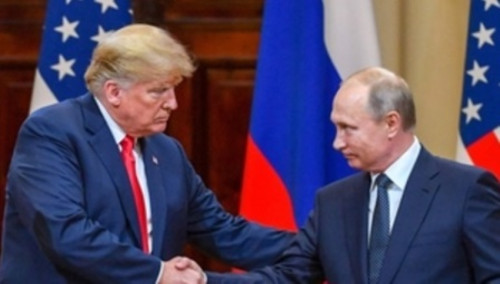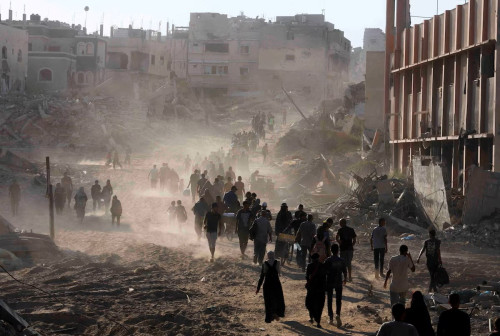
United States launches a fresh wave of military strikes against Iran on Wednesday after Tehran was accused of attacking commercial vessels in the Strait of Hormuz (Photo from Reuters)- July 9, 2026
US President Donald Trump declares the fragile ceasefire had effectively collapsed and warn of even harsher retaliation if shipping lanes were targeted again
THE United States has intensified its military campaign against Iran with another round of strikes targeting military infrastructure, only hours after President Donald Trump declared that the temporary ceasefire between Washington and Tehran was effectively over following renewed attacks on commercial shipping in the Strait of Hormuz.
AP reported on Thursday that the latest strikes came a day after American forces attacked Iranian military positions and port facilities in retaliation for what Washington said were Iranian attacks on three merchant vessels operating off the coast of Oman.
In a statement posted on social media, the US military said the latest operation was intended to "further degrade" Iran's capability "to threaten freedom of navigation" through the Strait of Hormuz, one of the world's most strategically important maritime corridors for global energy supplies before the conflict erupted on Feb. 28.
Iranian state media reported explosions across several locations, including Bushehr, home to Iran's nuclear power station, as well as the southern ports of Chabahar, Konarak, Bandar Abbas and Sirik.
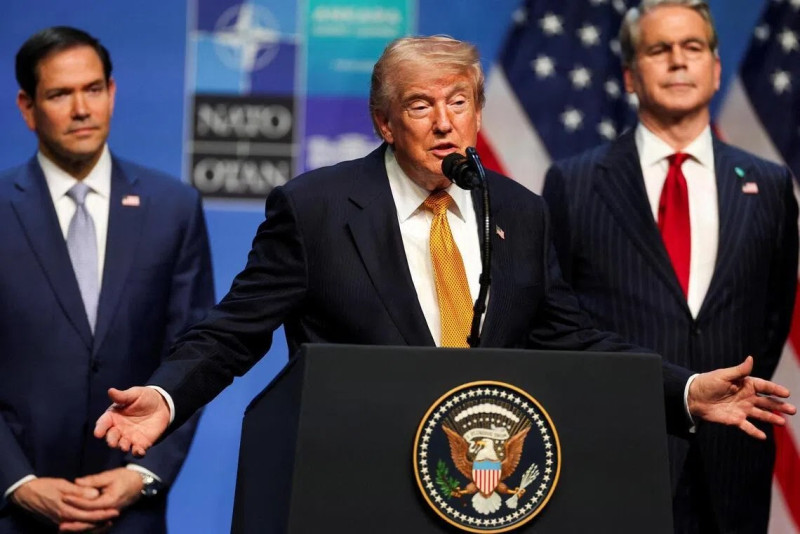
Speaking after departing the NATO summit in Ankara, Trump released videos which he claimed showed explosions inside Iran and said the latest military action was direct retaliation for attacks on international shipping.
"This is in retribution for yesterday's bombing of ships by Iran. If it happens again, it will get much worse!" Trump wrote.
Although Trump earlier suggested the latest confrontation would not necessarily evolve into a prolonged military campaign, he also signalled that Washington remained prepared to escalate further if required.
"Anything that happens is going to happen very fast," he said, adding that the United States might "just finish the job."
Trump also renewed previous warnings that the United States could target Iran's civilian infrastructure, including electricity generation facilities, desalination plants and the strategically vital Kharg Island oil export terminal, through which approximately 90 per cent of Iranian crude exports are shipped.
The latest escalation followed Iranian retaliatory attacks against American military installations across the Gulf after US forces struck Iranian military assets on Tuesday.
Iran has maintained that the interim ceasefire allows it to regulate maritime traffic through the Strait of Hormuz. Parliament Speaker Mohammad Bagher Qalibaf reaffirmed Tehran's position in a message posted on X.
"The era of bullying and extortion is over. It leads nowhere. We don't fold."
Trump's declaration that the ceasefire was effectively finished has fuelled fears that the conflict could rapidly return to full-scale warfare despite ongoing diplomatic contacts.
"For me, I think it's over," Trump said when asked about the future of the truce.
"They can talk, but I think they're wasting their time," he added, referring to continuing negotiations between US and Iranian representatives.
Iranian Deputy Foreign Minister Kazem Gharibabadi dismissed Trump's comments, saying they reflected weakness rather than strength.
"They are not a sign of power but an admission of the failure" of US policy towards Iran, he wrote on X.
The renewed attacks on commercial shipping have also raised questions over divisions within Iran's leadership, with hard-line factions reportedly favouring continued control of the Strait of Hormuz as strategic leverage, while more pragmatic officials seek a permanent settlement that could ease international sanctions and revive the country's struggling economy.
Negotiations towards a comprehensive peace agreement had been expected to begin following the funeral ceremonies for Iran's Supreme Leader Ayatollah Ali Khamenei, whose death at the beginning of the conflict had initially created expectations of a temporary reduction in hostilities.
Those planned talks are expected to focus on reopening the Strait of Hormuz fully to international shipping and addressing Iran's disputed nuclear programme.
Earlier on Tuesday, the US Central Command said American forces had destroyed Iranian air defence systems, radar installations and more than 60 small Revolutionary Guard vessels that had been used to threaten commercial shipping throughout the conflict.
Meanwhile, tensions spread across the Gulf after Bahrain and Kuwait activated missile warning systems on Wednesday morning.
Iran's Revolutionary Guard later confirmed it had targeted US military installations in both countries.
Kuwaiti authorities said air defences intercepted two ballistic missiles and 13 drones launched from Iran, while the country's Electricity Ministry reported that falling missile debris had damaged several power transmission lines. - July 9, 2026