JAPAN’S Meteorological Agency (JMA) lifted its final tsunami advisories at 6:20 a.m. Tuesday after a 7.5-magnitude earthquake struck at 11:15 p.m. Monday off the coast of Aomori prefecture.
Reuters reported today that the tremor’s epicentre was about 80 kilometres offshore at a depth of roughly 54 kilometres.
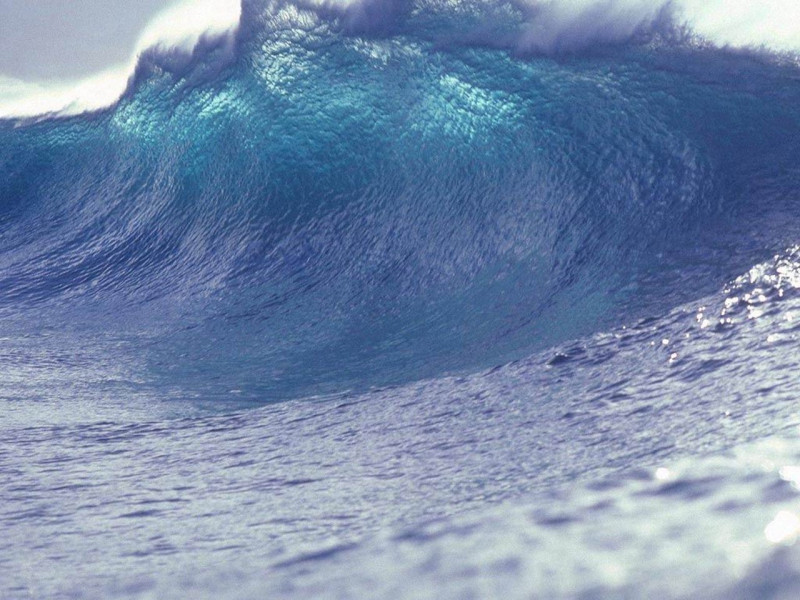
Initial warnings of possible 3-metre waves triggered evacuations across coastal communities from Hokkaido to Iwate, with observed tsunami measuring between 20 and 70 centimetres.
No major structural damage has been reported so far, but injuries continue to rise. Prime Minister Sanae Takaichi said: “As of now, I have received reports of 30 people being injured and one fire.”
On Japan’s seismic intensity scale, the quake registered an “upper 6” in Hachinohe, Aomori — a level considered strong enough to prevent people from standing or walking without crawling.
Local resident and convenience store owner Nobuo Yamada described the experience to NHK: “I’ve never experienced such a big shaking,” adding that “luckily” power lines in his area remained operational.
The Fire and Disaster Management Agency confirmed at least 23 injuries earlier in the night, including one serious case, noting that many were struck by falling objects.
NHK reported that several guests in a Hachinohe hotel sustained injuries, while a man in Tohoku was slightly hurt when his car plunged into a hole created by the tremor.
East Japan Railway suspended Shinkansen and several local services in the region, while flight operations were also disrupted, with around 200 passengers stranded overnight at New Chitose Airport in Hokkaido.
Chief Cabinet Secretary Minoru Kihara urged residents to move to higher ground and remain sheltered until all advisories were lifted. He said about 800 homes suffered power outages and confirmed that nuclear facilities were carrying out checks.
The Nuclear Regulation Authority later reported that around 450 litres of water had spilled from a spent-fuel cooling area at the Rokkasho reprocessing plant in Aomori, but the water level remained normal and posed no safety risk.
The Defence Ministry mobilised 18 helicopters for damage assessments, with about 480 residents taking temporary shelter at Hachinohe Air Base. Defence Minister Shinjiro Koizumi said assessments were continuing.
The JMA warned that the risk of aftershocks — including a potentially powerful one — remains. “There is a possibility that further powerful and stronger earthquakes could occur over the next several days,” a JMA official said.
The agency noted a slight increase in the likelihood of a magnitude-8-class quake along the northeastern coast, urging residents across 182 municipalities from Chiba to Hokkaido to review emergency readiness.
Satoshi Kato, a vice-principal of a public high school in Hachinohe, told NHK he found shattered glass across his home and encountered traffic jams and accidents as residents attempted to flee. His school, designated as an evacuation centre, had not yet received evacuees at the time he spoke.
Prime Minister Takaichi said the government had activated an emergency task force: “We are putting people’s lives first and doing everything we can.” She later added, “Please be prepared so you can immediately evacuate as soon as you feel a tremor.”
Japan, located along the seismically volatile Ring of Fire, experiences tremors frequently and accounts for roughly 20 per cent of the world’s magnitude-6 or greater earthquakes.
The latest quake struck close to the zone devastated in March 2011 by a 9.0-magnitude earthquake and tsunami that killed nearly 20,000 people and triggered the Fukushima Daiichi nuclear disaster.
Drawing on lessons from 2011 — when a magnitude-7 foreshock preceded the main quake by two days — the government now issues automatic one-week “mega-quake” advisories after significant regional tremors.
The U.S. Geological Survey also detected a separate 5.1-magnitude earthquake early Tuesday, about 122 kilometres south of Honcho at a depth of 35 kilometres. No immediate reports of damage were available. - December 9, 2025