IRAN faces a mounting human rights crisis as a brutal crackdown on nationwide protests has reportedly claimed at least 544 lives, activists said on Sunday, with thousands more feared dead.
The U.S.-based Human Rights Activists News Agency, which has a track record of monitoring unrest in Iran, reported that 496 of the deceased were demonstrators while 48 were security personnel. Over 10,600 people have been detained since the protests erupted two weeks ago.
The Iranian government has not released official casualty figures, and with internet and telephone lines cut, verifying events from abroad has become increasingly challenging.
AP reported on Monday that amid the unrest, Tehran issued stark warnings that the United States and Israel would constitute “legitimate targets” if Washington took military action to protect demonstrators.
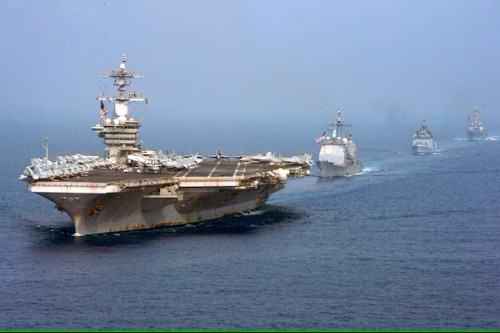
Mohammad Baagher Qalibaf, the hard-line speaker of the Iranian Parliament, said in a parliamentary address, “In the event of an attack on Iran, both the occupied territory and all American military centres, bases and ships in the region will be our legitimate targets.
“We do not consider ourselves limited to reacting after the action and will act based on any objective signs of a threat.” Lawmakers in the chamber shouted, “Death to America!” during the speech.
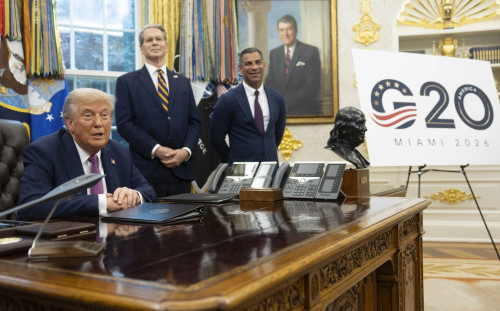
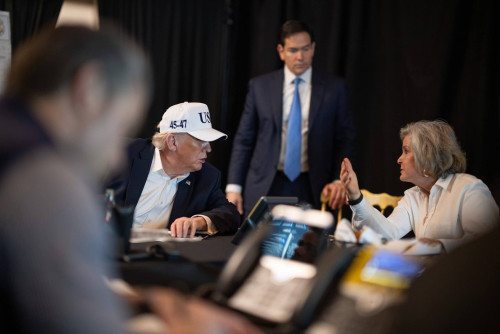
U.S. President Donald Trump, who has been assessing potential responses including cyberattacks and direct strikes by American or Israeli forces, stated, “The military is looking at it, and we’re looking at some very strong options. If they do that, we will hit them at levels that they’ve never been hit before.”
The ongoing deployment of U.S. forces to the Caribbean is also a factor in Washington’s strategic calculations.
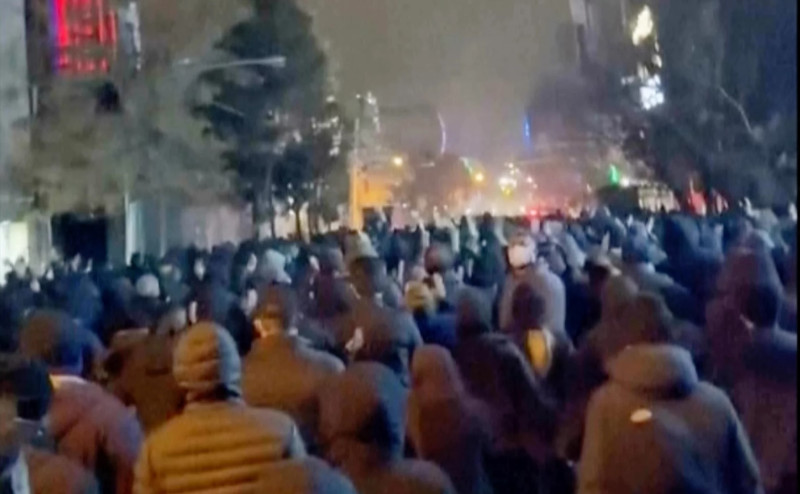
Online videos, likely transmitted via satellite networks such as Starlink, purportedly show ongoing protests in Tehran’s Punak district and in Mashhad, Iran’s second-largest city, as well as Kerman.
Demonstrations have been described as scattered and fluid, in response to heavy security presence and surveillance drones. Protesters were seen waving mobile phones, banging metal objects, and setting off fireworks.
Iranian authorities have sought to frame the protests as violent, with top security officials accusing some demonstrators of killing or burning people in a manner “very similar to what ISIS does.”
State television aired footage of funerals for slain security personnel, as well as bodies in morgues, while reporting additional deaths across several provinces.
Even reformist President Masoud Pezeshkian, who had previously sought to ease public anger, emphasised security in a Sunday interview, stating, “People have concerns, we should sit with them and if it is our duty, we should resolve their concerns. But the higher duty is not to allow a group of rioters to come and destroy the entire society.”
The unrest, which began on December 28, was triggered by the collapse of the Iranian rial, now trading at over 1.4 million to the U.S. dollar, amid sanctions imposed over the country’s nuclear programme.
The protests have evolved into a broader challenge to the ruling theocracy, with demonstrators calling for systemic change.
International reactions include demonstrations in several capitals in support of Iranian protesters. United Nations Secretary-General Antonio Guterres expressed shock at reports of violence, calling on Iran to exercise restraint and restore communications. Israeli officials, meanwhile, have stated they are monitoring the situation closely, with Prime Minister Benjamin Netanyahu praising the “tremendous heroism” of Iranian citizens.
With the situation remaining highly fluid, the potential for escalation involving U.S. or Israeli intervention, coupled with internal suppression, leaves Iran on a precarious trajectory, as protesters continue to challenge the country’s leadership under intensifying security crackdowns. - January 12, 2026