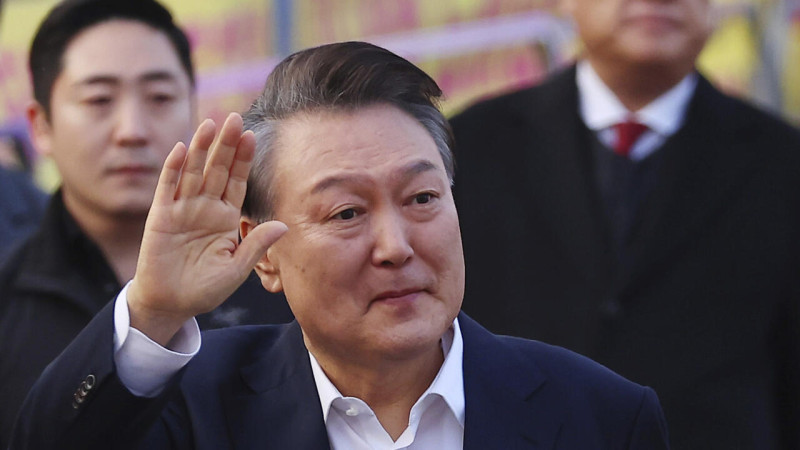
FORMER South Korean President Yoon Suk Yeol will face his first court ruling on Friday in connection with criminal charges arising from his controversial attempt to impose martial law last December, a move that lasted only six hours but sent shockwaves through the nation.
Reuters cited on Friday that if convicted, Yoon could face up to 10 years in prison on charges including obstructing officials executing an arrest warrant.
In January, Yoon allegedly barricaded himself within his residential compound and directed security forces to block investigators from entering, prompting a second, large-scale police operation involving over 3,000 officers that led to his arrest.
His detention marked the first time a sitting president had been arrested in South Korean history.
Yoon, currently held at the Seoul Detention Center, also faces accusations of falsifying official documents when he declared martial law, claiming it was necessary to restore democratic order amid what he described as threats from majority opposition factions and “anti-state” forces.
“The bid to impose martial law may have been brief, but its impact on the country’s political stability was profound,” analysts say, noting South Korea’s position as Asia’s fourth-largest economy, a key U.S. security partner, and one of the world’s most resilient democracies.
In addition to the martial law charges, Yoon is facing multiple other trials, including a case accusing him of masterminding insurrection.
Prosecutors have requested the death penalty in that case, with a ruling expected in February.
The episode began when Parliament, with support from members of Yoon’s own conservative party, swiftly overturned his martial law decree and later impeached him, suspending his presidential powers.
The Constitutional Court formally removed Yoon from office in April, ruling that he had violated the duties of his office.
Friday’s verdict is expected to set a key precedent for accountability in South Korea, testing the limits of presidential immunity and the resilience of the country’s democratic institutions.
Yoon’s trial continues to dominate headlines as South Korea reflects on one of the most unprecedented constitutional crises in its modern political history. - January 16, 2026