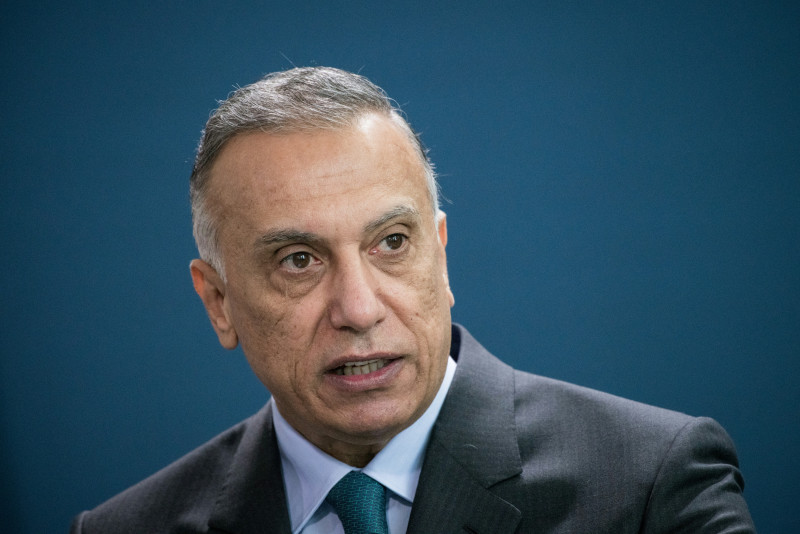
BAGHDAD – One year after United States forces assassinated Iran’s most storied commander, tensions are boiling between Iraq’s Washington-backed prime minister and pro-Tehran forces that accuse him of complicity in the Baghdad drone strike.
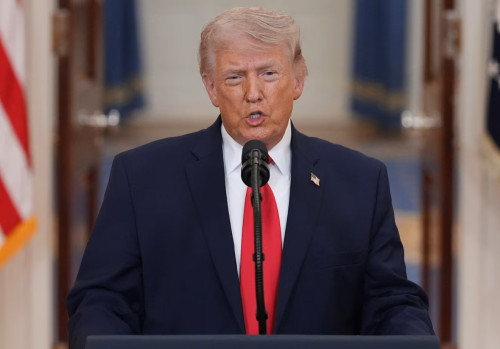
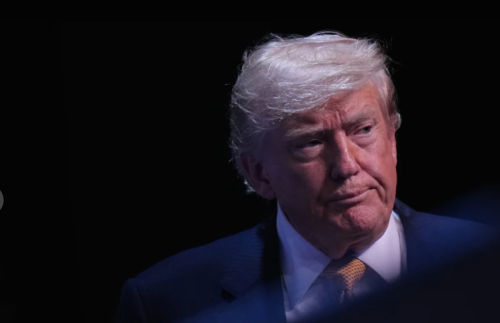
US President Donald Trump sent shockwaves through the region on January 3, 2020 with the targeted killing of Iran’s revered General Qasem Soleimani and his Iraqi lieutenant, which infuriated the Islamic republic and its allies.
Trump said the strike came in response to a hail of attacks on US interests in Iraq that has continued since. With only weeks left in the White House, he has warned that if there are new attacks, “I will hold Iran responsible”.
War-scarred Iraq remains torn between former occupation power the US and neighbouring Iran, Washington’s arch-enemy, whose influence has increased greatly since the US-led invasion that toppled Saddam Hussein in 2003.
Iraq’s Prime Minister Mustafa al-Kadhemi, who took office in May, has recently endured blistering threats from the powerful pro-Iranian paramilitary groups which Washington blames for the rocket attacks.
Security sources say tensions flared after the arrest of a man who planned another attack on the US embassy, a fighter of Asaib Ahl al-Haq (AAH), a faction of the Hashed al-Shaabi paramilitary network.
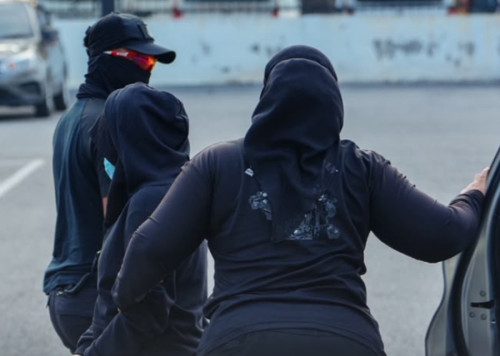
Outraged AAH fighters spread out through Baghdad’s streets and threatened to personally target Kadhemi unless their brother-in-arms was let go, the sources said.
“We warn Kadhemi that if you don’t back off, you will be punished,” said a masked, gun-toting fighter in one of several videos circulating online.
Another group threatened to “cut off the ears... of the traitor”.
Pro-Iran forces accuse Kadhemi, who is also Iraq’s spy chief, of complicity in the killing of Soleimani, who was head of external operations for Iran’s Revolutionary Guards, and Hashed’s deputy leader Abu Mahdi al-Muhandis.
Kataeb Hezbollah, another hardline Hashed faction, has piled on the pressure, with a spokesman urging “treacherous Kadhemi not to test the patience of the resistance”.
The Iraqi prime minister has urged calm but also warned that “we are ready for a decisive confrontation if necessary’.
The war of words has heightened tensions in a country that remains politically fragile after years of war and insurgency and is battling the Covid-19 pandemic with its economy reeling from the sharp fall in world demand for oil.
“If there is an escalation, it’s make or break for the government,” said Sajad Jiyad, a fellow at US think-tank The Century Foundation.
“The potential for the Kadhemi government to fall apart is quite high,” he said, arguing that the pro-Iran groups “have political allies that may unseat him”.
In the standoff, the government has refrained from keeping in detention fighters of Hashed, a movement that is formally part of the Iraqi security apparatus.
Security sources said that the Iraqi intelligence service would hand over the AAH fighter to the Hashed’s own security directorate.
This echoed a similar episode in June, when elite security forces under Kadhemi's command arrested 14 members of Kataeb Hezbollah on the same charges, then also transferred them to the Hashed.
Thirteen were released within hours, and the last was let go later.
Such compromises show Kadhemi is opting for the status quo over an escalation with armed groups, said Jiyad, the analyst.
“People are tired of seeing the law trampled on,” said one politician, speaking on condition of anonymity.
“But the armed forces are afraid to take the initiative because they do not feel they are supported by the political leadership.” – AFP, December 31, 2020



.jpg)