ISRAEL and the United States launched a coordinated military strike on Iran on Saturday, with the first assault reported near the offices of Supreme Leader Ayatollah Ali Khamenei.
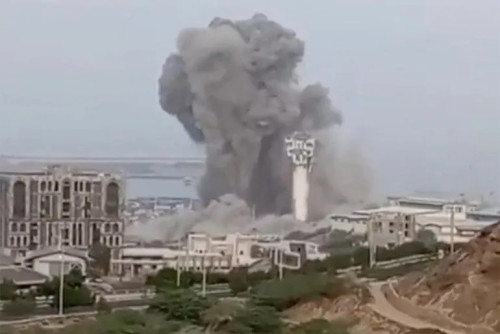
Explosions and plumes of smoke were observed across Tehran as the strikes targeted Iranian military installations, government offices, and intelligence facilities.
Israeli Prime Minister Benjamin Netanyahu described the operation as a pre-emptive measure aimed at removing an “existential threat” posed by Iran and said the campaign would create conditions for the Iranian population to “take their fate into their own hands.”
Reuters reported on Saturday that the military action follows failed diplomatic negotiations between Washington and Tehran earlier this month, after weeks of talks aimed at curbing Iran’s nuclear ambitions.
Both the United States and Israel had previously warned that further military measures would be taken if Iran continued advancing its nuclear and ballistic missile programmes.
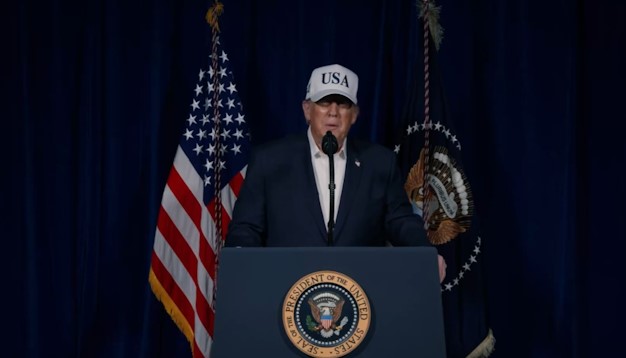
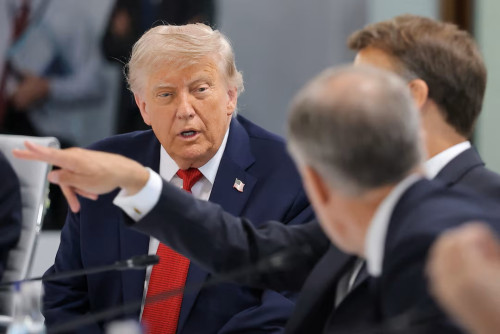
President Donald Trump confirmed the United States had commenced “major combat operations” in Iran, warning that casualties among American forces were possible.
“The lives of courageous American heroes may be lost and we may have casualties — that often happens in war — but we are doing this, not for now.
“We are doing this for the future, and it is a noble mission,” he stated in a social media video. Trump urged members of Iran’s Islamic Revolutionary Guard Corps to surrender their weapons, offering immunity, while warning that refusal would result in “certain death.”
He also emphasised that Iran had “refused, just as it has for decades and decades,” to abandon its nuclear programme.
It remains unclear whether the 86-year-old Khamenei was present in his offices during the initial strike.
Authorities closed roads around his compound as further explosions were reported throughout Tehran. Neighboring Iraq closed its airspace as a precautionary measure.
The operation was reportedly planned over several months, with the launch date finalised weeks in advance. Some personnel at the U.S. Al Udeid Air Force base in Qatar were evacuated as a precaution.
In northern Israel, explosions followed as the military activated air defence systems to intercept missiles fired by Iran.
Sirens sounded across Jordan, and hospitals in Israel implemented emergency protocols, transferring patients and surgeries to underground facilities.
Iranian authorities also closed airspace and disabled mobile phone networks, while no casualty reports have yet been confirmed.
Satellite imagery indicates renewed activity at sites previously targeted during a 12-day U.S.-Israeli air campaign last June, suggesting that Iran is assessing and potentially recovering critical materials.
Iran’s ballistic missiles are currently limited to a self-imposed range of 2,000 kilometres, covering much of the Middle East and parts of eastern Europe.
Although there is no public evidence that Iran is developing intercontinental ballistic missiles, U.S. intelligence has noted that Tehran’s space-launch capabilities could allow such development in the future.
The strikes mark a major escalation in a decades-long dispute over Iran’s nuclear programme, with Washington and Jerusalem signalling that additional military action is possible should Iran continue enrichment and missile activities.
Explosions across Tehran shortly after the operation began underscore the rapidly escalating tensions in the region. - February 28, 2026





_leader__Sanae_Takaichi.jpg)