THE Philippines has introduced a temporary four-day working week for government offices while Vietnam has urged businesses to adopt remote working, as Southeast Asian economies scramble to cushion the impact of surging fuel prices following supply disruptions linked to conflict involving Iran.
The measures come after significant disruption to the Strait of Hormuz, one of the world’s most critical oil transit routes through which about a third of global supply passes, raising fears of sharp increases in domestic fuel prices across energy-importing nations.
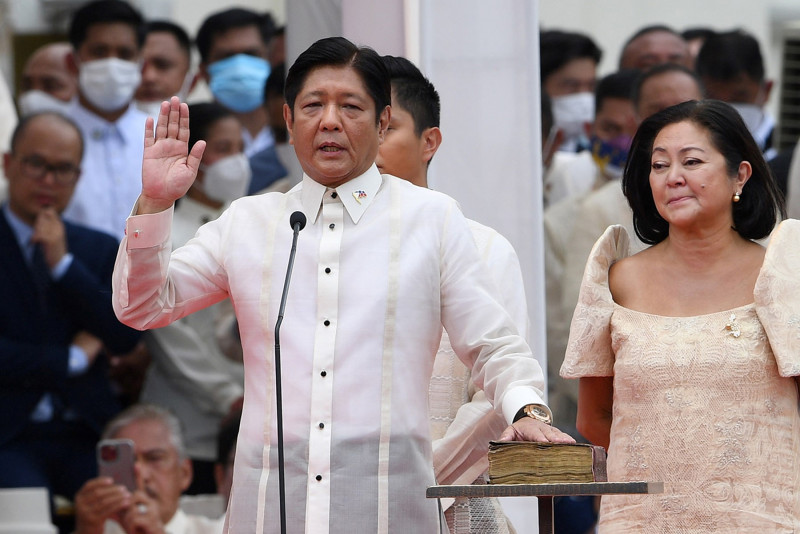
Philippine President Ferdinand Marcos Jr announced that all government offices would shift to a shortened working week beginning Monday, 9 March, describing the decision as part of broader efforts to manage the economic consequences of rising oil prices.
Marcos warned that fuel prices in the Philippines could rise substantially as a result of the supply shock. Petrol prices are expected to increase by 7.48 pesos per litre, diesel by 17.28 pesos per litre and kerosene by 32.35 pesos per litre.
“We are victims of a war that we did not choose. However, we can control and protect the Filipino people,” he said in a statement issued on Friday.
The Philippines remains heavily dependent on crude oil imports from West Asia and still relies on oil-fired power plants to generate a portion of its electricity, leaving the country particularly vulnerable to volatility in global energy markets.
The ongoing conflict also raises concerns for more than two million Filipino workers employed across the Middle East, whose security and employment prospects may be affected.
Alongside the four-day working week, Marcos has directed all government agencies to reduce their consumption of fuel and electricity by between 10 and 20 per cent.
Official study trips have been suspended and meetings that can be conducted virtually are to be moved online.
The president has also requested congressional authority to lower excise taxes on petroleum products if global crude oil prices exceed US$80 per barrel.
In addition, he has proposed amendments to existing biofuel legislation to allow the use of cheaper bioethanol blends in petroleum.
The Philippine government is also considering fuel subsidies and targeted cash assistance for sectors most affected by rising energy costs, although details have yet to be finalised.
The four-day working arrangement will be temporary, with essential frontline services such as the police and fire departments exempted.
Meanwhile, Vietnam has introduced its own measures to curb fuel consumption as prices surge.
The country’s Ministry of Trade has urged businesses to allow employees to work from home to reduce travel and transportation needs.
“Businesses should encourage employees to work from home to reduce the need for travel and transportation,” the ministry said in a statement.
Vietnam is among the countries most affected by fuel supply disruptions since the conflict involving Iran escalated, largely due to its heavy reliance on energy imports from West Asia.
Fuel prices have risen sharply in recent weeks. Data from the state-linked fuel trading company Petrolimex shows petrol prices have climbed by 32 per cent since the end of last month, diesel by 56 per cent and kerosene by 80 per cent.
The spike has triggered long queues at petrol stations in Hanoi, prompting authorities to warn businesses and consumers against fuel speculation.
Vietnamese Prime Minister Pham Minh Minh has also contacted counterparts in Kuwait, Qatar and the United Arab Emirates to secure stable supplies of crude oil and refined fuels.
As an immediate response, the Vietnamese government has suspended fuel import tariffs until the end of April in an attempt to ease supply constraints and stabilise domestic prices while the conflict in West Asia continues. - March 10, 2026