MISSILE alerts sounded across several Gulf states on Tuesday as Iran widened its military pressure in the region, launching fresh attacks that have heightened fears of a broader conflict while pushing global energy markets into renewed volatility
AP reported on Tuesday that air raid sirens were reported in Dubai in the United Arab Emirates and in Bahrain early in the morning, while Saudi Arabia said it intercepted two drones over its oil-rich eastern province.
Kuwait’s National Guard also confirmed it had shot down six drones approaching its territory.
The attacks form part of a wider campaign by Iran that has targeted Israel, United States military installations and critical energy infrastructure across the Middle East.
The conflict has also disrupted shipping through the Strait of Hormuz, one of the world’s most strategic oil transit routes.
The waterway, which connects the Persian Gulf with the Gulf of Oman and the wider Indian Ocean, carries roughly 20 per cent of global oil supplies. Iran has effectively halted tanker traffic through the strait, while attacks on merchant vessels near the passage have killed at least seven sailors, according to the International Maritime Organization.
The disruption has sent oil markets into sharp swings. Brent crude, the international benchmark, surged to nearly 120 US dollars a barrel on Monday before retreating.
Prices were still trading at around 90 US dollars a barrel on Tuesday, roughly 24 per cent higher than when the war began on 28 February.
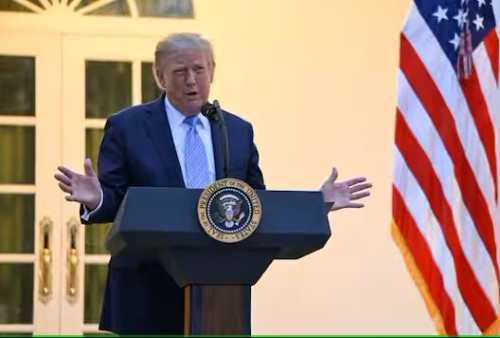
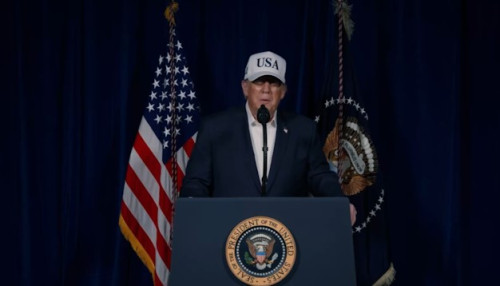
United States President Donald Trump attempted to calm concerns that the fighting could escalate into a prolonged regional war.
“It’s going to be a short-term excursion,” he said on Tuesday, after previously warning that the conflict could last a month or longer.
Trump also warned Tehran against interfering with global oil supplies.
“If Iran does anything that stops the flow of Oil within the Strait of Hormuz, they will be hit by the United States of America TWENTY TIMES HARDER than they have been hit thus far,” he wrote earlier on social media.
Iran signalled defiance in response. Ali Mohammad Naini, a spokesperson for the Islamic Revolutionary Guard Corps, was quoted in Iranian state media as saying that “Iran will determine when the war ends.”
Kamal Kharazi, a senior foreign policy adviser to Iran’s supreme leader, also suggested the country was prepared for a prolonged conflict.
In remarks to CNN, he said there was no “room for diplomacy anymore” unless international pressure forces an end to what he described as “the aggression of Americans and Israelis against Iran.”
The conflict has increasingly spread across the region. In Iraq, an airstrike early Tuesday targeted the 40th Brigade of the Popular Mobilization Forces near the northern city of Kirkuk, killing at least five pro-Iranian militants and wounding four others, according to officials who spoke anonymously because they were not authorised to brief the media.
The party responsible for the strike was not immediately identified.
Hostilities have also intensified along Israel’s northern border, where Israel has carried out repeated strikes against Hezbollah positions in Lebanon, while the Iran-backed group has fired missiles into Israeli territory.
Pro-Iranian militias in Iraq have also launched attacks on United States bases in the country since the war began.
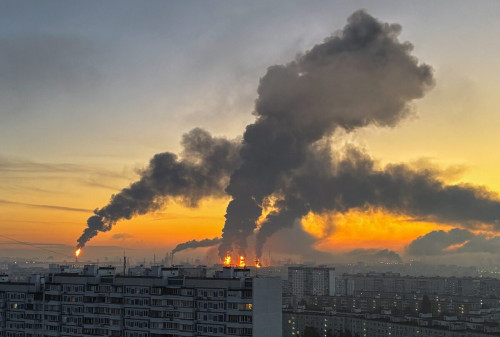
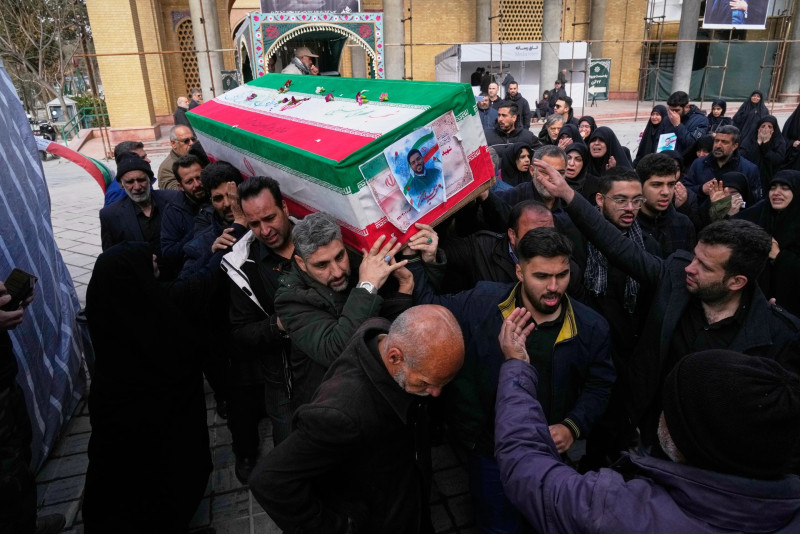
Beyond the battlefield, the war has shaken global markets, disrupted energy supply chains and triggered evacuations from major regional business hubs as civilians seek shelter from strikes targeting military facilities, government buildings, oil and water installations, hotels and even a school.
The economic impact is also being felt by the Gulf’s largest energy producers. Saudi Arabia’s state oil giant Aramco reported profits of US$104 billion for 2025, down from US$110 billion the previous year.
The company, formally known as Saudi Arabian Oil Co., said revenues fell to US$445 billion from US$480 billion in 2024. - March 10, 2026