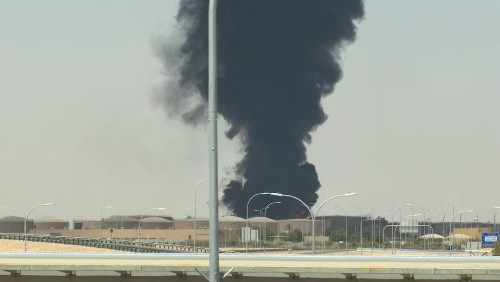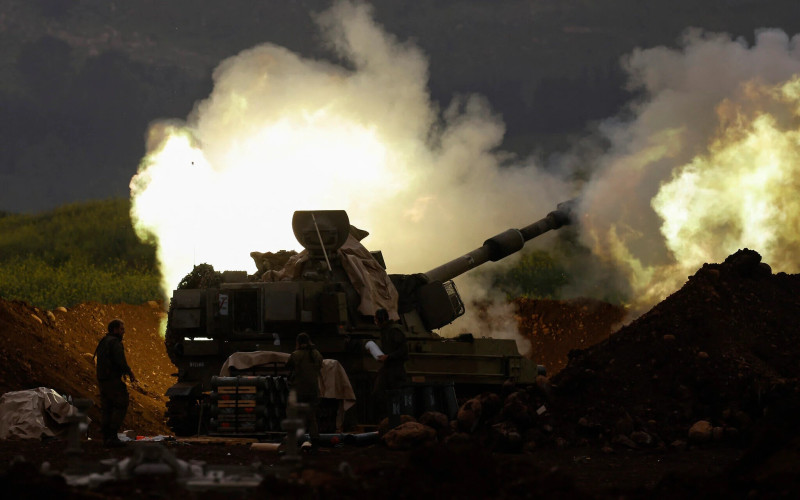
ISRAEL has approved plans to significantly expand its military operations against Hezbollah in Lebanon, fuelling fears that a large-scale ground incursion may be imminent as regional tensions escalate.
The move follows a sharp deterioration in security after Hezbollah launched rocket attacks towards northern Israel earlier this month, against the backdrop of an ongoing conflict involving Israel, the United States and Iran.
AP, citing Lebanon’s health authorities reported on Monday that more than 1,000 people have been killed since the escalation, including at least 118 children and 40 healthcare workers, while over one million residents have been displaced, raising alarm over a deepening humanitarian crisis.
The Israeli military said Chief of Staff Eyal Zamir had approved plans to “advance ground operations and targeted strikes” against Hezbollah, signalling a campaign that could extend over a prolonged period.
The stated objective is to protect Israeli communities in the north from continued attacks.
In a parallel move, Defence Minister Israel Katz ordered the destruction of bridges across the Litani River, which Israel claims are being used by Hezbollah to move fighters and equipment.
Subsequent air strikes damaged the Qasmiye Bridge, a key route linking southern Lebanon to central areas near the coastal city of Tyre.
The crossings are not only strategically significant but also vital for civilian movement, intensifying fears among Lebanese residents that southern regions could be isolated ahead of a broader offensive.
The river lies roughly 30 kilometres from the Israel-Lebanon border, and concerns are mounting that Israel may be seeking to cut off predominantly Shiite areas regarded as Hezbollah strongholds, potentially paving the way for territorial control and the creation of a buffer zone.
Lebanese President Joseph Aoun condemned the strikes as “the beginning of a ground invasion”, describing them as “collective punishment against civilians”.
He warned that the actions could form part of a wider strategy to expand Israeli control within Lebanese territory.
Katz also confirmed that Israeli forces had been instructed to demolish homes in Lebanese border villages to remove perceived threats to Israeli communities, a tactic observers say mirrors operations seen in Gaza, where infrastructure destruction and forced displacement have been used to establish security zones.
The latest escalation was triggered after Hezbollah launched rockets in response to the killing of Iran’s Supreme Leader, Ali Khamenei, despite a ceasefire agreed in November 2024. Lebanese authorities have accused Israel of repeatedly violating that truce through near-daily strikes.
Efforts by the Lebanese government to disarm Hezbollah have stalled, with the group refusing to engage in discussions over its weapons. President Aoun has rejected the use of force to resolve the issue, warning it would deepen sectarian divisions and risk further violence.
Meanwhile, the conflict has taken a heavy toll in Iran.
Bernama reported earlier that at least 210 children have been killed and a further 1,510 injured since the start of joint US-Israeli strikes, according to Health Minister Mohammad-Reza Zafarghandi.
In remarks carried by the semi-official ISNA, he said around 300 health, medical and emergency facilities had been damaged since Feb 28, while approximately 30 ambulances had been rendered unusable.
Regional tensions have surged since the United States and Israel launched coordinated strikes on Iran on Feb 28, in a campaign that has reportedly killed more than 1,300 people.
With violence spreading across multiple fronts and civilian casualties rising, fears are growing that the conflict could spiral into a broader regional war with far-reaching humanitarian and geopolitical consequences. - March 23, 2026