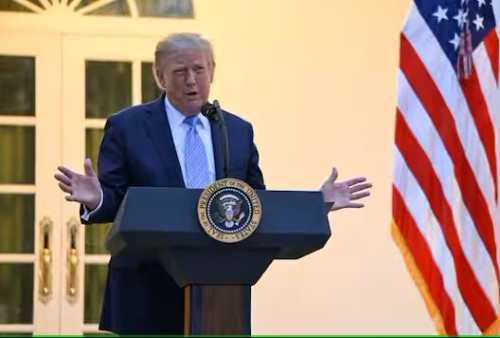
U.S. President Donald Trump has indicated a possible de-escalation in the conflict with Iran, citing what he described as “very good” discussions towards a potential agreement, even as Iranian officials firmly deny that any negotiations with Washington have taken place.
In remarks and social media posts timed to calm financial markets, Trump said he had delayed plans to strike Iranian energy infrastructure for five days, following reported weekend discussions involving his envoys and unnamed Iranian officials.
He framed the move as contingent on ongoing talks.
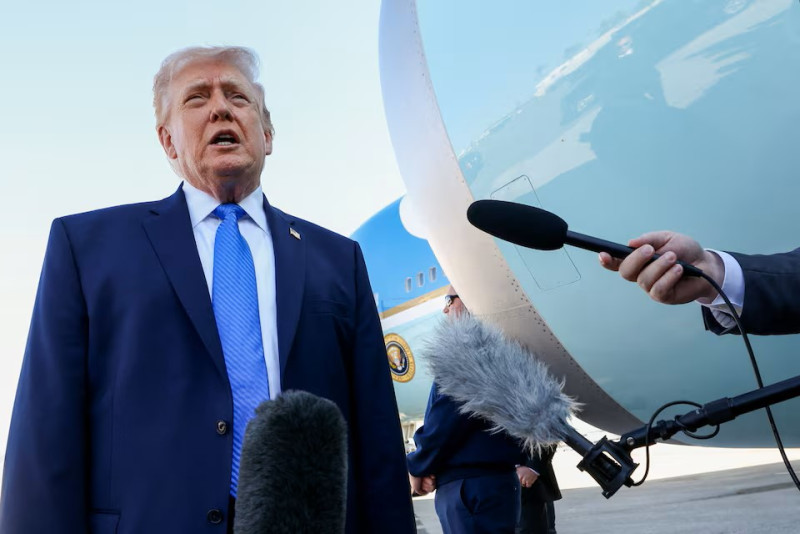
“All I’m saying is we are in the throes of a real possibility of making a deal,” AP cited Trump saying during an exchange with reporters before departing for Tennessee. “And I think, if I were a betting man I’d bet for it. But again, I’m not guaranteeing anything.”
He added: “They want very much to make a deal. We’d like to make a deal, too… We’re doing a five-day period, we’ll see how that goes. And if it goes well, we’re going to end up settling this. Otherwise, we’ll just keep bombing our little hearts out.”
Trump also said he had instructed the US Department of Defense to postpone any strikes on Iranian energy infrastructure, describing the pause as dependent on the success of the purported discussions.
In contrast, senior Iranian officials rejected the US president’s claims of diplomatic engagement. Mohammad Bagher Ghalibaf stated publicly that no negotiations had taken place.
“No negotiations have been held with the US,” Aljazeera reported him saying. “Fakenews [sic] is used to manipulate the financial and oil markets and escape the quagmire in which the US and Israel are trapped.”
The Iranian Foreign Ministry echoed the denial, describing Trump’s remarks as an attempt to influence energy markets and buy time for military planning.
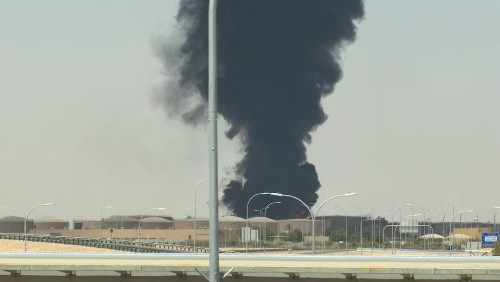
The conflicting narratives come as the US-Israeli campaign against Iran enters its fourth week, with continued air strikes and missile exchanges reported across the region. Israeli forces said they carried out renewed attacks on Tehran, while Iran has continued launching missiles and drones and restricting passage through the Strait of Hormuz, a critical global oil transit route.
The disruption has driven up global energy prices and heightened concerns over economic fallout. Trump had previously threatened to escalate attacks unless Iran reopened the strait, which carries roughly a fifth of the world’s oil and gas shipments.
The president has also suggested that any eventual agreement could involve US efforts to secure Iranian enriched uranium. However, he provided no details on how such an operation would be carried out, stating only that the US military would “take it ourselves.”
Military and regional developments continue alongside diplomatic uncertainty. The US has deployed additional troops to the Middle East, including amphibious assault ships and thousands of Marines, bringing total US troop presence in the region to more than 50,000.
Officials have said the deployments are intended to support contingency operations, though Trump has stated he does not plan to send ground forces into Iran while keeping all options open.
Analysts say the situation reflects a shifting dynamic in which energy markets and economic considerations are increasingly intertwined with military strategy.
Some observers suggest the president’s statements may be aimed at easing market volatility while allowing time for reinforcements to arrive in the region.
Meanwhile, Iran continues to deny any direct contact with Washington, even as it acknowledges receiving indirect messages via third countries indicating possible interest in negotiations.
The standoff highlights a widening gap between diplomatic signalling and official positions on both sides, with regional actors reportedly attempting to mediate behind the scenes. Despite the uncertainty, both military activity and market sensitivity remain elevated as the conflict evolves. - March 24, 2026