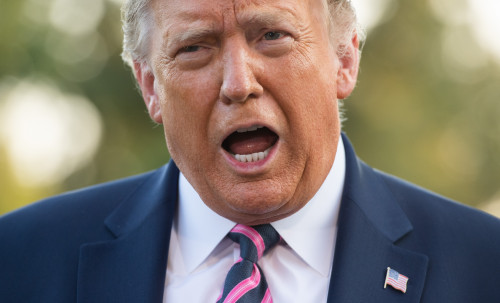
TENSIONS have sharply escalated in the Gulf after Iran’s military warned United States forces on Monday not to enter the Strait of Hormuz, following an announcement by President Donald Trump that Washington would begin assisting vessels stranded in the vital shipping corridor.
Trump said the United States would help “guide” ships and their crews trapped in the waterway, which he described as being “locked up” amid the ongoing Iran-Israel conflict. However, he provided few operational details.
“We have told these Countries that we will guide their Ships safely out of these restricted Waterways, so that they can freely and ably get on with their business,” Reuters cited Trump saying in a post on his Truth Social platform on Sunday.
In response, Iran’s armed forces issued a strong warning, asserting control over the strategic strait and cautioning against foreign military involvement.
Its unified command said Iranian forces would “respond harshly” to any perceived threat, warning commercial shipping and oil tankers against movement without coordination with Iranian authorities.
“We have repeatedly said the security of the Strait of Hormuz is in our hands and that the safe passage of vessels needs to be coordinated with the armed forces,” said Ali Abdollahi, head of the forces’ unified command.
“We warn that any foreign armed forces, especially the aggressive U.S. army, will be attacked if they intend to approach and enter the Strait of Hormuz,” the statement added.
The Strait of Hormuz, a critical global energy route, has been heavily disrupted for more than two months, with hundreds of ships and as many as 20,000 seafarers reportedly unable to transit, according to the International Maritime Organization.
The U.S. military has moved to support the operation, with United States Central Command (CENTCOM) confirming the deployment of around 15,000 personnel, more than 100 aircraft, warships and drones.
“Our support for this defensive mission is essential to regional security and the global economy as we also maintain the naval blockade,” Admiral Brad Cooper, CENTCOM commander, said in a statement.
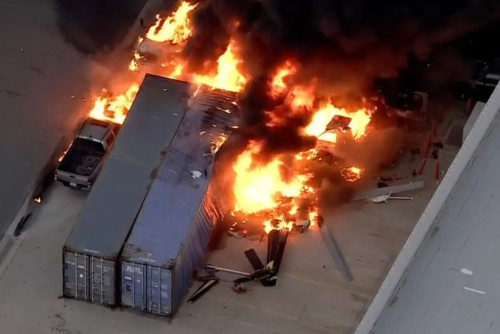
Soon after Trump’s announcement, the United Kingdom Maritime Trade Operations agency reported that a tanker had been struck by unidentified projectiles in the Strait of Hormuz, 78 nautical miles north of Fujairah in the United Arab Emirates. Authorities said all crew were safe, though details remain limited.
Iran has been restricting most foreign shipping through the Gulf for more than two months, apart from Iranian vessels, contributing to a surge in global energy prices. Several ships have reportedly come under fire, while others have been seized.
Last month, the United States imposed its own blockade on vessels departing Iranian ports.
The Trump administration has been seeking international support to form a coalition to secure maritime traffic in the region. Officials said the latest initiative would combine diplomatic engagement with military coordination, though it remains unclear which countries will participate or how escort operations would function.
Trump also warned that any interference with the operation would be met with force.
Separately, diplomatic tensions remain high over Iran’s nuclear programme and stalled negotiations. Iran said it had received a response from Washington regarding its latest peace proposal, delivered via Pakistan, though neither the United States nor Pakistan has confirmed this.
State media quoted Iran’s foreign ministry spokesperson Esmaeil Baghaei as saying: “At this stage, we do not have nuclear negotiations.”
Iran has proposed delaying nuclear discussions until after the conflict ends, alongside demands for the lifting of sanctions, release of frozen assets, and withdrawal of US forces from the region. Washington, however, has insisted Tehran must first accept strict limits on its nuclear programme, including surrendering enriched uranium stockpiles it says could be used for weapons development.
While Trump has maintained he is “in no hurry”, he faces domestic pressure as disruption in the Strait of Hormuz continues to affect global oil flows and drive up energy prices, with the waterway accounting for around 20 per cent of global oil and gas shipments.
Talks between the two sides have stalled despite earlier contacts, and no further meetings have been scheduled following an initial round of discussions weeks ago. - May 4, 2026