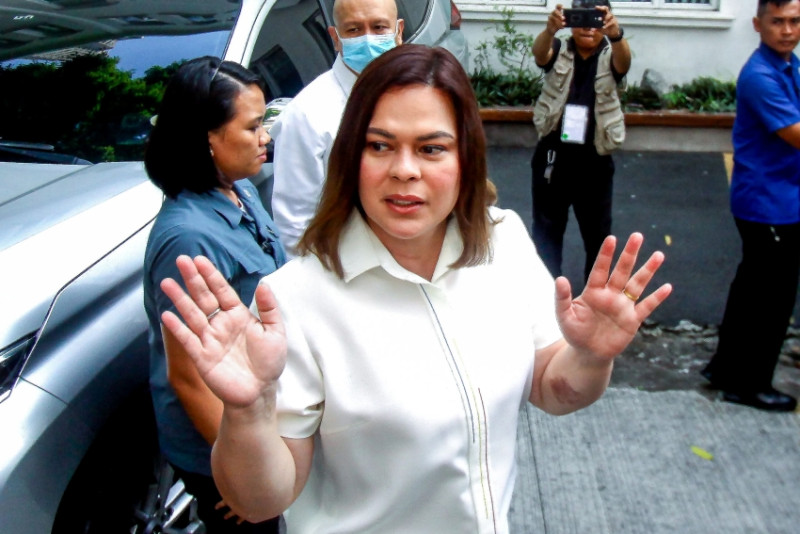
PHILIPPINE Vice-President Sara Duterte is set to face a fresh impeachment battle in Congress in a development that threatens to deepen the country’s political divisions and further destabilise an economy already grappling with inflationary pressures and slowing growth.
The impeachment vote in the House of Representatives is expected to take place on May 11, according to Deputy Speaker Janette Garin, although no additional procedural details were disclosed.
Reuters reported on Tuesday that at least one-third of the 318-member chamber is required to approve impeachment proceedings before the matter is elevated to the Senate, where a two-thirds majority of the 24 senators would be needed to secure a conviction.
Should the Senate convict Duterte, she would be permanently barred from public office and removed as vice-president, a scenario that could dramatically alter the race to succeed Ferdinand Marcos Jr when his six-year term ends in 2028.
Congressman Terry Ridon claimed there was already sufficient parliamentary support to move the process forward.
“There are at least 215 votes to impeach the Vice-President,” he said in a post on X.
“At this point, the evidence has clearly established probable cause for betrayal of public trust and culpable violation of the Constitution,” he added.
Duterte, the daughter of former president Rodrigo Duterte, is currently facing four accusations, including allegations of misusing public funds and threatening to assassinate Marcos.
She has denied all allegations and insists the impeachment effort is politically motivated.
The vice-president remains one of the country’s most influential political figures and continues to lead opinion polls as the preferred candidate to replace Marcos in the next presidential election.
The latest impeachment push follows an earlier attempt in February 2025, which was ultimately dismissed by the Supreme Court on procedural grounds.
The escalating confrontation reflects the complete collapse of the once-powerful Marcos-Duterte alliance that swept to victory in the 2022 national election.
Political tensions between the two camps have since evolved into a prolonged and increasingly hostile struggle for influence, dominating the Philippine political landscape.
The impeachment proceedings also come at a precarious economic moment for the country.
The Philippines is facing mounting pressure from higher global oil prices linked to conflict in the Middle East, while inflation has accelerated sharply.
Last week, the country recorded its weakest economic expansion outside the pandemic period since 2009, heightening concerns that prolonged political uncertainty could undermine investor confidence and domestic consumption.
Marcos himself previously faced impeachment pressure earlier this year, although an attempt against him failed after the House justice committee ruled that the complaint was “insufficient in substance”.
The Philippines has a long history of impeachment battles involving senior state officials, most notably former president Joseph Estrada and former chief justice Renato Corona.
The renewed effort against Duterte is now expected to become one of the most consequential political confrontations in the country since the fall of the Marcos-Duterte alliance. - May 11, 2026