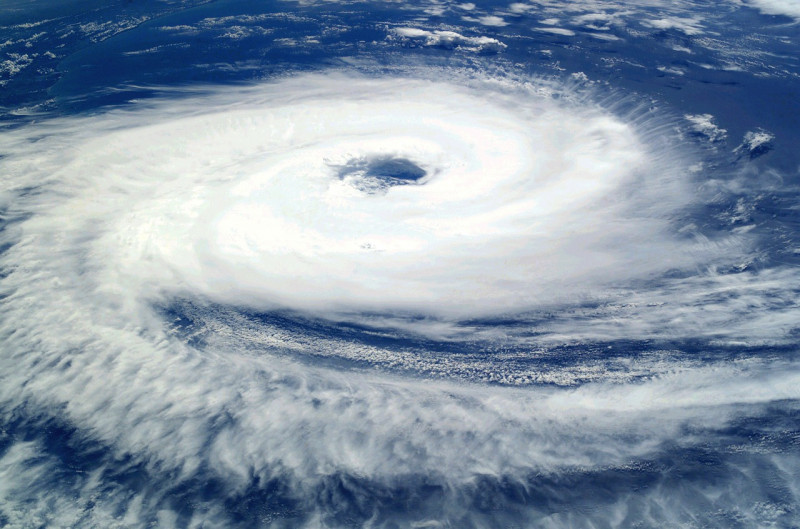
CHINA’S densely populated eastern coast is bracing for Typhoon Dolphin, which is expected to make landfall on Sunday with powerful winds and torrential rain, prompting mass evacuations, widespread transport disruptions and warnings of flooding and landslides.
Dolphin is forecast to be the most powerful typhoon to make landfall in China so far this year, with sustained winds of up to 162kph before the storm weakens as it moves inland, the National Meteorological Centre (NMC) said.
The NMC issued a red typhoon warning, its highest alert, on Sunday morning and forecast “exceptionally heavy rain” in parts of central and eastern Zhejiang.
Reuters reported that more than one million people have been moved to safety across eastern China as authorities prepare for the storm’s arrival.
Shanghai has evacuated at least 30,300 people and cancelled about 1,500 flights, according to flight-tracking data provider VariFlight.
China’s state broadcaster CCTV reported that nearly 1,400 inbound and outbound flights at Shanghai’s two main passenger airports had been cancelled on Sunday, while Hangzhou airport in neighbouring Zhejiang cancelled another 270 flights.
Dolphin is expected to make landfall late on Sunday or early Monday in Zhejiang or neighbouring Fujian province after sweeping through Japan’s southern Okinawa prefecture and northern Taiwan.
Authorities have ordered offshore workers to safety, vessels back to port and increased inspections at reservoirs, mountain streams, landslide-prone areas, construction sites and tourist destinations.
Torrential rain is forecast through Aug 10 across Zhejiang, Shanghai, northern Fujian, northeastern Jiangxi, central and southern Anhui, and much of Jiangsu.
Parts of central and eastern Zhejiang could receive between 250mm and 500mm of rain, forecasters said, raising the risk of flooding and landslides.
After making landfall, Dolphin is expected to track westwards before slowing over central and southwestern China and gradually losing strength, Wang Haiping, chief forecaster at the NMC, told state broadcaster CCTV.
The slower movement could prolong heavy rainfall, particularly in mountainous areas and along smaller rivers.
The Ministry of Water Resources warned that the Qiantang, Yong, Jiao and Shuiyang rivers could experience major flooding, while smaller rivers in the hardest-hit areas could rise above warning levels.
Authorities in Zhejiang also warned of a high risk of geological disasters, while residents in areas covered by red mountain-torrent warnings were urged to comply with evacuation orders.
In Zhejiang, Wenzhou relocated more than 900,000 residents and opened more than 1,000 emergency shelters.
In Fujian, 98,900 people were evacuated from high-risk areas after authorities raised the typhoon emergency response to Level III, according to Xinhua.
Zhejiang, Shanghai and Jiangsu also activated Level III emergency responses.
Fujian maritime authorities suspended 55 coastal passenger ferry routes, halted all 115 offshore construction projects and moved 290 construction vessels to sheltered waters.
More than 200 ferry routes in Zhejiang and Fujian were suspended, Xinhua reported.
Shanghai’s Yangshan port cleared ships from its berths and moved more than 500 small and medium-sized vessels to shelter ahead of the storm, the city’s maritime safety administration said.
Dolphin has already caused disruption in Japan, where heavy rain and powerful winds swept through Okinawa.
At least six people were injured, while thousands of households lost power.
AFP reported that seven people in Okinawa suffered minor injuries, including a man aged over 100 who was blown over by strong winds and hit his head.
As of Sunday afternoon, 5,290 households in Okinawa remained without electricity.
In Taiwan, dozens of ferry services were suspended and more than 180 flights cancelled after the storm brought heavy rain and strong winds to the northern part of the island.
A 44-year-old tourist from Guangdong, identified by his surname Chen, said he was stranded in Shanghai after his family’s flight scheduled for Sunday evening was cancelled because of the typhoon.
He said the family had been rebooked on a flight at 10pm on Monday but was uncertain whether it would be able to depart.
“To us Guangdong people, this typhoon is as ordinary as having a meal and feeling the wind. It's just part of everyday life,” Chen said, adding that the storm did not appear particularly strong by southern China’s standards.
Dolphin’s arrival comes about two weeks after Typhoon Noul struck Guangdong in southern China, with authorities then describing it as the strongest typhoon to hit China this year.
Noul killed three people and damaged hundreds of homes after striking the Philippines before moving towards China. - August 9, 2026