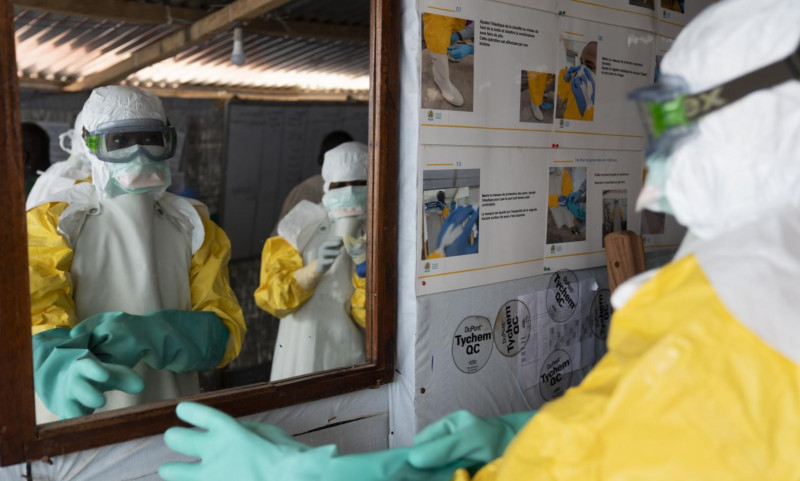
THE head of the World Health Organization (WHO) has travelled to the Democratic Republic of Congo to oversee efforts against a rapidly worsening Ebola outbreak that has already claimed more than 200 lives and raised fears of a broader regional health emergency.
WHO director-general Tedros Adhanom Ghebreyesus arrived in Kinshasa on Thursday before a planned visit to Ituri province in the country’s northeast, where the outbreak is centred.
The outbreak, officially declared on May 15, involves the rare Bundibugyo strain of Ebola and has already resulted in 223 suspected deaths and 10 confirmed fatalities among more than 1,000 confirmed and suspected infections, according to the WHO’s latest figures.
Health authorities believe the actual scale of transmission could be significantly larger, warning that the virus may have circulated undetected for an extended period before being identified.
“That thing can be stopped,” AFP cited Tedros saying upon arrival, expressing confidence that coordinated international action could contain the outbreak despite worsening security conditions in eastern Congo.
He also rejected calls for international travel bans, arguing that such restrictions would do little to control the spread of the disease.
“Together, we will overcome this outbreak,” he said, pledging to do “everything in my power to help you.”
The crisis marks the 17th recorded Ebola outbreak in the vast central African nation, which has faced repeated epidemics over the past several decades.
Containment efforts are being severely complicated by ongoing armed conflict in eastern Congo, particularly in mineral-rich territories destabilised by decades of violence involving militia groups and foreign-backed insurgents.
The latest escalation has involved the Rwanda-backed M23 rebel movement, which has seized significant territory since 2021 as fighting intensified over the past 18 months.
Tedros urged all armed groups operating in the region to halt hostilities to allow humanitarian and medical operations to proceed safely.
“Conflict and displacement make everything harder,” he said.
“I am making a direct appeal to all warring parties in this region: please, declare a ceasefire.
“No cause, no conflict, no grievance is worth condemning innocent people to death from a preventable disease.”
The outbreak has also exposed major gaps in medical preparedness because no approved vaccine or treatment currently exists for the Bundibugyo strain responsible for the latest infections.
However, Africa Centres for Disease Control and Prevention said efforts are underway to develop both vaccines and medicines before the end of the year.
Jean Kaseya said African governments were mobilising resources to accelerate vaccine research and pharmaceutical development.
“What we can tell you for sure, by the end of this year, 2026, Africa CDC will make sure that we have a vaccine and medicine against Bundibugyo,” he said during an online briefing.
“Our leaders are ready to invest. We are investing at technical level, at a strategic level, to make sure that (the vaccine) will happen,” he added.
International aid agencies have intensified emergency support efforts in the region.
The WHO confirmed that 4.6 tonnes of medical and humanitarian supplies had arrived in Bunia, the capital of Ituri province, while UNICEF announced plans to deliver 100 tonnes of aid to affected communities.
Neighbouring Uganda has already reported one confirmed Ebola-related death and six additional infections linked to the outbreak.
Ugandan authorities have responded by immediately closing border crossings with the Democratic Republic of Congo in an attempt to prevent further transmission.
Meanwhile, the United States announced it would prohibit entry for individuals infected with the virus.
The administration of President Donald Trump is also reportedly working to establish a treatment facility in Kenya for infected American citizens rather than repatriating patients to the United States, as was done during previous Ebola outbreaks.
The proposal has triggered opposition in Kenya, where rights groups have filed legal challenges amid fears such a facility could overwhelm the country’s already strained healthcare system.
The WHO said its scientific advisory groups have recommended fast-tracked clinical trials involving vaccines and treatments that may prove effective against the Bundibugyo strain.
The agency added that it would work closely with authorities in both Congo and Uganda to facilitate emergency research and evaluation of potential medical countermeasures.
Ebola outbreaks have killed more than 15,000 people across Africa over the past five decades.
The deadliest epidemic recorded in Congo between 2018 and 2020 resulted in nearly 2,300 deaths from approximately 3,500 cases. - May 29, 2026