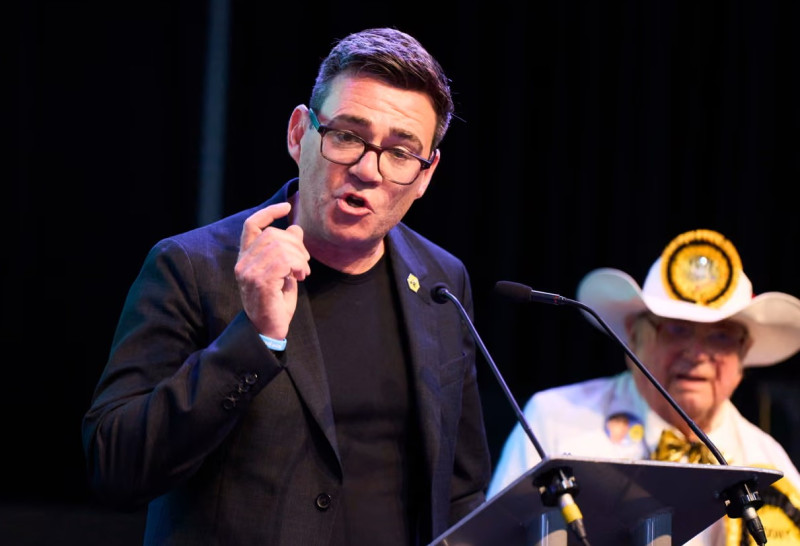
ANDY Burnham delivers a major speech outlining what allies describe as a 10-year plan for power, focused on reshaping the British state through deep regional devolution and a redistribution of decision-making away from Westminster.
In the address, the former Greater Manchester mayor and newly elected Makerfield MP is expected to argue for stronger regional governance structures, including the creation of a “No10 in the North” model should he eventually assume national office.
The proposals are expected to centre on the principle of “good growth in every postcode”, with supporters claiming the plan would represent one of the most significant transfers of power from Whitehall in recent political history.
He is also expected to acknowledge the role of his own political generation in declining public trust in politics, amid polling suggesting rising support for Labour under his influence while the party remains under the leadership of Sir Keir Starmer.
According to GB News, his speech is expected to set out reforms to public procurement, including a drive towards “buying British” to support domestic industry, alongside requirements for social value such as apprenticeships and work placements.
Education reforms will also feature, with proposals described by his team as aiming to establish “true parity” between academic and technical pathways, building on existing government direction.
The Times cited that the wider plan would also increase the powers of regional mayors over areas including social housing, welfare, and post-16 education as part of a broader rebalancing of the UK state.
In his book Head North, Burnham previously criticised what he described as a system in which regional leaders must seek approval from Westminster, arguing instead for a more balanced distribution of authority between central and local government.
He wrote that councils and mayors should be “dealt some cards too”, rather than operating on what he described as “bended knee” to Whitehall.
Senior Labour figures have emphasised party unity behind Burnham, while downplaying expectations of immediate constitutional upheaval, with Housing Secretary Steve Reed suggesting any future leadership would involve changes in emphasis rather than a break with fiscal rules.
Deputy Labour leader Lucy Powell said Burnham had developed a “clear sense of purpose” and argued that voters wanted the party to “get on with the job” of governing.
Burnham recently secured a landslide victory in the Makerfield by-election with 55 per cent of the vote, a result that followed a difficult set of local election outcomes for Labour earlier in the year.
Speculation over his political future has also prompted discussion within Westminster over potential cabinet alignments, with senior figures including Shabana Mahmood and Ed Miliband among those tipped for prominent roles should he assume leadership.
Meanwhile, Conservative Party chairman Kevin Hollinrake dismissed Burnham’s agenda as “the politics of distraction”, arguing it focused on structural reform rather than immediate issues such as taxation, defence, and welfare.
Reform UK and Conservative figures have both indicated they would be prepared for a general election scenario should Labour leadership changes trigger a wider political reset.
If Burnham remains the sole contender for the Labour leadership, he could be positioned to assume the role of Prime Minister shortly after internal party procedures conclude, with MPs required to nominate candidates before any formal contest is confirmed. - June 29, 2026
.jpeg)