EFFORTS to secure a lasting end to the war between the United States and Iran have stalled, with Tehran and Washington still at odds over how to revive an interim agreement reached in June and implement its terms.
A senior Iranian source said there had been no progress in negotiations to restore the deal or establish a timetable for fulfilling the commitments made under it.
The latest setback came as US President Donald Trump renewed his attacks on Iran’s leadership, further dimming hopes of a breakthrough following fresh attacks on shipping in the region on Tuesday.
Reuters cited on Thursday that the June agreement called for an "immediate and permanent termination of military operations on all fronts", but rapidly unravelled. Trump declared the agreement "over" on July 7, while Iran’s Foreign Ministry described it as "suspended" a week later.
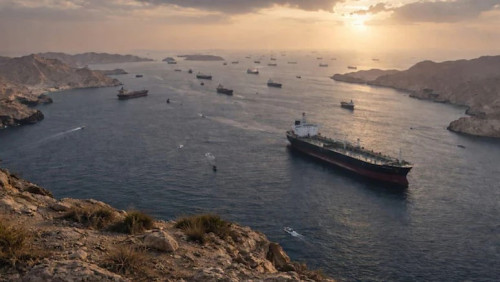
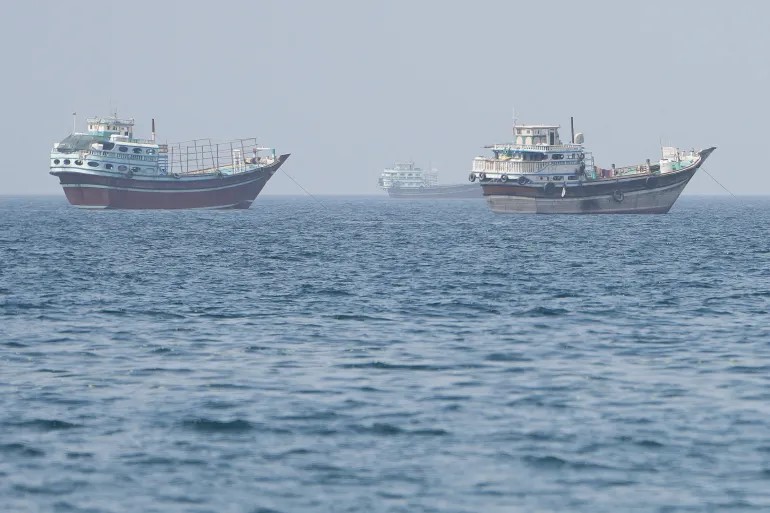
Washington has accused Tehran of failing to honour its commitment to reopen the Strait of Hormuz, a crucial global shipping route.
Iran, however, maintains that the United States has failed to fulfil its own obligations, including lifting a blockade on Iranian ports and releasing frozen Iranian assets.
"One of the issues that is being discussed via mediators is the U.S. returning to the interim agreement and defining a time frame for implementing the commitments. There has been absolutely no progress on this issue," the Iranian source said.
Trump said on Wednesday that the United States had "total control" over the Strait of Hormuz.
However, the Persian Gulf Strait Authority, established by Iran to manage the waterway, said the strait remained blocked and would not be reopened until Tehran’s conditions were accepted.
"Iran is all talk and no action, the Bully of the Middle East No Longer," Trump said on his Truth Social platform.
Trump has repeatedly alternated between threats of further escalation and claims that a peace agreement could be reached, adding to uncertainty over the direction of the conflict.
No Agreement On Extension
Thousands of people have been killed in the conflict, mainly in Iran and Lebanon, since the United States and Israel launched attacks on Iran on Feb 28.
Iran has retaliated by targeting US assets and infrastructure in countries including Oman, Jordan, Kuwait, Israel, the United Arab Emirates and Saudi Arabia.
The June interim ceasefire established a 60-day period, extendable by mutual agreement, during which Washington and Tehran were expected to negotiate a final arrangement aimed at limiting Iran’s nuclear programme in return for the lifting of US sanctions.
The Iranian source rejected a report by Turkey’s Anadolu news agency that Pakistan had helped secure agreement to extend the 60-day period.
"There is no talk of an extension because, from Iran’s perspective, there is no period that began and therefore nothing to extend. The United States violated the interim agreement 48 hours after it was reached and withdrew from it a few days later," the source told Reuters.
Hormuz Closure Keeps Markets On Edge
The Strait of Hormuz, the narrow waterway between Iran and Oman connecting the Gulf with the Arabian Sea, carried about a fifth of global oil and liquefied natural gas supplies before the conflict.
Brent crude futures have remained highly volatile since the war began, reaching a peak of US$126 a barrel, about 75% above pre-war levels, as traders assess the risks of prolonged disruption to Gulf energy supplies and changing signals from Washington and Tehran.
Fresh incidents involving shipping on Tuesday further unsettled markets.
Oil prices rose on Wednesday before stabilising in volatile trading as concerns over supply disruptions were balanced by weaker forecasts for global oil demand in 2026. - August 13, 2026
.jpeg)