UNCERTAINTY has deepened over the future of United States-Iran peace negotiations after Washington announced that senior envoys would travel to Doha for another round of talks, only for Tehran to reject claims that any bilateral meeting has been arranged.
The conflicting statements underscore the fragility of a temporary ceasefire reached on June 17, following renewed missile exchanges over the weekend that threatened to unravel efforts to end four months of hostilities.
Reuters cited White House Press Secretary Karoline Leavitt saying that US President Donald Trump had dispatched his son-in-law, Jared Kushner, and special envoy Steve Witkoff to lead the American delegation for discussions in Qatar.
Iran, however, insisted no negotiations with the United States were planned.
Foreign Ministry spokesman Esmaeil Baghaei said Iran's technical delegation would be in Qatar this week, but stressed that its visit was unrelated to the presence of the US delegation.
"We will not hold any negotiating meeting at any level with the United States over the coming days," Baghaei said.
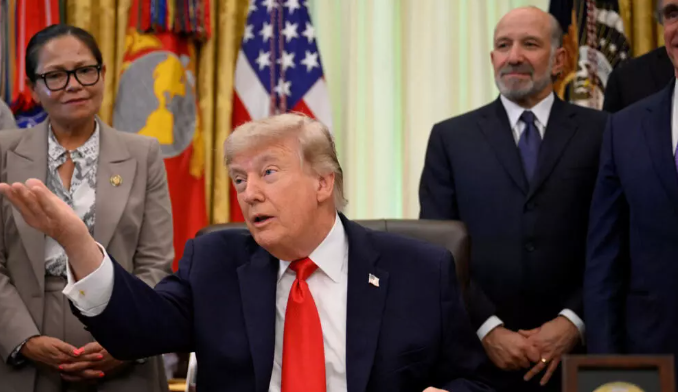
Speaking to reporters in the Oval Office, Trump appeared to play down expectations surrounding the proposed meeting.
"The meeting in Doha may be important, or it may not. We'll see," he said.
Trump nevertheless reiterated that the United States remained in a strong military position and repeated his administration's demand that Iran must be prevented from developing nuclear weapons.
The divergent accounts from Washington and Tehran have fuelled doubts over the durability of the ceasefire, with both sides continuing to accuse each other of violating previously agreed commitments.
The latest tensions come despite both countries agreeing to a minimum 60-day timeframe to implement a 14-point memorandum of understanding aimed at extending the April ceasefire, advancing discussions on Iran's nuclear programme and negotiating a permanent cessation of hostilities.
Progress has remained slow as mutual accusations of non-compliance continue to hinder diplomatic momentum.
The broader regional fallout has also complicated efforts to stabilise the Middle East.
US-Iran tensions have affected attempts to secure a lasting ceasefire in Lebanon after Lebanese Parliament Speaker Nabih Berri questioned a separate US-supervised agreement between Lebanon and Israel.
Meanwhile, Iran has continued to signal its willingness to leverage its strategic position along the Strait of Hormuz, one of the world's most important energy shipping routes near Oman.
Tehran has announced plans to impose transit charges on vessels passing through the waterway and warned that ships failing to follow designated routes could face restrictions.
In a separate development, Iranian President Masoud Pezeshkian said US$6 billion (RM24.4 billion) of the US$12 billion (RM49 billion) in Iranian assets frozen in Qatar would be released and returned to Tehran, according to Iranian state media.
Pezeshkian described the memorandum, which also includes US sanctions relief for Iran's oil and petrochemical sectors, as "a great victory for the Iranian people." - June 30, 2026