THE conflict between the United States and Iran intensified sharply on Friday as both sides broadened their military targets to include critical infrastructure, raising fears of a wider regional war and renewed disruption to global energy supplies.
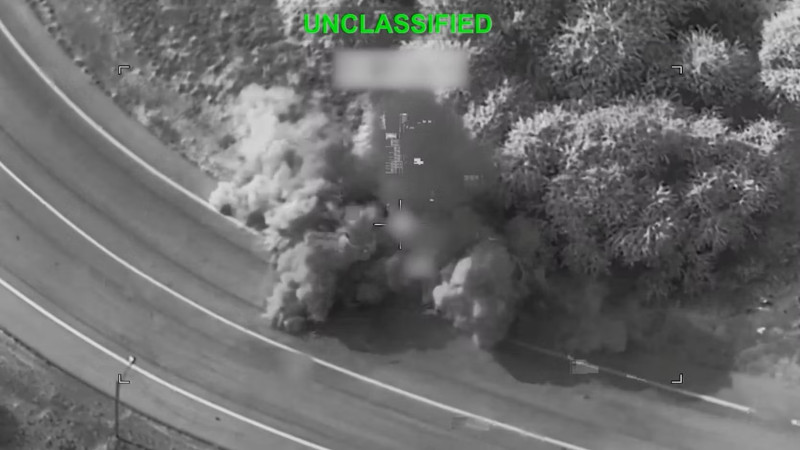
The U.S. military said it carried out strikes against military logistics infrastructure in Iran for a seventh consecutive night, including attacks on bridges in the country's south, marking the first time Washington has publicly identified infrastructure as part of its target set.
Iran responded by launching attacks against U.S. interests and regional allies, claiming responsibility for strikes on a power generation and water desalination plant in Kuwait, as well as attacks targeting Bahrain, Qatar and a U.S. naval vessel in the northern Indian Ocean.
Reuters reported on Saturday that the latest escalation has further destabilised maritime security in one of the world's most strategically important shipping corridors.
Iranian media reported that two oil tankers exploded and caught fire after passing through a mined route south of the Strait of Hormuz, while U.S. Marines boarded another tanker near the waterway. Separately, armed men seized a commercial vessel off Yemen, heightening concerns over security at the entrance to the Red Sea.
Iran's Revolutionary Guards warned that as long as what it described as U.S. "aggression" continued, exports of oil, gas and even chemical fertilisers from the region would be impossible.
Benchmark Brent crude rose about three per cent following reports of the latest escalation, putting prices on course for a third consecutive weekly gain amid mounting concerns over supply disruptions.
The renewed fighting follows the collapse of a ceasefire agreement last week, reigniting fears that the confrontation could spiral into a broader regional conflict.
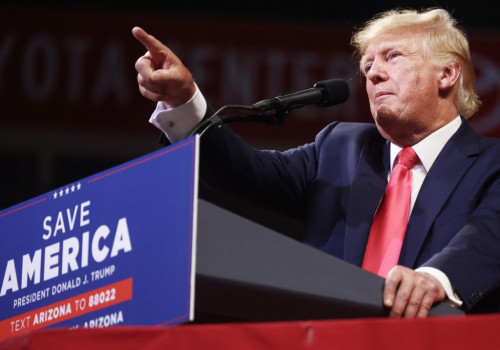
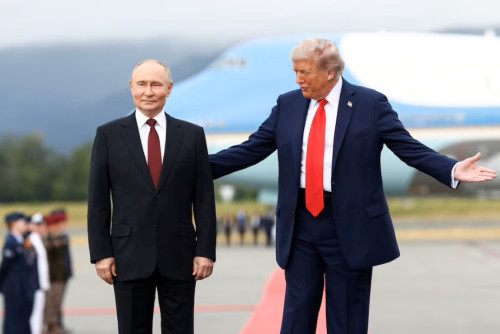
U.S. President Donald Trump has warned of wider air strikes against Iranian infrastructure and has not ruled out military operations against Iran's coastline or islands. U.S. officials have said operations in southern Iran are intended to provide the President with additional military options.
Iran has responded with increasingly robust warnings.
"If U.S. strikes continue for several more days, we will move into a phase of full-scale offensive operations," senior adviser to Iran's Supreme Leader Mohsen Rezaei said in remarks carried by state television.
The United Nations expressed growing alarm over the expanding conflict.
A spokesperson for Secretary-General António Guterres said he was particularly concerned by the escalation and "attacks on civilian infrastructure in Iran and across the region."
According to U.S. Central Command, the latest wave of strikes began at approximately 1900 GMT and was aimed at further degrading Iran's military capabilities.
Iranian media subsequently reported explosions in Sirik, Ahvaz and Yazd, while authorities said at least five bridges had been targeted in southern Iran.
Iranian reports said seven people were killed in attacks on bridges in Bandar Khamir, where the railway station was also damaged. An airport in Iranshahr, near the Pakistani border, was also reported to have been struck.
Meanwhile, Iran's Revolutionary Guards claimed to have attacked a U.S. drone depot in Bahrain and destroyed the country's principal artificial intelligence centre using ballistic missiles and drones, while the Iranian navy said it launched a shore-to-sea cruise missile towards what it described as a hostile U.S. vessel in the northern Indian Ocean.
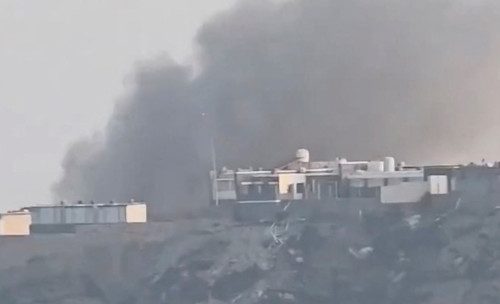
Kuwaiti authorities confirmed that one of the country's electricity generation and desalination facilities had been struck, causing damage, a fire and disruption to multiple power generation units.
The Gulf's desalination plants are critical infrastructure, supplying fresh water and electricity to much of the region's population.
The latest exchange of attacks underscores the rapid deterioration of security across the Gulf since the ceasefire collapsed on July 7, when Iran resumed attacks on shipping in the Strait of Hormuz and the United States responded with renewed air strikes. Iran has since declared the strait closed, while Washington has tightened its blockade of Iranian ports. - July 18, 2026