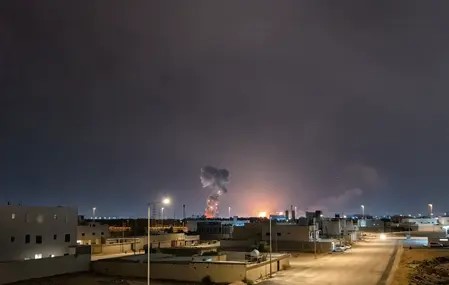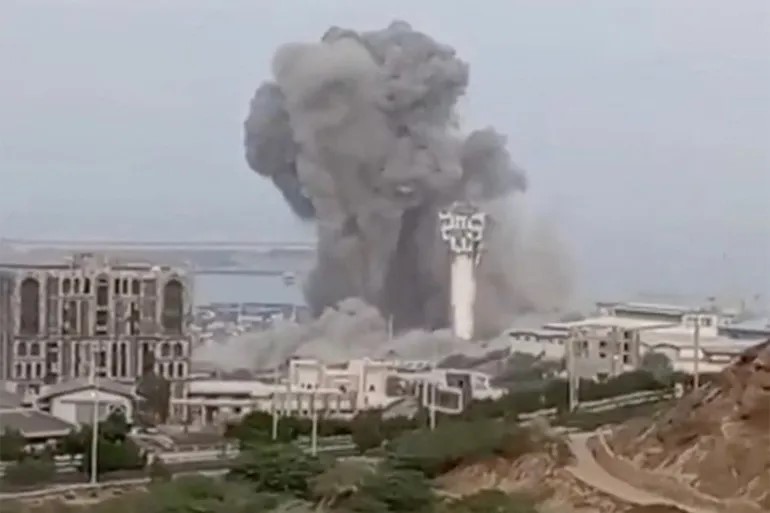
THE United States has expanded its military strikes against Iran, hitting targets further north and near the capital Tehran for the first time in the latest escalation of hostilities, while Tehran warned it would retaliate against infrastructure across the Gulf region if attacked.
US Central Command (CENTCOM) said early Thursday that American forces had struck multiple Iranian military sites and assets in an effort to "further degrade Iran’s ability to threaten innocent mariners" in the Strait of Hormuz.
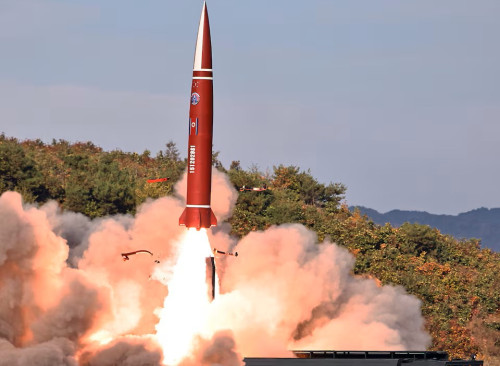
The US military said the strikes targeted Iranian command centres, air defence systems, missile and drone capabilities, as well as coastal surveillance facilities.
CENTCOM also said it had disabled an oil tanker in the strategic waterway after it allegedly failed to comply with a naval blockade reimposed by Washington.
The latest wave of attacks began last Wednesday after CENTCOM launched strikes on Iranian port areas near the Strait of Hormuz, which the United States said were in response to Iran’s attacks on three commercial vessels in the passage.
At least 35 people have been killed and more than 300 wounded since the latest escalation began, according to reports.
Iran’s Islamic Revolutionary Guard Corps (IRGC) said it had retaliated by targeting US military assets in neighbouring Gulf countries, including Kuwait and Bahrain.
Foreign news agencies cited Iranian authorities warning that the Strait of Hormuz remained a non-negotiable "red line", threatening a broader response if Washington attacked critical infrastructure.
"The Americans thought that by attacking some of our bases on the southern coasts of the country, they could take control of this strategic strait," Iranian army spokesman Brigadier General Mohammad Akraminia said.
"However, the Islamic Republic of Iran has the ability to exert control over the Strait of Hormuz from every single point of its territory, and this matter is never dependent on coasts and islands," he added.
The Strait of Hormuz, one of the world’s most important energy chokepoints, previously carried about one-fifth of global oil and gas shipments before the conflict disrupted maritime traffic.
CENTCOM said its latest operations targeted several locations, including Bandar Abbas, a major Iranian port city near the Strait of Hormuz.
An earlier wave of strikes late Wednesday hit coastal defence and cruise missile facilities on Greater Tunb Island, a strategically located island near the waterway believed to host Iranian military installations.
Iranian media reported strikes in several areas, including Bandar Abbas, Qeshm Island, Sirik, Chabahar, Konarak, Rask, Khondab, Khorramabad and Semnan.
A hospital in Ahvaz was reportedly forced to evacuate 211 patients after being hit during the strikes.
Iranian air defences were activated in Tehran and nearby areas, including Pakdasht and Parchin, while the Iranian military claimed an MQ-9 drone had been shot down over Andimeshk.
Iran launches retaliatory attacks
Iran’s military said it had targeted US military facilities in Kuwait and Bahrain, while warning neighbouring countries against allowing their territories to be used for American operations.
In Kuwait, Iran claimed it had struck radar systems, Patriot air defence systems and fuel facilities linked to US forces at Ali Al Salem Air Base.
Iran also claimed attacks against US military communications facilities and fuel depots at Jordan’s Al Azraq Air Base.
In Bahrain, Iranian forces said drones targeted US radar and Patriot defence systems at Sheikh Isa Air Base.
Jordan said it had intercepted eight Iranian missiles, while Iraqi authorities reported drone attacks near Erbil, including areas close to a US military base and the US consulate.
Iran has not claimed responsibility for the reported drone attacks in Iraq.
Iran’s parliament speaker and chief negotiator Mohammad Baqer Qalibaf said the country was prepared for a broader confrontation if Washington failed to honour the terms of an interim agreement.
"We are in an essential and existential war with America," he said.
The IRGC also warned that energy exports from the Middle East could be disrupted following the US naval blockade of Iranian ports.
"The export of oil and gas from the region will be either for everyone or for no one," the group said.
Iran’s military said any attack on Iranian infrastructure would trigger a wider and more destructive response across the region.
The warning came after US President Donald Trump threatened to target Iranian power plants and bridges if Tehran did not return to negotiations.
"If Trump carries out this threat, Iran’s armed forces will target all remaining infrastructure across the region," Akraminia said.
Speaking at the US Army War College in Pennsylvania, Trump said Iran was seeking a diplomatic settlement behind the scenes but warned that Washington would decide whether negotiations could succeed.
"They don’t like what we’re doing, and they do want to settle. We’ll find out whether or not we settle with them, or we just finish it off," he said.
Trump also thanked Iran for releasing American citizen Dena Karari, whom Washington said had been wrongfully detained since 2024.
US Vice-President JD Vance, in an interview released Wednesday, defended the military campaign but said an agreement between Washington and Tehran would ultimately be needed to end the conflict.
The latest escalation has raised fears of a return to a wider Middle East war, with analysts warning Iran could activate allied groups, including Yemen’s Houthis, to threaten the Bab el-Mandeb shipping route in the Red Sea.
The conflict has already killed thousands and displaced millions, particularly in Iran and Lebanon, where fighting has resumed between Israel and Iran-backed Hezbollah. - July 16, 2026