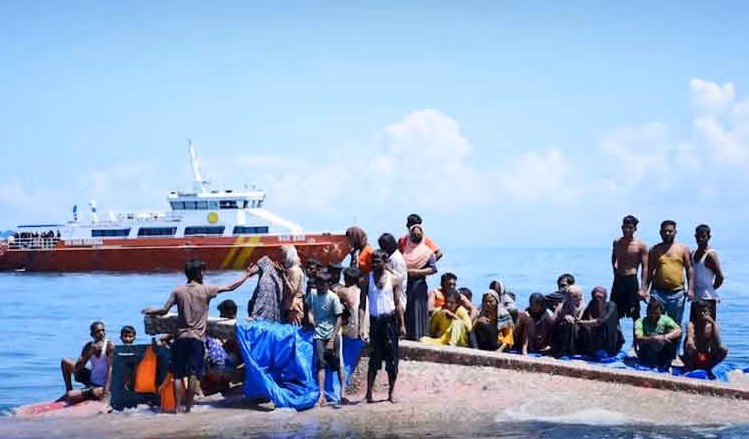
MORE than 500 people are feared dead after two boats carrying mostly Rohingya refugees reportedly capsized off the coast of Myanmar, in what could become one of the deadliest maritime disasters involving the persecuted minority group in recent years.
The United Nations High Commissioner for Refugees (UNHCR) and the International Organization for Migration (IOM) said they were gravely concerned over reports that two vessels carrying more than 500 people may have sunk after departing Myanmar’s western Rakhine State in late June.
While the incidents and casualty figures have not been officially confirmed, the UN agencies warned that the suspected tragedies highlighted the worsening humanitarian crisis facing Rohingya communities displaced by conflict, persecution and deteriorating conditions.
"While the incidents and casualty figures have yet to be officially confirmed, UNHCR and IOM are gravely concerned by the potentially devastating loss of life," the agencies said in a joint statement issued on Thursday.
According to preliminary information, both boats were carrying mostly Rohingya refugees, with some passengers believed to have travelled from the overcrowded refugee camps in Cox’s Bazar, Bangladesh, before embarking on the dangerous sea crossing.
The first vessel, believed to have been carrying about 250 people, lost contact shortly after leaving Myanmar. A second boat, reportedly carrying around 280 passengers, is believed to have sunk off Myanmar’s Ayeyarwady coast on July 8.
Search operations and investigations are ongoing as authorities attempt to determine the fate of those on board.
For years, members of Myanmar’s Rohingya Muslim minority have risked their lives on overcrowded and poorly equipped boats in search of safety, protection and better living conditions.
Many are fleeing ongoing violence in Myanmar, while others are attempting to escape difficult conditions in Bangladesh’s refugee settlements, where more than one million Rohingya refugees remain dependent on humanitarian assistance.
Their intended destinations often include Malaysia, Indonesia and Thailand, with many journeys facilitated by smuggling and human trafficking networks that exploit vulnerable refugees desperate to escape hardship.
The latest crossings reportedly took place outside the regular sailing season, when maritime conditions are more dangerous. The UN agencies said recent heavy rains and widespread flooding across the region had further increased the risks faced by those attempting sea crossings.
The suspected sinkings come amid a rising death toll in the Andaman Sea and Bay of Bengal. UNHCR and IOM said nearly 300 people, including Rohingya refugees and Bangladeshi nationals, have already been reported missing or dead in the region this year.
If confirmed, the latest disaster would rank among the deadliest Rohingya refugee maritime tragedies in recent years.
UNHCR previously recorded nearly 900 Rohingya refugees missing or dead in the northern Indian Ocean in 2025, out of more than 6,500 people who attempted similar sea journeys.
The UN agencies said the continuing tragedies reflected the impact of prolonged conflict, displacement and the lack of a sustainable solution for Rohingya communities.
They warned that escalating fighting in Myanmar, particularly in Rakhine State, combined with worsening humanitarian conditions and reduced aid access, was pushing more refugees to attempt dangerous journeys.
Aid cuts by international donors, including reductions in support for refugee programmes in Bangladesh, have also worsened conditions in camps where food assistance and essential services remain under pressure.
Around 1.2 million stateless Rohingya refugees remain in Bangladesh after fleeing a brutal military crackdown in Myanmar in 2017. Many have been unable to return due to ongoing insecurity, restrictions on their rights and continued conflict in their homeland.
Those remaining in Myanmar continue to face severe challenges, while renewed fighting between the military and ethnic armed groups in Rakhine State has further destabilised the region.
Thousands of Rohingya have attempted sea crossings in recent years, with women, children and infants among those who have died during perilous journeys aboard overcrowded vessels.
The UNHCR and IOM called for stronger search and rescue operations, improved access to asylum and international protection, and tougher action against smuggling and human trafficking networks.
The agencies also praised Bangladesh for continuing to host a large Rohingya refugee population but stressed that the responsibility could not be carried by one country alone.
They urged the international community to provide sustained humanitarian support while addressing the root causes of forced displacement to prevent further loss of life at sea. - July 16, 2026




.jpeg)