VICTIMS of transnational online scams across East Asia, South-east Asia, Australia and New Zealand suffered estimated losses of up to US$114.1 billion (S$147.2 billion) in 2025, highlighting the rapid expansion of a global cybercrime economy driven by organised criminal networks.
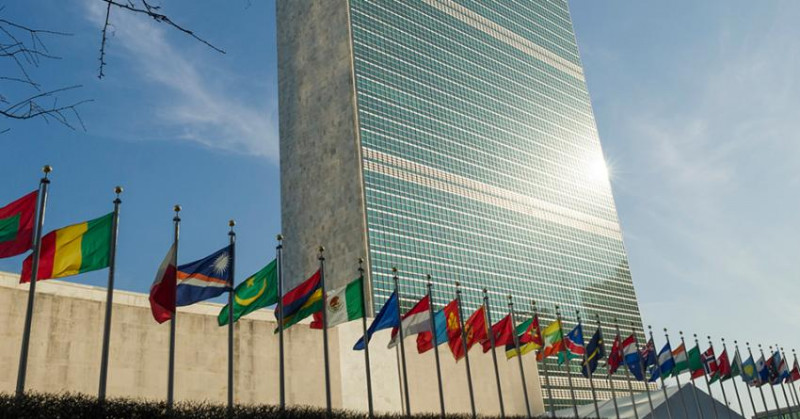
A new report by the United Nations Office on Drugs and Crime (UNODC) estimated that online scams, particularly investment fraud schemes, caused losses ranging between US$88.3 billion and US$114.1 billion across the regions last year.
The figure represents a sharp increase from the estimated US$18 billion to US$38 billion lost in 2023, reflecting what the UN described as "the dramatic scaling of this criminal economy".
South-east Asia, particularly Cambodia and Myanmar, has emerged as a major hub for criminal syndicates operating fake romance schemes and cryptocurrency investment scams, with fraud operations often conducted from heavily secured compounds.
Some individuals involved in these operations are believed to have participated voluntarily, while others were trafficked and forced to carry out scams targeting internet users worldwide.
The UN report said the industry has expanded significantly in recent years, with criminal groups initially focusing largely on Chinese-speaking victims before broadening their operations to target people globally.
Authorities in the region have come under increasing pressure from countries including the United States, Britain and China to dismantle these illicit networks.
Several alleged scam network leaders were extradited from Cambodia to China over the past year, following sanctions imposed by Washington and London against companies and individuals accused of operating large-scale cyber scam networks linked to human trafficking.
Foreign news agencies cited the report stating China, South Korea and Taiwan recorded some of the largest scam-related financial losses in the region over the past two years, with each country losing billions of dollars.
The UNODC warned that South-east Asia’s wider criminal ecosystem, which includes illicit drug trafficking, online scams, human trafficking, illegal financial activities and property-related crimes, has undergone significant transformation over the past decade.
Organised crime groups are increasingly moving away from isolated operations towards a more connected and technologically advanced model spanning multiple countries and criminal activities.
"Organised criminals are moving away from a fragmented system of locally rooted criminal syndicates towards an increasingly integrated, transnational and technologically sophisticated criminal economy," the UNODC said.
UNODC regional representative Delphine Schantz said criminal networks were adopting a business-like structure by combining specialised services across different illegal activities.
"What we are seeing is a shift in which groups that stayed within their own geographic domain and criminal speciality are now operating across multiple illicit markets at once, relying on the same service streams," she said.
"Their operating model looks like corporate franchising: imagine specialised departments for laundering money, trafficking people, smuggling migrants and harvesting data, all plugged into the same service-based, interconnected network."
The UNODC warned that the evolution of these criminal networks poses challenges for law enforcement agencies while threatening regional governance, economic stability and social security. - July 21, 2026