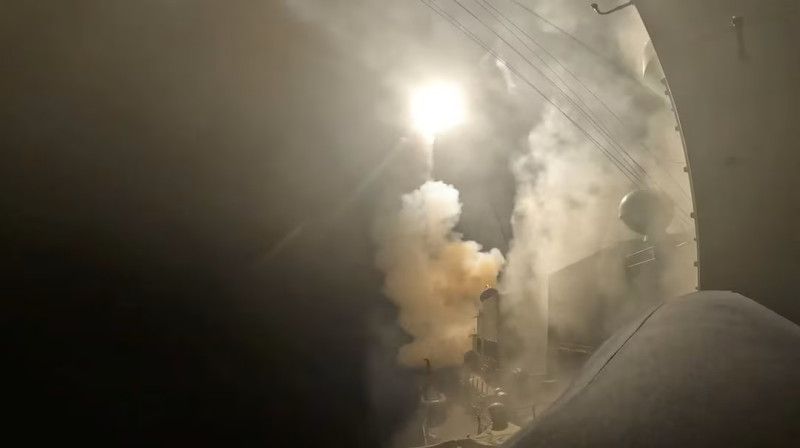
THE United States and Iran have reignited hostilities with their biggest exchange of attacks since July, as Washington struck Iranian military and maritime targets while Tehran launched missiles and drones at US facilities across the Middle East.
The escalation has raised fresh concerns over the security of the Strait of Hormuz, a critical global energy route, after Iran said two tankers were struck by mines while being guided through the strait by US personnel.
Reuters reported on Thursday that the US military said its latest strikes targeted Iranian air defences, radar systems, maritime assets, mine-laying capabilities and communications sites along Iran’s southern coast.
Iran, meanwhile, said it had attacked US assets in Bahrain, Jordan, Kuwait and Iraq, declaring that its objective was to drive American forces out of the region.
"American evil in the region will be met with heavier, more widespread, and devastating responses, and any country that cooperates with the aggressive American army must accept its dangerous consequences," Iran's military command said.
US officials said initial assessments showed no American casualties despite Iran’s claims that it had killed US forces in Jordan and at a base in northern Iraq.
In Kuwait, Iran said it had targeted the US Ali Al Salem air base and a residential complex used by a US commander with missiles and drones. Kuwait’s fire service said it extinguished a blaze at a residential complex struck by a drone.
Bahrain said Iranian drones targeting the country were intercepted and destroyed, while Qatar said it held Iran responsible for attacks and their consequences.
The latest escalation came after both sides had largely withheld fire for weeks, raising fears that the conflict could once again intensify across the region.
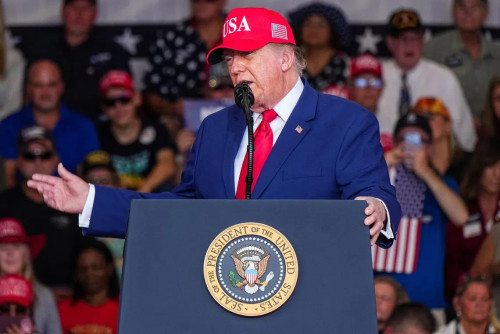
US President Donald Trump said Washington had hit Iran "very hard" and described Tehran’s response as a "love tap".
"It was a very heavy attack last night, and we're prepared to do another one any time we want," Trump told reporters at the White House.
Iran also accused the United States of striking a wedding gathering in Sirik, on Iran’s southern coast, saying four people, including a four-year-old child, were killed and dozens wounded.
Iranian Health Minister later said 18 people had been killed and 108 injured in the latest wave of US strikes.
Reuters was unable to independently verify the reported wedding strike or the casualty figures.
U.S. Navy Captain Tim Hawkins, a spokesperson for Central Command, said: "We are aware of reports, which originated from Iranian state media. The U.S. military never targets civilians, unlike the IRGC," referring to Iran's Revolutionary Guards.
The renewed fighting is also threatening an already fragile global energy market.
The Strait of Hormuz handled around 20 per cent of global oil and liquefied natural gas shipments before the war, while US Energy Secretary Chris Wright said more than 17 million barrels of oil exited the strait on Monday.
Iran has also blacklisted 11 more ships, bringing the total to 56 vessels that Tehran says could face fines, confiscation or detention if they attempt to pass through the strait without its permission.
Trump, however, repeated his assertion that the waterway remains open to shipping.
The latest confrontation marks the most serious exchange since July, when Trump halted two weeks of intense US bombing after American military officials warned that munitions were being depleted and meaningful targets were becoming harder to find.
The conflict has continued since Washington launched its latest campaign against Iran in February under "Operation Epic Fury", with Trump saying its objectives included ending Iran’s nuclear programme, weakening its ability to attack neighbouring countries and creating conditions for political change in Tehran.
While US officials say American strikes have significantly degraded Iran’s conventional military capabilities and further weakened its economy, the latest exchange highlights the difficulty of containing a conflict that has already disrupted regional security and energy flows.
"It’s very difficult to live like this. We don’t know when America will strike,” Mahpari, 28, a woman in the southern port city of Bandar Abbas, told Reuters by phone. - September 3, 2026