THE United States military carried out a 13th night of strikes against Iran on Thursday as fighting intensified over control of key shipping routes, with global energy markets rattled after Yemen’s Iran-backed Houthi rebels claimed attacks on two Saudi oil tankers in the Red Sea.
The latest developments raised fears that the conflict could expand further, disrupting two of the world’s most important maritime chokepoints — the Strait of Hormuz and the Bab el-Mandeb Strait — while sending international oil prices above US$100 a barrel.
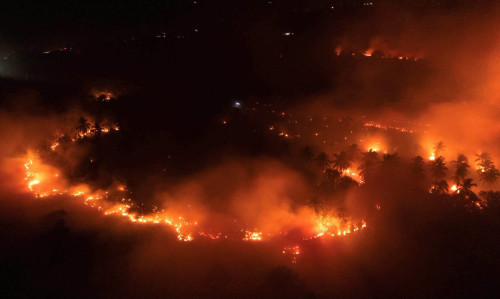
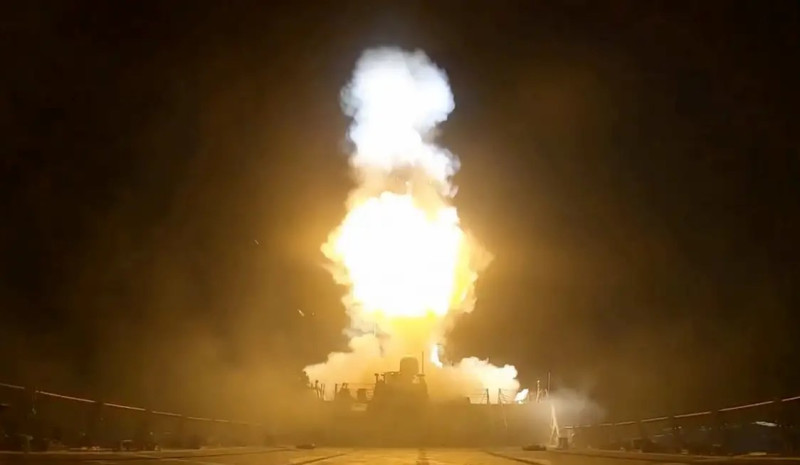
Global news agencies reported on Friday US Central Command saying the latest strikes concluded shortly before 5am local time and were aimed at "further degrade Iran’s ability to threaten civilian mariners and commercial vessels transiting regional waters" as Washington seeks to restore the flow of international shipping through the Strait of Hormuz.
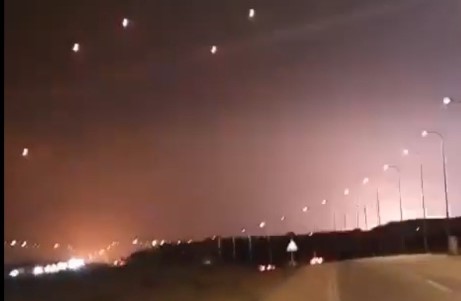
Shortly after the strikes, Iranian state media reported explosions near the Strait of Hormuz in Qeshm and Bandar Abbas, where two people were reportedly injured, as well as in areas northwest of the country including Andimeshk, Omidiyeh and Firuzabad.
The escalating confrontation has already disrupted global energy markets, with Brent crude, the international benchmark, rising more than 6% on Thursday to around US$100 a barrel — the highest level since May before a temporary peace agreement between the two sides collapsed.
The Houthi movement threatened to further target another major trade route after Iran’s closure of the Strait of Hormuz sent shockwaves through global markets. The strategic waterway, through which around one-fifth of the world’s oil and gas shipments passed during peacetime, has become a focal point of the conflict as Iran and the US compete for control.
US President Donald Trump warned the Houthis against further attacks on commercial shipping and threatened severe consequences against both the group and Iran.
"If they do this again, the U.S. will hold Iran responsible, in that the Houthis are a Surrogate and/or Proxy of Iran, and major military punishment will be inflicted upon Iran and, of course, the Houthis, themselves," Trump wrote on social media.
The Houthi attacks marked the first reported strike on a vessel since the group announced a blockade of Saudi-linked shipping through the Bab el-Mandeb Strait earlier this week, citing retaliation against Riyadh over its blockade of Yemen and an attack on the international airport in the rebel-held capital, Sanaa.
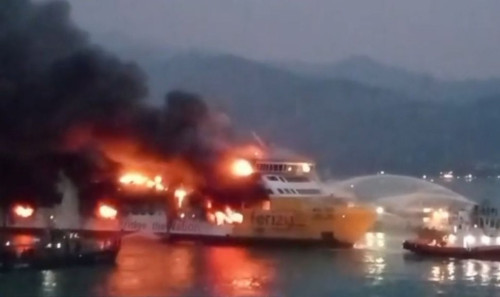
The group’s SABA news agency said the rebels struck two Saudi-linked tankers, the Encelia and Layla, causing fires on both vessels. No casualties were reported.
Saudi Arabia’s state-run Saudi Press Agency confirmed that the Encelia was attacked and caught fire overnight in the Red Sea, while the Layla was not mentioned.
The United Kingdom Maritime Trade Operations Centre said it received a report of a tanker being hit by an "unknown projectile" about 130 kilometres southwest of Al Shuqaiq, Saudi Arabia.
Maritime analysts warned that the attacks could create a "double whammy" for oil markets by threatening Saudi Arabia’s alternative export route through the Red Sea while the Strait of Hormuz remains disrupted.
Saudi Arabia has redirected millions of barrels of oil exports daily through its Yanbu port on the Red Sea via an overland pipeline after conflict restricted shipments through the Persian Gulf.
Maritime intelligence firm Lloyd’s List Intelligence warned that the latest Houthi threats raised questions over the viability of the route.
The Bab el-Mandeb Strait, located at the southern end of the Arabian Peninsula, is one of the world’s most important shipping corridors, linking the Red Sea with the Gulf of Aden. Around 12% of global trade, including roughly a quarter of container traffic, passes through the route connecting Europe and Asia via Egypt’s Suez Canal.
Diplomatic efforts intensify
Amid the escalating conflict, Iraqi Prime Minister Ali al-Zaidi travelled to Tehran on Thursday to call for peace and dialogue, while pledging that Iraqi territory would not be used for attacks against Iran.
United Nations Secretary-General Antonio Guterres warned that the region was being dragged into "an ever-widening circle of confrontation" as one crisis triggered another.
"Diplomacy is the only way forward," Guterres told the UN Security Council, urging stronger mediation efforts by Pakistan to help end the conflict.
Meanwhile, both Washington and Tehran continued to harden their positions over the Strait of Hormuz.
Iran has claimed the right to regulate maritime traffic and potentially impose fees on vessels using the waterway, which previously operated as an open international passage without tolls.
Trump said any damage caused to ships, cargo or related assets during the conflict would be paid for using sanctioned Iranian funds held by the United States.
"Please let this statement serve to represent, until further notice, that from this point forth, any and all damages done to Ships, Cargo, or anything related thereto, will be paid for by Iranian Money that the United States has in its possession, and controls," Trump said.
It remained unclear what legal authority would allow Washington to use the funds.
The US has expanded its military campaign across Iran and reinstated a naval blockade of Iranian ports. Central Command said it had redirected around a dozen commercial vessels and disabled one vessel since the blockade resumed.
The war of words has also intensified, with Iranian Foreign Minister Abbas Araghchi warning Tehran would adopt an "eye for an eye" response to US attacks on its infrastructure.
US Secretary of State Marco Rubio responded that Trump’s policy was "a head for an eye".
"The price will continue to get higher every single night until they come to their senses," Rubio told reporters while attending a regional summit in the Philippines.
Iran’s Health Ministry said 55 people had been killed and 629 wounded since renewed US airstrikes began on June 27.
Iran has retaliated by targeting energy infrastructure and desalination facilities supplying drinking water to neighbouring Gulf countries.
Meanwhile, opposition to the conflict has grown in the United States, with a resolution calling for an end to the war narrowly passing the US House of Representatives on Thursday, although the vote remains largely symbolic. - July 24, 2026