By Murray Hunter
SINGAPORE has unveiled the world’s first independently operated data centre that harnesses living human brain cells for computing tasks.
Developed by the National University of Singapore’s medical school (NUS Medicine) in partnership with local data centre operator DayOne and Australian biotech firm Cortical Labs, the prototype marks a significant step in biological computing.
Housed at the university, the facility features 20 CL1 biological computers.
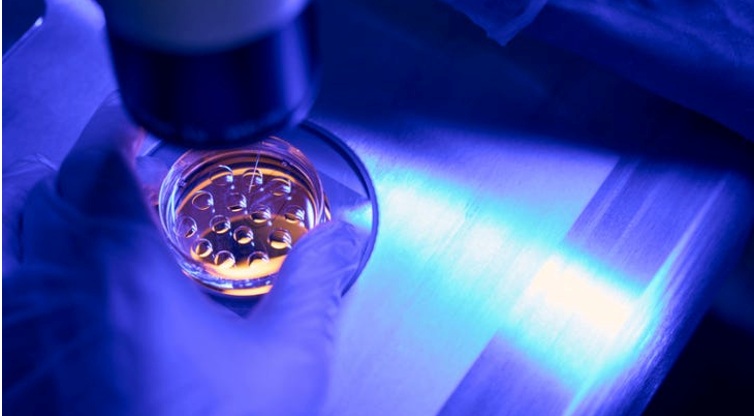
Each unit contains at least 200,000 lab-grown human neurons cultured on electrode-equipped silicon chips.
These neurons originate from blood cells reprogrammed into stem cells and communicate via electrical signals with conventional hardware, converting their natural activity into usable computing power.
Unlike energy-intensive traditional data centres packed with power-hungry servers and cooling systems, this biological system operates far more efficiently.
Each CL1 unit, including its life-support equipment, draws only around 30 watts.
By comparison, a single high-end AI processor like Nvidia’s H100 can consume up to 700 watts under load, while multi-chip servers can reach over 10,000 watts.
Technicians maintain the cells by feeding them a nutrient mixture every three days and supplying controlled gases of carbon dioxide, oxygen, and nitrogen through dedicated systems.
Cortical Labs founder Hon Weng Chong described the project as moving biological computing “from research to commercial application.”
Potential uses include drug discovery, robotics, cybersecurity, and fraud detection, particularly in scenarios with sparse data or changing conditions.
The technology is not meant to replace silicon-based systems, which remain superior for rapid, repetitive calculations such as those powering large language models. Instead, it complements them by learning from fewer examples and adapting more flexibly.
This innovation arrives at a critical time for Singapore, which previously paused new data centre construction due to concerns over electricity and water use.
Data centres already accounted for a notable share of the nation’s power consumption.
Looking ahead, the lower power demand of these biological systems offers a promising path toward more sustainable computing infrastructure.
Eventually, integrating human neurons more deeply into the thinking process could enable hybrid machines that combine the efficiency of living neural networks with the speed of silicon, opening new frontiers in adaptive artificial intelligence. – August 25, 2026




.jpg)