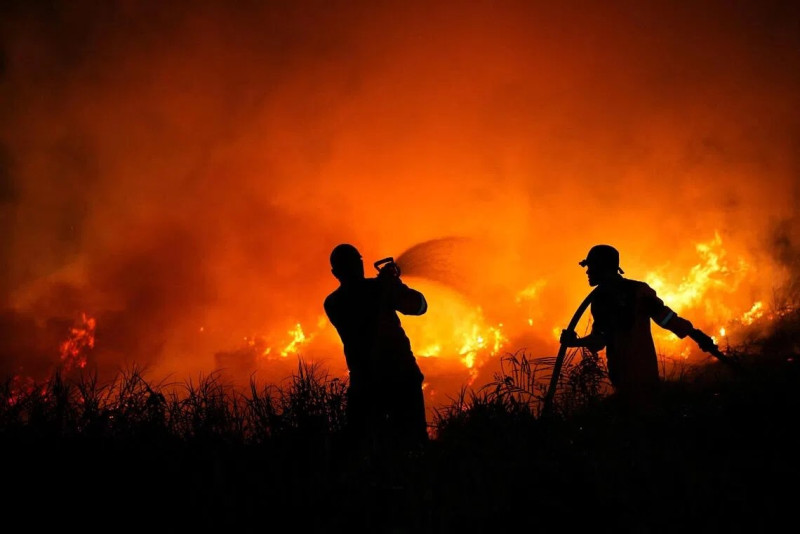
INDONESIA is battling its most intense wildfires in 11 years, with more than 12.5 million people exposed to hazardous haze and wildfire-related respiratory illnesses more than doubling in nine days, as neighbouring Malaysia and Singapore also experience worsening air quality.
In Pontianak on Borneo island, thickening haze has forced residents to limit outdoor activities as fires rage across West Kalimantan, one of the worst-hit provinces.
Reuters, on Wednesday, cited Indonesian housewife Mimi Marlina, 45, riding a motorbike through the haze to buy groceries and supplies, despite struggling to breathe and caring for two children suffering from respiratory problems including coughing, sore throats and fever.
“We can still hold it off with medicines, but I'm concerned that if this persists, it will lead to worse illnesses,” said the mother of two, who was wearing a mask.
The fires have been intensified by “super El Niño” weather conditions, which have driven up temperatures and brought punishing droughts, making vegetation more vulnerable to burning.
Despite wearing a mask, Mimi said she was labouring for breath as haze and pollution levels rose across the city, at times reaching hazardous levels.
Volunteers in West Kalimantan have begun going door-to-door to distribute oxygen cylinders to residents and firefighters struggling to breathe under a campaign known as “Rumah Oksigen”, or Oxygen House.
“Visits for respiratory illness cases are on the rise due to the fires,” said Popong Solihat, head of a public health clinic in Pontianak.
More than 12.5 million people have been exposed to haze from fires across seven provinces on the Indonesian islands of Borneo and Sumatra, according to health ministry data.
The number of people suffering wildfire-related respiratory illnesses in those provinces rose to 113,336 by Sept 9, more than double the 50,891 recorded on Sept 1.
At Solihat's clinic, 187 cases of breathing difficulties were treated in the first 11 days of September, compared with 422 cases during the whole of August.
“And the daily visits now could range between 80 and 120,” he said.
The worsening haze has also affected neighbouring Singapore and Malaysia, where transboundary smoke from Indonesia has contributed to deteriorating air quality.
The smog, commonly known as haze in Southeast Asia, contains smoke from land-clearing fires, soot and fine suspended particles.
Among those receiving oxygen cylinders was Suriana, 54, in Kubu Raya district, who said her health had deteriorated as the air quality worsened.
“I often feel short of breath when exposed to the smoke,” said Suriana, who goes by one name, as is common in Indonesia. “It seems to be getting worse now, particularly in the mornings and evenings, when the haze is at its strongest.”
Indonesia's fire emissions reached 19.7 million metric tons in the week to Sept 7, accounting for more than a third of the global total, according to the Fire Emissions Watch portal of the European Union's Copernicus climate monitoring service.
Government data showed fires had affected about 202,000 hectares (500,000 acres) of land from January to July, while environmental group YKAN estimated another 600,000 hectares (1.4 million acres) were damaged by fires in August.
Indonesia has stepped up firefighting operations, deploying more than 50 aircraft to drop water on fires and carry out cloud seeding to encourage rainfall.
Japan also sent three CH-47 Chinook helicopters and 180 crew members last week to support Indonesia's firefighting efforts. - September 16, 2026