RUSSIAN attacks have destroyed more than 13 million books in Ukraine over the past two months, including hundreds of thousands of school textbooks, pushing the country’s publishing industry into its worst crisis yet and threatening the future of Ukrainian literature.
AP reported on Monday Ukraine’s Ministry of Culture saying the destruction, equivalent to about a third of Ukraine’s annual print run, had caused at least US$39.3 million (1.75 billion hryvnias) in damage.
At least 40 publishing houses and multiple bookstores have also been damaged in recent weeks, according to industry figures.
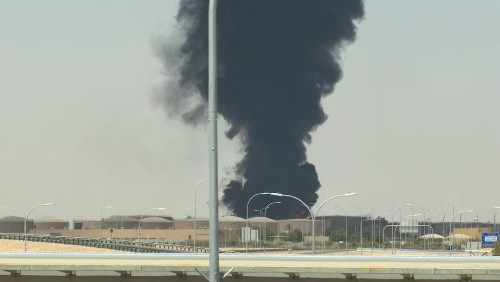
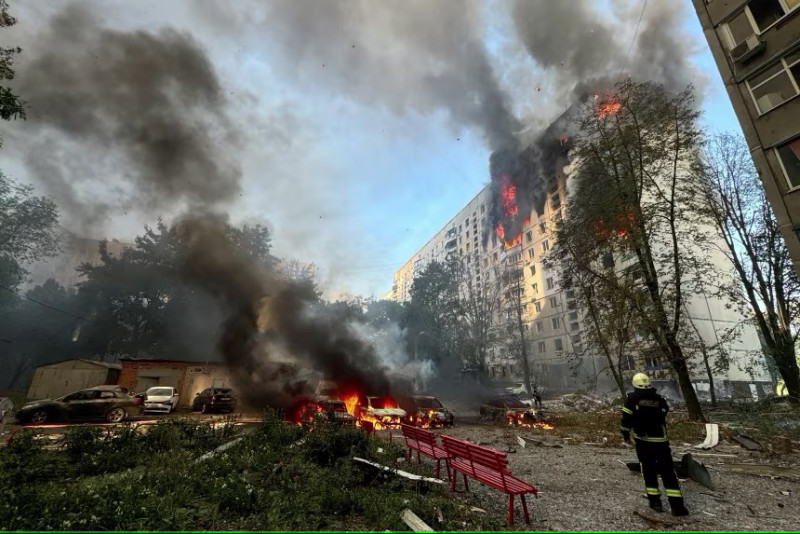
The scale of the losses was highlighted by the Aug 1 attack on the main warehouse of Ranok, one of Ukraine’s major publishers, in northeastern Kharkiv.
Two explosive-laden Shahed drones struck the facility, destroying 8 million books, including 620,000 textbooks supplied to schools across Ukraine.
"Steel was blazing and burning," Ranok owner Viktor Kruglov said, describing the attack, adding that the warehouse’s reinforced concrete melted and its roof collapsed.
The blaze burned for almost a week, reducing millions of books to ash.
"This is a huge blow to the industry, and if we don’t move quickly to put strategic support measures in place … the industry could collapse entirely," Kruglov said, describing the book industry as an "element of Ukraine's national security".
He said the warehouse, which opened in 2013, had been an automated logistics hub capable of processing tens of thousands of books a day.
"There were difficult periods" for Ranok, he said, referring to the 2008 global financial crisis and the COVID-19 pandemic, "but no one could have imagined that almost a year’s turnover for Ranok could be destroyed at once."
The attacks are also threatening the industry's ability to develop new writers, with publishers expected to favour established bestsellers and translated works over debut authors because of the financial risks involved.
Ukraine's Culture Minister Tetiana Berezhna said the attacks were part of a deliberate campaign against Ukrainian culture.
"This is a deliberate policy of Russia because they understand that culture is what makes us feel resilient, what makes us feel the owners of our land, of our destiny," she said.
She said the destruction was part of a broader campaign against Ukrainian cultural heritage, which has also damaged or destroyed thousands of cultural and religious sites.
"They’ve been doing it for centuries," Berezhna said, referring to historical restrictions imposed on the Ukrainian language and publishing during the period when much of modern Ukraine was part of the Russian Empire.
"But still, the Ukrainian language exists. Ukrainian literature exists. We have the books in our libraries, which were kept in secret from the very old ages, and they still exist," she said.
"It shows us the hope that Ukraine will stay strong."
The damage to printing capacity is also delaying textbook production.
Viktoriia Haidai, commercial director of the Konvi print shop, said replacing a printing press destroyed in a July Russian missile strike would cost 1.2 million euros (US$1.37 million) and take four to five years to fully restore capacity.
Textbook printing that previously took three to four months could now take six to seven months, she said, threatening deadlines for the coming academic years.
"It’s not just the large printing houses that are suffering," she said. "Many small printers, who don’t make themselves known publicly, have also been destroyed."
The government is preparing a financial support package that could include state purchases of Ukrainian books for school libraries, grants to help small publishers cover printing costs, rent compensation for bookstores and war-risk insurance for print runs.
However, industry representatives say more assistance is needed, particularly for smaller independent publishers.
Iryna Baturevych, co-founder of Chytomo, a leading Ukrainian publishing industry organisation, said the losses were unprecedented in the country's history of independence.
"The losses the Ukrainian book industry has suffered in recent months are unlike anything it has seen in the country’s entire history of independence," she said.
She warned that the survival of small, independent publishers was at risk, potentially reducing diversity in Ukraine's literary market, particularly in niche and experimental genres.
Children's publishing is also under pressure as millions of Ukrainian children have left the country, forcing publishers to diversify into other genres while some authors leave the profession.
Baturevych said foreign support would be crucial because Ukraine's financial resources were focused primarily on the war effort.
"I’d say there’s a huge need to support Ukrainian book publishing from foreign partners, because without that support, I don’t think Ukrainian publishing will make it," she said.
Kruglov said publishers needed preferential lending and insurance, investment to rebuild warehouses and printing facilities, and measures to stimulate demand for books.
Publishers currently struggle to access such financing because much of their collateral consists of intellectual property rather than property or equipment.
"I hope the state will help, because there can be no independent Ukraine without independent publishing," Kruglov said.
"The Ukrainian book is the one product that cannot be imported." - September 21, 2026