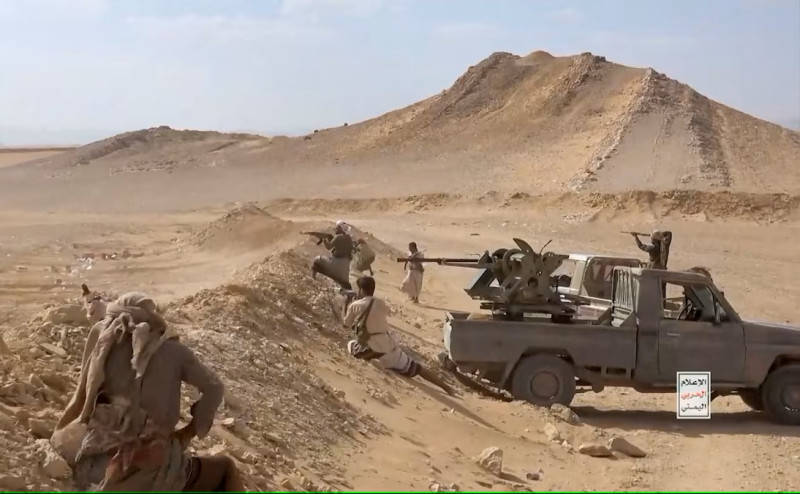
HOUTHI fighters pushed to seize strategic mountain positions in Yemen in an attempt to cut off the Red Sea coast from areas still held by Saudi-backed forces, as fighting intensified and the group claimed a new attack on the Saudi capital.
The Iran-aligned Houthis have made rapid territorial gains this month, extending the wider Middle East conflict into Yemen and threatening a key alternative route for Saudi oil exports.
The New York Times reported that the Trump administration had prepared to launch airstrikes against the Houthis on Sunday following fresh appeals from Saudi Crown Prince Mohammed bin Salman, but that Trump called off the strikes at the last minute as troops were loading bombs onto aircraft.
Reuters could not independently verify the report. The US military’s Central Command referred questions to the White House, which did not immediately respond to a request for comment.
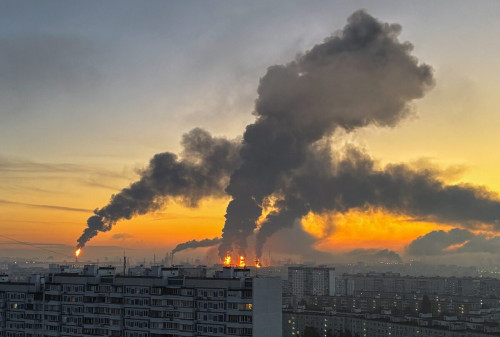
Riyadh was apparently targeted on Saturday for the first time since the escalation began, with explosions heard and smoke seen near the airport. The Houthis said they had fired missiles at the Saudi capital, although Saudi authorities have not commented.
The latest fighting is concentrated around strategic highlands separating the Red Sea coast from government-held territory further south.
Five Yemeni military sources told Reuters that the Houthis were seeking to seize the Kahboub Mountains in Taiz and Lahij provinces.
Fighting has centred on the outskirts of Al-Wazi'iyah district in Taiz province and Ras al-Ara along the Indian Ocean coast, between the Bab el-Mandeb Strait at the entrance to the Red Sea and the Saudi-backed government's base in Aden, the sources said.
“The government forces appear to remain largely in a defensive posture following the loss of the Bab el-Mandeb area, while the Houthis are seeking to maintain the momentum of their advance, despite being exposed to intensive air strikes,” said Mohammed Al-Qadhi, a veteran Yemeni journalist and political analyst.
“These mountains could become critical to determining whether the Houthis succeed in consolidating their recent territorial gains or whether government forces will be able to retain the positions necessary to mount a counteroffensive.”
The Houthis said Saudi Arabia had carried out hundreds of airstrikes against their positions in the highlands in recent days, but the strikes had failed to dislodge their fighters.
The United Nations estimates that nearly 700 people have been killed and thousands injured in the fighting, while nearly 130,000 Yemenis have been displaced within the country and more than 3,000 have fled by boat across the Red Sea to Africa.
Britain has meanwhile agreed to provide Saudi Arabia with defensive air-to-air refuelling support for a limited period, Prime Minister Andy Burnham said, while France said it was ready to help protect Saudi energy infrastructure in Yanbu on the Red Sea coast and the East-West pipeline corridor.
The escalation presents a dilemma for Trump, who faces pressure to support Saudi Arabia while seeking to avoid widening the war he launched alongside Israel against Iran in February.
The Houthi advance threatens Saudi Arabia’s main alternative route for exporting oil without relying on the Strait of Hormuz, forcing Riyadh to increase shipments through the strategically vital waterway.
Saudi oil shipments through Hormuz have risen to about 2.9 million barrels per day in recent days, from around 700,000 barrels per day in August, according to satellite data.
Traders have said Saudi Arabia has sold about 60 million barrels of oil for loading off Oman this month and next, allowing exports to bypass the most exposed section of the Gulf route.
The increased flows have helped limit global crude prices, which have retreated towards US$100 a barrel after approaching US$110 last week. However, refined fuel prices remain elevated, with US retail diesel reaching another record high on Monday.
The latest escalation comes as diplomacy over the wider conflict remains largely stalled following the collapse of a June interim ceasefire between the United States and Iran. Iranian President Masoud Pezeshkian is due to travel to New York on Tuesday for the United Nations General Assembly. -September 22, 2026


.JPG)