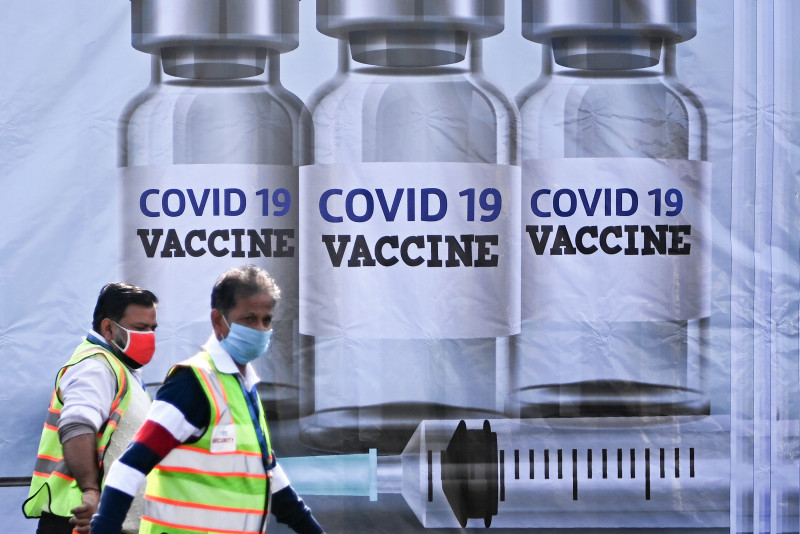
GENEVA – Four of the world’s most prominent health, trade and financial organisations today implored Covid-19 vaccine manufacturers to prioritise doses for developing countries to combat an “acute and alarming shortage”.
A joint statement by the heads of the World Health Organisation (WHO), the World Trade Organisation (WTO), the International Monetary Fund (IMF) and World Bank said countries which have progressed far in vaccinating against the disease should release doses rapidly in favour of less fortunate nations.
“We reiterate the urgency of providing access to Covid-19 vaccines, tests and treatments to people throughout the developing world,” they said.
“In the area of vaccines, a key constraint is the acute and alarming shortage in the supply of doses to low- and low-middle-income countries, especially for the rest of 2021.
“We call on countries with advanced Covid-19 vaccination programmes to release as soon as possible as much of their contracted vaccine doses and options as possible to Covax, AVAT (the African Vaccine Acquisition Trust), and low- and low-middle-income countries."
Covax aims to get donor-funded jabs to developing countries.
The leaders said vaccine delivery contracts for developing nations were being delayed, with less than 5% of purchased vaccine doses having been delivered.
“We urge Covid-19 vaccine manufacturers to redouble their efforts to scale up production of vaccines specifically for these countries, and to ensure that the supply of doses to Covax and low- and low-middle-income countries takes precedence over the promotion of boosters and other activities,” they said.
They called on governments to reduce or eliminate barriers to the export of vaccines and all materials involved in producing them, and said there was an urgent need to tackle supply chain bottlenecks.
The four international agencies have set up a combined task force on Covid-19 vaccines, therapeutics and diagnostics for developing countries in order to identify and resolve impediments to production.
The task force held its first meeting on June 30.
More than four billion doses of Covid-19 vaccines have now been administered globally, according to an AFP count.
In countries categorised as high-income by the World Bank, 98.2 doses per 100 people have been injected.
That figure drops to 1.6 per 100 in the 29 lowest-income countries. – AFP, July 31, 2021