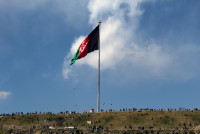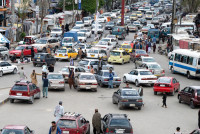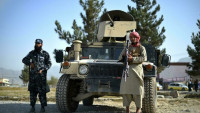
KABUL – In the days since taking power in Afghanistan, a wide range of Taliban figures have entered the capital here – hardened commandos, armed madrassa students and greying leaders back from years of exile.
There has been one major exception: the group’s supreme leader.
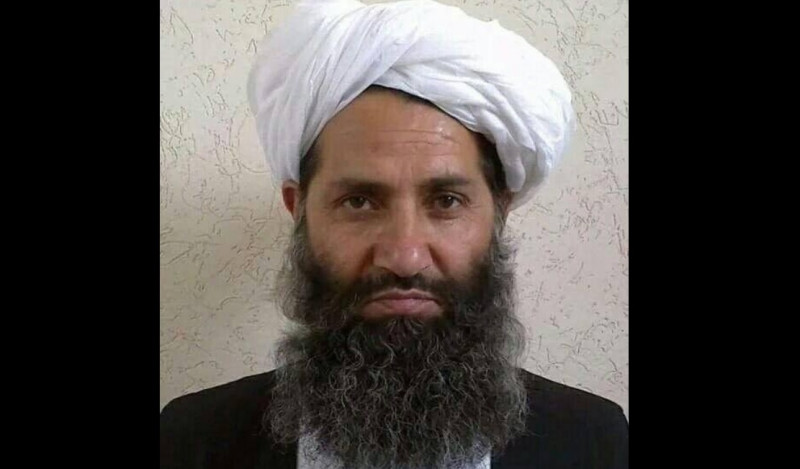
Hibatullah Akhundzada – the so-called “commander of the faithful” – has shepherded the Taliban as its chief since 2016, snatched from relative obscurity to oversee a movement in crisis.
After taking the insurgency’s reins, the cleric was tasked with the mammoth challenge of unifying a jihadist movement that briefly fractured during a bitter power struggle.
The infighting came as the group was hit with successive blows – the assassination of Akhundzada’s predecessor and the revelation that Taliban leaders had hidden the death of founder Mullah Mohammad Omar.
Little is known about Akhundzada’s day-to-day role, with his public profile largely limited to the release of annual messages during Islamic holidays.
Apart from a single photograph released by the Taliban, he has never made a public appearance, and his whereabouts remain largely unknown.
Since taking control of Kabul this month, the group has remained tight-lipped about Akhundzada’s movements.
“You will see him soon, God willing,” Taliban spokesman Zabihullah Mujahid told reporters this week when asked about Akhundzada’s whereabouts.
The ongoing silence comes as the heads of various Taliban factions openly preached at the mosques here, met opposition figures, and even chatted with Afghan cricket officials in recent days.
The secret history
The Taliban has a long history of keeping its top leader in the shadows.
Its enigmatic founder Omar was notorious for his hermit ways and rarely travelled to Kabul when the group was in power in the 1990s.
Instead, he stayed largely out of sight in his compound in Kandahar, reluctant even to meet visiting delegations.
Still, his word was rule, and no singular figure has emerged to command the movement with the same respect.
Laurel Miller, head of the Asia programme at the International Crisis Group, said Akhundzada “appears to have adopted a reclusive style similar” to that of Omar.
The secrecy may also be fuelled by security reasons, she said, citing the assassination of his predecessor Mullah Akhtar Mansour by a United States drone strike.
“A Taliban spokesman has indicated that their leader will emerge soon, and he might have reasons to do that to quash suspicions of his demise,” she told AFP.
“But, it’s also possible that after showing himself, he would withdraw and exercise his authority in a remote fashion, as Mullah Omar did.”
Akhundzada’s absence follows years of rumours about his health, with chatter in Pakistan and Afghanistan suggesting he has contracted Covid-19 or was killed in a bombing.
There has never been much in the way to prove these rumours, but Akhundzada’s secrecy comes at a sensitive time for the erstwhile insurgency.
There are myriad Taliban factions comprising groups from across Afghanistan, representing a vast array of constituents.
The revelation in 2015 that the Taliban leadership had for years hidden Omar’s death sparked a brief but bloody power struggle, with at least one major faction splitting from the group.
As the Taliban transitions from fighting to governance, balancing the interests of its numerous factions will be crucial to consolidating power.
Any power vacuum risks destabilising a movement that has managed to stay cohesive following decades of conflict, tens of thousands of foot soldiers killed, and top leaders assassinated or shipped off to the US prison in Guantanamo Bay.
Others suggested that the group may just be biding its time until US-led forces make their final exit from Afghanistan in the coming days.
“The Taliban considers itself in a state of jihad” as long as foreign troops are on Afghan soil, and will likely keep its leader hidden until they leave, said Pakistan-based security analyst Imtiaz Gul.
“That’s why the supreme leader is not surfacing.” – AFP, August 28, 2021