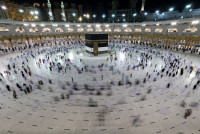
KUALA LUMPUR – Lembaga Tabung Haji (TH) is studying the need to make a targeted structuring of haj payments according to the capability and income of pilgrims to help those who wish to perform the religious pilgrimage.
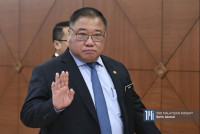
TH haj executive director Datuk Seri Syed Saleh Syed Abdul Rahman said the structuring of haj payments could help prospective pilgrims, especially in the B40 group, to fulfil the fifth pillar of Islam despite being less able.
He said no decision had been made on the matter thus far, as it needed to consider feedback from various parties.
“Roughly speaking, there are ‘muassasah’ pilgrims and private package pilgrims. The private package pilgrims can afford it and do not need financial assistance, while muassasah pilgrims comprise various categories, including the low-income group.
“We are taking this matter into account, and getting feedback from various parties including economists, academics, travel agents, and the government about whether it is necessary to create another targeted pilgrimage payment structure according to their capabilities,” he said on the Ruang Bicara programme broadcast by Bernama TV entitled “Understanding the Issues of Cost, Assistance and Payment for Haj” here last night.
Syed Saleh also denied that the increase in costs for muassasah pilgrims this year is due to TH’s financial difficulties as the body had announced its dividend distribution to contributors, which showed that its financial standing was sound.
He said the increase was instead due to inflation, tax factors, and other services in Saudi Arabia.
Syed Saleh also said that the cost of haj covers the entire cost incurred for the entire pilgrimage, covering the haj payment and financial assistance, and is divided into direct and indirect costs.
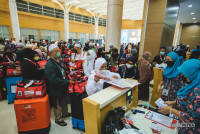
“Direct costs are costs that need to be paid to perform the haj, including flight costs, accommodation, food, bus transport, and services prepared by Saudi Arabia; indirect costs are services and facilities prepared by TH free of charge for pilgrims such as book publications, haj courses, payments for officials, and health services.
“Haj financial assistance is payments borne by TH for a pilgrim, while haj payment is payments borne by pilgrims who perform the haj,” he said.
On the estimated total costs and haj payment for this year, he said the matter would be announced soon.
According to Saleh, TH is currently waiting for the Saudi government to announce the quota of Malaysian pilgrims allowed to perform the haj for this season.
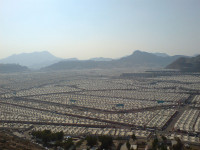
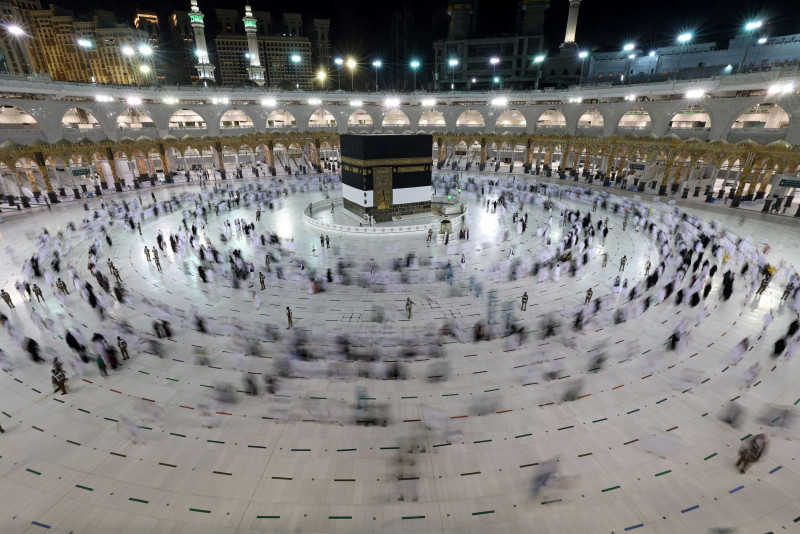
On April 9, the Saudi Haj and Umrah Ministry announced that the total haj pilgrims for the season of 1443 Hijrah/2022 AD was limited to a million local and international pilgrims.
The ministry stated that the number of international pilgrims this year would follow the allocated quota for each country taking into consideration compliance of all healthcare criteria.
The criteria include that pilgrims need to be under 65 and have completed their primer Covid-19 vaccination as approved by the Saudi Health Ministry, and that they must submit a negative Covid-19 RT-PCR test taken within 72 hours before departure.
Saudi Arabia allowed only 60,000 domestic pilgrims, both Saudi nationals and foreigners in the country, to perform the haj last year. – Bernama pic, April 13, 2022