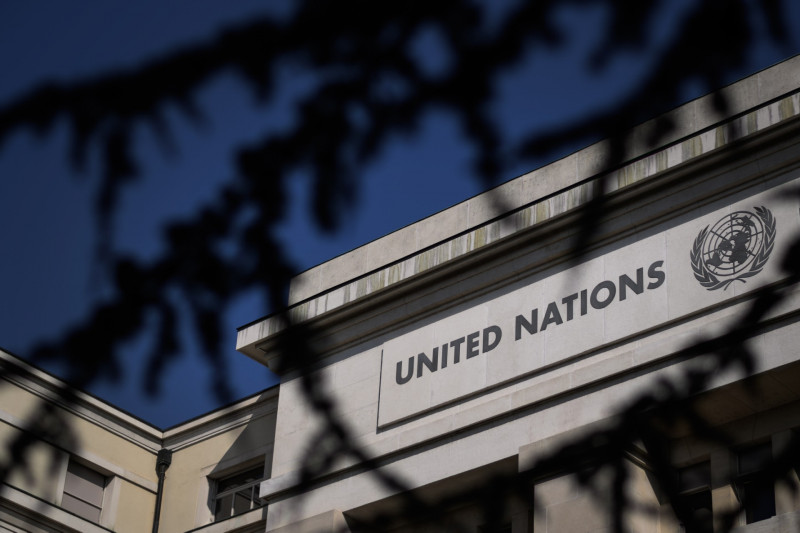
GENEVA – Cascading global crises have left 54 countries – home to more than half of the world’s poorest people – in dire need of debt relief, the United Nations (UN) said today.
In a new report, the United Nations Development Programme (UNDP) warned that dozens of developing nations were facing a rapidly deepening debt crisis and that “the risks of inaction are dire”.
UNDP said without immediate relief, at least 54 countries would see rising poverty levels, and “desperately needed investments in climate adaptation and mitigation will not happen”.
That was worrisome since the affected countries were “among the most climate-vulnerable in the world”.
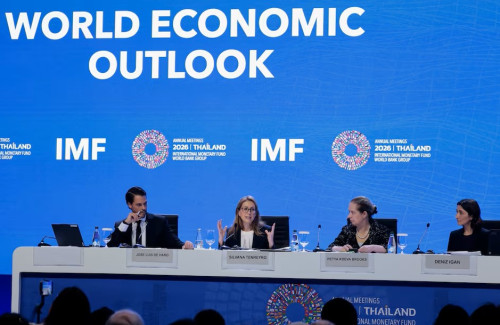
The agency’s report, published ahead of meetings of International Monetary Fund, the World Bank, and also of G20 finance ministers in Washington, highlighted the need for swift action.
But despite repeated warnings, “little has happened so far, and the risks have been growing,” UNDP chief Achim Steiner told reporters in Geneva.
“That crisis is intensifying and threatening to spill over into an entrenched development crisis across dozens of countries across the world.”
The poor, indebted countries are facing converging economic pressures and many find it impossible to pay back their debt or access new financing.
‘Volatility’
“Market conditions are shifting rapidly as a synchronised fiscal and monetary contraction and low growth are fuelling volatility around the globe,” UNDP said.
The UN agency said debt troubles had been brewing in many of the affected countries long before the Covid-19 pandemic hit.
“The rapid build-up in debt over the past decade has been consistently underestimated,” it said.
The freeze on debt repayment during the Covid-19 crisis to lighten their burden has expired and negotiations under the G20 Common Framework created during the pandemic to help heavily-indebted countries find a path to restructure their obligations has been moving at a snail’s pace.
According to available data, 46 of the 54 countries had amassed public debt totalling US$782 billion (RM3.5 trillion) in 2020, the report said.
Argentina, Ukraine and Venezuela alone account for more than a third of that amount.
The situation is deteriorating rapidly, with 19 of the developing countries now effectively shut out of the lending market – 10 more than at the start of the year.
‘Missing ingredient’
A third of all the developing economies have meanwhile seen their debt labelled as being “substantial risk, extremely speculative or default,” UNDP chief economist George Gray Molina told reporters.
The countries at the most immediate risk are Sri Lanka, Pakistan, Tunisia, Chad and Zambia, he said.
Gray Molina said private creditors have so far been the biggest obstacle to moving forward with needed restructuring.
But he suggested that the current market conditions could pave the way for a debt deal, as private creditors see the value of their holdings plunge by as much as 60%.
“When emerging market bonds trade at 40 cents on the dollar, private creditors suddenly become more open to negotiation,” he said.
“The incentives are to now join a negotiation where you might accept the haircut of 20 cents on the dollar, 15 cents on the dollar and 30 cents on the dollar.”
But willing creditors are not enough to actually nail down a much-needed debt-relief agreement, Gray Molina acknowledged.
“The missing ingredients at this moment are financial assurances from major creditor governments to clinch a deal.”
Steiner, who has repeatedly raised the alarm about the crisis, voiced hope the international community might finally recognise that action is in everyone’s shared interest.
“Prevention is better than treatment and certainly... much, much cheaper than having to deal with a global recession,” he said. – AFP, October 10, 2022