GENEVA – Three years since the Covid-19 pandemic began, nearly 200 prominent world figures called today for the vaccine inequity seen during the crisis to be relegated to history.
“We ask world leaders to pledge ‘never again’,” the current and former dignitaries said an open letter.
It was published to mark the three-year anniversary since the World Health Organisation first described the Covid-19 crisis as a pandemic.
The letter, coordinated by the NGO coalition People’s Vaccine Alliance, was signed by Timor-Leste President Jose Manuel Ramos-Horta, who won the 1996 Nobel Peace Prize, alongside the former leaders of more than 40 countries.
Several other Nobel laureates, faith leaders, and former United Nations secretary general Ban Ki-moon were among the signatories, alongside a range of current and former UN agency heads.
With the end of the pandemic in sight, “the world is at a critical juncture”, they wrote.
“Decisions made now will determine how the world prepares for and responds to future global health crises. World leaders must reflect on mistakes made in responding to the Covid-19 pandemic so that they are never repeated.”
The letter criticised the glaring inequity that characterised the response to the pandemic, which has officially killed nearly seven million people worldwide, although the true toll is believed to be far higher.
‘People’s vaccines’
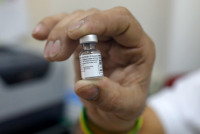
While a number of highly effective vaccines against Covid-19 were developed at record speed, wealthy nations were quick to snap up most of the initial doses, leaving vulnerable people in many poorer nations waiting in vain for jabs.
Still today, fewer than a third of people in low-income countries have received at least one vaccine dose, while three quarters of people have in high-income countries, according to UN data.
“There are decades of publicly funded research behind Covid-19 vaccines, treatments and tests,” the letter said.
“Governments have poured taxpayer money by the billions into research, development and advance orders, reducing the risks for pharmaceutical companies,” it said.
“These are the people’s vaccines, the people’s tests and the people’s treatments,” it insisted.
But “instead of rolling out vaccines, tests and treatments based on need, pharmaceutical companies maximised their profits by selling doses first to the richest countries with the deepest pockets”, it said.
The letter pointed to a study last year in the science journal Nature estimating that 1.3 million fewer people would have died of Covid-19 if the jabs had been distributed equitably in 2021, amounting to “one preventable death every 24 seconds” that year.
The letter urged leaders to support the tricky, ongoing international negotiations towards a pandemic accord, to ensure that equity is a key feature in the final agreement.
This, it stressed, would require governments to agree on the thorny issue of waiving intellectual property rules automatically if international public health emergencies arise, to ensure the sharing of medical technology and knowhow.
It also called for large-scale investments to develop scientific innovation and manufacturing capacity in the global south, to ensure that vaccines and treatments can be quickly developed and rolled out in all regions.
With such actions “world leaders can begin to fix the structural problems in global health that have held back the response to Covid-19, HIV and AIDS and other diseases”, it said.
“It is time to embed justice, equity and human rights in pandemic preparedness and response.” – AFP, March 11, 2023















.jpg)