Business

Nissan denies autonomous vehicle talks with Apple

Denial follows similar statement from South Korea’s Hyundai and its affiliate Kia last week

Updated 5 years ago · Published on 15 Feb 2021 8:45PM

Nissan denies autonomous vehicle talks with Apple
Nissan shares fell 2.8% to 610 yen today after the automaker announced it was not in talks to develop self-driving cars with US tech giant Apple. – Twitter pic, February 15, 2021

TOKYO – Japanese automaker Nissan says it is not in talks with Apple to develop self-driving cars, a week after Hyundai also denied reports it was discussing the top-secret project with the US tech giant.

Apple’s Project Titan is devoted to electric autonomous vehicles and has been in the works for several years – but details of the venture have been kept under wraps by the notoriously tight-lipped company.

Nissan’s denial came after the Financial Times reported that the iPhone maker had approached it in recent months about a tie-up related to the project, which did not go ahead.

“We are not in talks with Apple. However, Nissan is always open to exploring collaborations and partnerships to accelerate industry transformation,” the Japanese firm said.

A source close to Nissan told AFP that the company “doesn’t need Apple to sell” its cars.

“When you make a product under the Apple brand, you give your soul – and your profit margins – to Apple,” the source said on condition of anonymity.

“We are not interested in giving Apple the best that we offer. This should be under the Nissan brand.”

The denial followed a similar statement from South Korea’s Hyundai and its affiliate Kia last week after reports said Apple had wanted to discuss a potential partnership to develop electric vehicles and batteries.

Apple first revealed its self-driving tech aspirations in 2016 and chief executive Tim Cook later said he saw autonomous driving systems as a “core technology” for the future.

Nissan has been a pioneer in electric vehicles since its Leaf model was released over a decade ago.

But the struggling firm – still trying to recover from the devastating reputational damage caused by the sudden departure of now fugitive tycoon Carlos Ghosn – desperately needs a new hit.

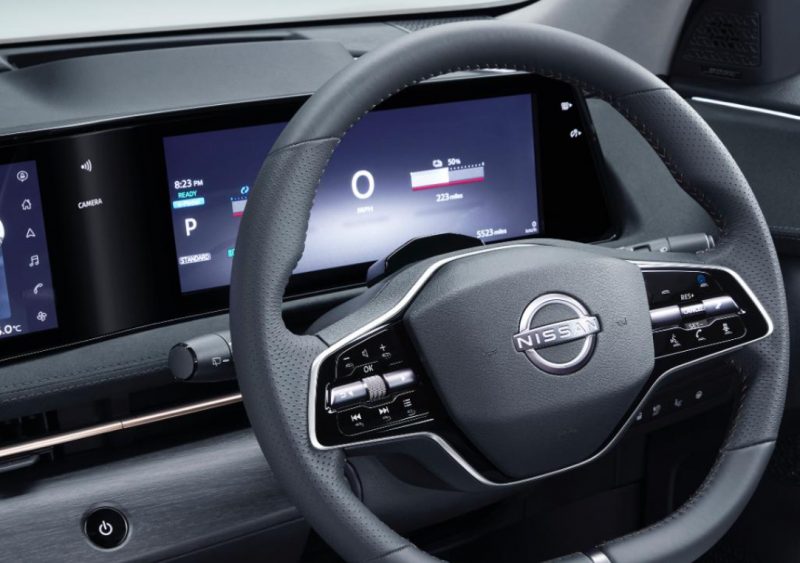
In July, Nissan unveiled the Ariya, a new fully-electric crossover model that it said would open a “new era” in the firm’s fortunes.

Today’s statement caused its shares to fall 2.8% to 610 yen. – AFP, February 15, 2021

Related News

Malaysia / 1mth

New Malaysia-Thailand border crossing: Businesses will not be affected, says tourism authority

Malaysia / 2mth

Cases of foreigners marrying locals for business licenses in Selangor getting serious

Trending / 4mth

Langkawi ferry to go out of business if trips are not reduced

Malaysia / 10mth

MITI focuses on financing, digital empowerment to boost women entrepreneurs - Tengku Zafrul

Malaysia / 11mth

Ipoh: The Haven granted stay of execution; business as usual

Culture & Lifestyle / 1y

Apple rumoured to be launching foldable iPhone next year

Spotlight

Malaysia

RM245m Penang Hill cable car project 32 per cent complete - CM

By Ian McIntyre

Malaysia

Six locals charged over alleged kidnapping of Singaporean couple in Johor

Malaysia

PM: No political, racial or religious shield for those found guilty in TH, Felda probes

Malaysia

Singapore security guard jailed 14 days, fined RM7,000 for insulting Islam

Health

Dengue cases soar 56% to 58,079 as nation records 55 deaths

Malaysia

NGOs urge BERSAMA to put Indian community agenda on political radar

By Alfian Z.M. Tahir

Health

MOH warns seniors against unproven hydrogen inhalers

Malaysia

Former Tabung Haji CEO remanded seven days as MACC RCI probe deepens

Malaysia

21 held in KLIA-Nilai crackdown on alleged online love scam syndicate

You may be interested

Business

Independent review needed, not blind denial, to address US claims – maritime expert

Business

Robo.ai expects shareholders’ equity to turn positive after restructuring

By Alfian Z.M. Tahir

Business

Oil prices surge as US-Iran standoff, Ukraine strikes rattle global energy markets