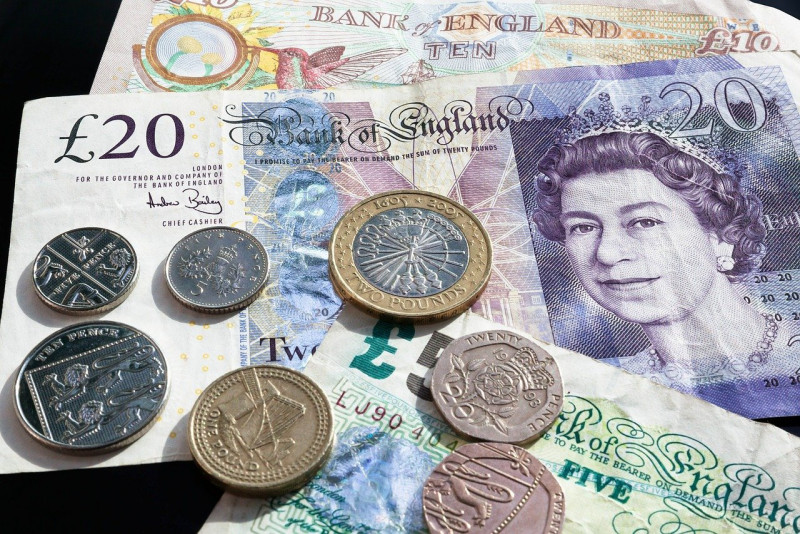
LONDON – The British pound continues a frantic two-month rise against the euro and United States dollar, reaching new highs yesterday in a sign of traders’ enthusiasm for the country’s Covid-19 vaccination roll-out.
Just before Christmas, investors feared that the country would leave the European single market without a post-Brexit trade agreement.
At the same time, a deadly second wave and new, more transmissible coronavirus variants pushed infection rates up and saw the death toll soar.
It currently stands at more than 120,000 – one of the worst in the world.
But since December, the pound has gained more than 5% against the euro and dollar, making it a top performer among major currencies.
The jump is due to the number of people vaccinated: according to the government, one adult in three has already received their first dose, representing more than 17.5 million people.
Another reason for optimism is Prime Minister Boris Johnson’s publication yesterday of a “cautious but irreversible” road map to ease lockdown restrictions by July.
“After a year in which the government’s reputation was soured by a string of policy U-turns, the UK has made good decisions regarding vaccines,” Jane Foley, head of FX strategy at Rabobank, told AFP.
“The vaccine roll-out has improved the economic outlook in the UK relative to elsewhere, especially in the EU,” said Capital Economics in a note.
Positive rate
“Markets are still adjusting to the fact that the Bank of England (BoE) is unlikely to implement negative rates for now,” said analysts at Swiss bank UBS.
Like other central banks, BoE adopted a record-low interest rate of just 0.1% to cushion the economic impact of the pandemic.
But, traders were mainly worried that it would adopt a negative rate like the European Central Bank or Bank of Japan.
At its last monetary policy meeting, BoE took that option off the table until August, and its governor, Andrew Bailey, said it may not be implemented then, either.
As a result, forex traders began to bid up the pound against the dollar and euro.
Unlike Europe’s single currency, whose strength has weighed on exports, the pound is just returning to relatively low levels.
The British currency is still 12% lower against the euro and 6% lower against the dollar from levels before the seismic Brexit referendum in June 2016.
“A stronger pound is another headwind for UK exporters and provides small relief for households,” said Paul Dales of Capital Economics.
“But, it’s not going to make a big difference to the economy.”
Foley warned that “there are speed bumps ahead”.
The effectiveness of vaccines against Covid-19 variants, and the strength of the UK recovery, will determine if the pound remains at its current levels, she said.
And, another risk looms on May 6, when elections for the devolved Parliament in Scotland could give fresh impetus to the pro-independence movement, she added. – AFP, February 23, 2021

.jpg)

.jpg)

.jpeg)


.jpg)