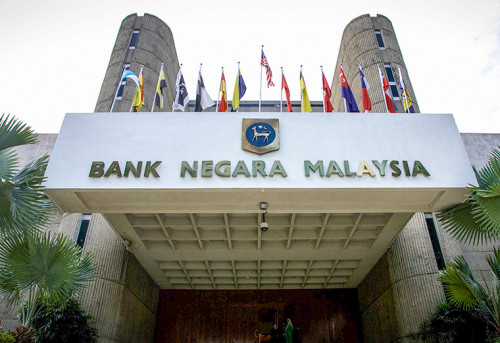
KUALA LUMPUR – Malaysia needs a reset and to seize new growth opportunities in order to emerge stronger from the pandemic, said Bank Negara Malaysia (BNM) governor Datuk Nor Shamsiah Mohd Yunus.
Speaking at a virtual press conference on the BNM Annual Report 2020 today, she proposed that focus should be on attracting quality investment, building innovation capacity, enhancing economic complexity as well as social protection reform.
“Looking to the longer term, the crisis has also provided Malaysia with an opportunity to reset and build stronger fundamentals on multiple fronts,” the governor said.
“(Structural) reforms will place Malaysia in a better position to secure a durable economic recovery with a resilient and agile workforce, innovation-led growth as well as social protection for vulnerable groups.”
Commenting on the central bank’s financial position, Shamsiah said it remained stable in 2020.
As at December 31, 2020, the total assets amounted to RM448.04 billion, while international reserves stood at US$107.6 billion, equivalent to RM432.37 billion.
BNM recorded a net profit of RM10.4 billion, of which RM6.24 billion were transferred to the general reserve fund and RM4 billion will be paid as dividend to the government.
Shamsiah said almost all continued efforts to catalyst economic transformation, particularly improvements to the investment ecosystem, are needed to attract and facilitate investments that could create high-skilled jobs.
She said labour-related policies to improve training and matching mechanisms as well as enhance workers’ resilient, should complement these efforts.
The central banker said comprehensive policies are needed in the labour market to support recovery from the crisis and prepare the workforce for future work.
She said the Covid-19 crisis has exacerbated structural challenges in the country’s labour market, and prevailing structural impediments are weighing on future job and income prospects.
The low-cost production model suppresses wages and productivity enhancement, high-skilled job creation has been insufficient to keep up with the entry of fresh graduates, and there have been skill mismatches between workers and industry needs, Shamsiah said.
“As a result of the pandemic, the vulnerable segment of the labour market has been more affected – in particular, women, non-standard workers, and youth – experiencing higher unemployment losses.
“Going forward, the anticipated uneven recovery and acceleration of key trends surrounding digitalisation and technological adoption may adjust a bit this issue,” she reckoned.
On innovation reforms, Shamsiah said it is timely for Malaysia to embark on the 3D reforms – accelerate Digitalisation, rethink Downstreaming, and reduce Distortion – that would reset Malaysia to its higher quality growth.
“Being forward looking in the post-pandemic world is crucial and will require greater policies adaptability and flexibility to benefit from the rapid shifts in global trends,” she added.
Touching on the digital economy, Shamsiah said the share of digital economy is expected to reach almost 23% by 2025 supported by measures under the Malaysia Digital Economy Blueprint, Jalinan Digital Negara, and the 5G rollout.
She expects the digital economy share will rise further post Covid-19, with the widespread remote working arrangement and the acceleration in e-payment and e-commerce.
“Our economy has been able to weather the disruption caused by the pandemic because of the technology. It is also undoubtedly an important determinant of Malaysia’s growth path,” she said.
The digital economy accounted for about 19.1% of Malaysia’s gross domestic product (GDP) in 2019, while e-commerce activities alone accounted for 8.4% of GDP. – Bernama, March 31, 2021