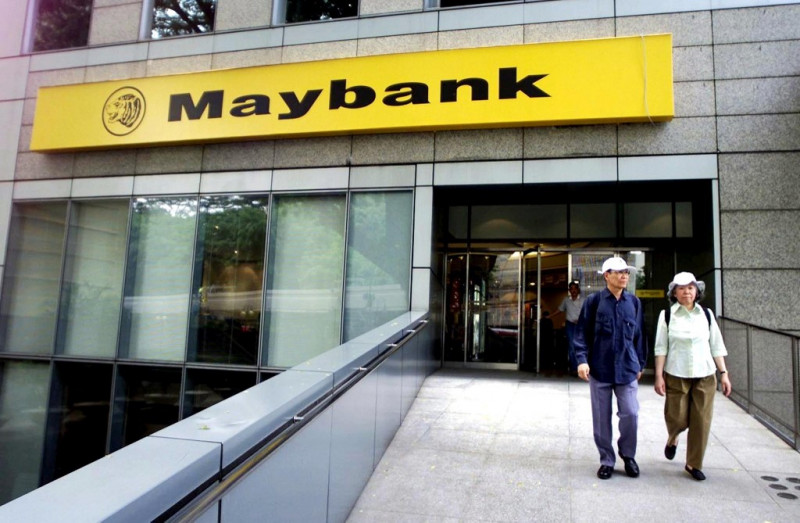
KUALA LUMPUR – S&P Global Ratings has affirmed its ratings for five Malaysian banks – CIMB Bank Bhd, Malayan Banking Bhd (Maybank), Public Bank Bhd, AmBank (M) Bhd and RHB Bank Bhd – with a negative outlook.
The ratings agency affirmed CIMB, Maybank and Public Bank with “A-” long-term and “A-2” short-term issuer credit ratings, while assigning “BBB+” long-term and “A-2” short-term issuer credit ratings for AmBank and RHB Bank.
In a note today, S&P Global said the downside systemic risks for Malaysian banks are on the rise, adding that lenders are also facing rising risks in the competitive environment due to negative government intervention.
“We now see a one-in-three possibility that Malaysian banks could underperform our base-case asset quality expectations in the next 12 to 24 months.
“The protracted lockdown, rampant pandemic waves, repeated moratoriums on loan repayment, and ongoing political uncertainties in Malaysia have increased the downside risk to the recovery of the country’s banking system.
“These factors have also reduced the headroom in our ratings on Malaysian banks.”
Nonetheless, it said, Malaysian banks are facing Covid-19-related credit challenges from a position of strength compared with most of their Asean peers.
It also forecast Malaysia’s gross domestic product to grow by 6% next year, and the unemployment rate to improve to 4.4%.
As for the banking industry’s non-performing loan (NPL) ratio, S&P Global expects it to reach 3% to 4%, and credit costs to stay at 55 to 60 basis points (bps) annually over 2021 and 2022, before recovering gradually.
Prior to 2020, the Malaysian banking sector’s NPL ratio and credit costs were at historical lows of 1.5% and eight bps, respectively, with banks having a good earnings buffer to absorb unexpected rises in credit costs, it said.
The agency also anticipates that the country’s banking industry will maintain a healthy level of local currency deposits over the next 12 to 24 months as banks benefit from their dominant retail presence and strong consumer confidence, and Malaysia’s high savings rate of about 30% of GDP.
It said banks are also likely to maintain their capital strength, given their satisfactory earnings generation capability and flexible dividend payout policies.
“Our rating affirmations of the five Malaysian banks reflect those banks’ healthy financial buffers, stable market positions, good capitalisation, as well as ample funding and liquidity.” – Bernama, September 24, 2021