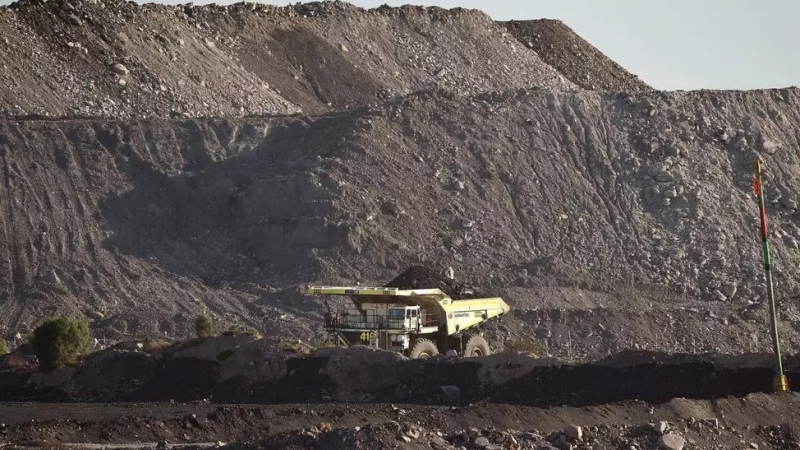
SYDNEY – Australia's ANZ became the country's last major bank to walk away from thermal coal investments on Thursday, delivering a fresh blow to a sector facing export market upheaval and widespread public hostility.
The bank said that from 2030 it would no longer finance thermal coal mines or coal-fired power stations, joining Australia's other "big four" banks who have already made similar commitments.
Coal has long been a mainstay of the country's resource-dependent economy.
Exports were worth almost US$50 billion (RM207.7 billion) in 2018 – or more than three percent of gross domestic product, according to central bank research.
But despite heavy government support, the coal industry's foundations appear increasingly wobbly.
In the last few months major customers – most notably China, Japan and South Korea – have all vowed to reach net-zero carbon emissions by the middle of this century.
That is likely to mean reduced dependence on fossil fuels, particularly coal, which accounts for almost half of global carbon dioxide emissions.
Prime Minister Scott Morrison's conservative government has slow-peddled measures to tackle climate change, conspicuously avoided any national commitment to being carbon neutral and vowed continued support for fossil fuels – including greenlighting new coal mines – despite strong public opposition.
After historic bushfires and prolonged drought, a poll released this week by The Australia Institute showed four in five Australian are concerned by climate change and only 12% back Morrison's plans for a gas-led Covid recovery.
But investors like ANZ are increasingly voting with their feet.
"We are in a unique position, through our lending decisions, to support customers and projects that reduce emissions as well as support economic growth," ANZ said Thursday.
"That is why we've announced important changes to our carbon policy, supporting the transition to a net zero emissions economy by 2050."
ANZ's decision drew withering criticism from Morrison's government, with Resources Minister Keith Pitt telling the bank to "focus on home loans, not activism" and not play "eco-warrior".
Agriculture Minister David Littleproud went a step further by suggesting banks "shouldn't interfere in markets" and threatened to revoke government deposit guarantees, which protect customers' savings.
The Australian Financial Review quoted a former central bank governor as saying that suggestion risked sparking a run on the banking sector.
The coal industry has publicly shrugged off upheaval in the sector and predicts strong demand in Asia for thermal coal over the next 10 years – particularly from India and Vietnam.
The Minerals Council of Australia, a powerful industry lobby group dismissed suggestions that overseas carbon targets would curtail markets, saying the sector could contribute through cleaner technologies.
Those technologies – such as carbon capture – "will be critical in helping countries continue their economic development into the future while reducing emissions" council chief executive Tania Constable said in a statement.
Covid hangover
ANZ Bank also announced Thursday that its post-tax profit had plunged 40% after setting aside billions to cover loans unlikely to be repaid because of the coronavirus pandemic.
The bank reported profits of A$3.58 billion (RM10.47 billion) for the full year ending September 30, attributing the lower return to credit impairment charges of A$2.74 billion before tax.
A further A$815 million was set aside to cover expected virus-related lending losses in Asia.
The bank said about 119,000 home loans across Australia and New Zealand were deferred during the crisis, with roughly 40,000 remaining frozen as at October 15 and another 11,000 requesting an extension. – The Vibes, October 29, 2020






.jpeg)