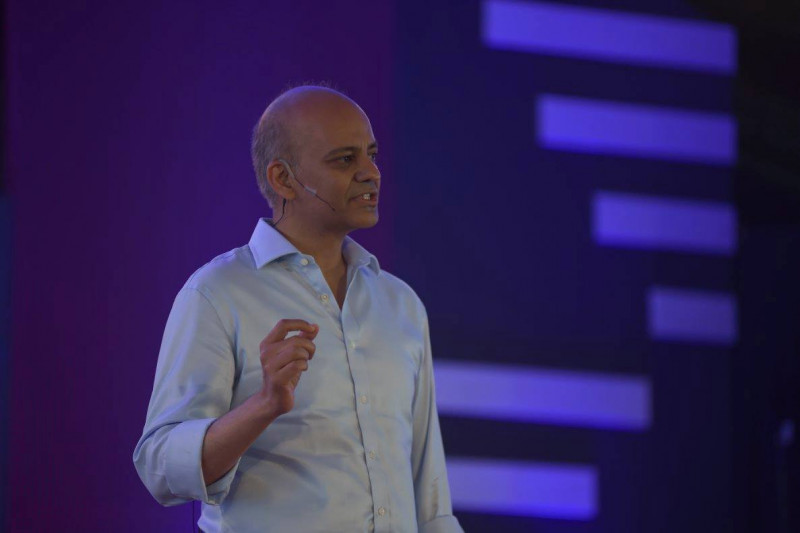
KOTA KINABALU – The goods and services tax (GST) is better than the sales and services tax (SST) because the former widens a country’s tax base and brings in more revenue, said the World Bank Group’s lead economist for Malaysia Apurva Sanghi.
More than 170 countries around the world have adopted some kind of value-added tax (VAT) or GST system, which is one reason why the GST is more efficient than the SST, he said.
“GST is a regressive system because it is based on a tax on consumption and 60% of the economy depends on consumption.
“Early analysis shows that GST provides nearly twice as much tax revenue (compared) to SST. It is also self-billing because businesses must issue invoices to claim a refund,” he said in an online press conference today.
The press conference was held in conjunction with the launch of the Malaysia Economic Monitor report, entitled “Catching Up: Inclusive Recovery and Growth for Lagging States”, scheduled for June 16, 2022, in Kota Kinabalu.
Also present at the press conference was the World Bank’s country manager for Malaysia Yasuhiko Matsuda.
Apurva said the GST is not without its shortcomings, one of which is that lower-income households consume more than regular households, which would affect them if a regressive tax system based on consumption like GST was to be implemented.
“Some countries use tax exemptions to address the regressiveness of the GST but in our view, tax exemptions may not be the best option.
“Instead, the government should increase the targeted spending to those affected,” he said.
Meanwhile, a report released today by the World Bank Group stated that the Malaysian economy is projected to expand by 5.5% in 2022, driven mainly by a strong rebound in consumption.
The financial institution also projected Malaysia’s economy to grow by 4.5% in 2023 and 4.4% in 2024.
It noted that the country’s economic recovery is expected to continue this year, following a healthy 5% growth in the first quarter of 2022.
The bank said the full withdrawal of movement restrictions and the reopening of the economy will reposition Malaysia on a quicker recovery path, while fiscal consolidation to support inclusive recovery across the country should remain a key priority, but needs to be implemented gradually.
“As recovery becomes more entrenched, fiscal policy needs to refocus on addressing the fiscal impact of the Covid-19 crisis through increased revenue collection and greater spending efficiency.
“Beyond rebuilding fiscal buffers, new growth opportunities could be seized in the post-pandemic world,” said the report.
The World Bank said that in the short term, fiscal policy should be focused on maintaining financial support for the poor and vulnerable, as well as establishing a more inclusive social protection framework with better targeting.
The government’s various cash-assistance programmes throughout the pandemic have provided important support to households, and higher fiscal spending in response to the pandemic has helped support the economy, which has also led to further narrowing of the fiscal space, said the World Bank.
“Efforts to rebuild fiscal buffers through increased revenue collection and enhanced spending efficiency should remain a key policy priority, however, because the economic recovery is still in its early stage, medium-term fiscal consolidation has to be tackled gradually,” stated the report.
“With the right governmental support systems and prudent fiscal steps in place, Malaysia’s economy can expand beyond a return to pre-pandemic levels, towards achieving significant long-term development goals.” – Bernama, June 13, 2022