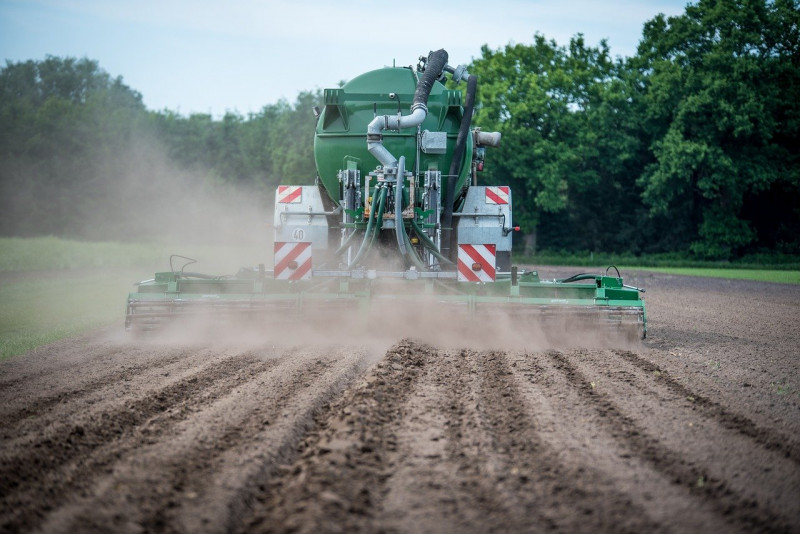

KOTA KINABALU – Having seen Sabah already spend billions of ringgit to import fertilisers and animal feed, the state government is now searching for investors to start fertiliser factories there.
Deputy Chief Minister Datuk Seri Jeffrey Kitingan (Tambunan-Star), who is the state minister of agriculture and fisheries, told the Sabah legislative assembly today that his ministry is now actively promoting Sabah to investors towards the development of factories to produce fertiliser and pesticides.
He said the matter is still being studied in the ministry’s research and development unit.
The unit is identifying which locally sourced materials can be processed and whether they are sufficient for Sabah to manufacture their own fertilisers and pesticides.
Other than that, Kitingan said his ministry is also planning to adopt the natural agriculture method that is currently being promoted in Peninsular Malaysia. This entails a farming method that does not require fertilisers, but only microorganisms in the soil.
“This is one of the approaches to promote natural agriculture other than organic farming,” he said.
“Natural agriculture uses microorganisms to revive the soil and its crops. This is currently being studied and we hope we can promote this.”
Kitingan also said there is an entrepreneur already established in the industry in Sabah who has the potential to produce fertilisers for plants, and food for fish and animals.
He hopes the state and federal government can support the growth of this business in an effort to promote organic farming.
Earlier, Assistant Agriculture and Fisheries Minister Hendrus Anding (Tandek-PBS) told the state assembly that Sabah’s import value for fertilisers was RM1.3 billion in 2021 alone.
These fertilisers were imported mainly from China (290,000 metric tonnes in 2021), Russia (110,000 metric tonnes), West Malaysia (51,000 metric tonnes), Vietnam (8,000 metric tonnes), and Korea (7,000 metric tonnes).
He said animal feed imports such as corn and soybean in Sabah had also reached RM498.2 million in 2021, with imports mainly from Argentina (90,000 metric tonnes), West Malaysia (40,000 metric tonnes), and Thailand (6,000 metric tonnes), among others.
Hendrus said the state Sabah Agriculture and Fisheries Ministry is aware of the rising prices of imported animal feed and fertilisers, These are due to the 40% increase in logistics costs, drought in Argentina, the Covid-19 pandemic, the falling ringgit, as well as the Russia-Ukraine war.
He was answering Tan Lee Fatt (Likas-DAP) who questioned the Sabah government’s plan to reduce the state’s dependence on the import of animal feeds, fertilisers, and pesticides.
Hendrus said the ministry will also look into processing palm kernel cake from oil palm residues into chicken feed.
“The ministry is also planning to set the correct volume of usage for pesticides and encourage farmers to use the right technique to reduce the use of pesticides,” he said. – The Vibes, July 21, 2022.