
GEORGE TOWN – Jobs in the gig economy should not be seen as a long-term solution for employment as the roles in the sector will gradually be replaced by automation, said special investment adviser to the Penang Chief Minister, Datuk Seri Lee Kah Choon.
He said while many youth see the gig economy as a good avenue for jobs due to instant gratification and flexible work hours, the reality is that the nature of such jobs can change with advancements in technology.
Lee said that technology was constantly evolving and within the span of years or even months, certain jobs can quickly be rendered obsolete.
For example, he believes that the food delivery system could be replaced by drones, which can perform the tasks more efficiently than the current food delivery riders, whose movements are constricted by traffic congestion.
Moreover, he said ride-sharing services can be replaced by autonomous vehicles, which are self-driven cars powered by artificial intelligence (AI).
“Our youths need to be equipped with skills, which can cope with the evolution of technologies rather than having jobs ‘stolen’ by it. They should see the gig (economy) as something temporary.”
He added that permanent jobs of the future hinged on strong skill sets.
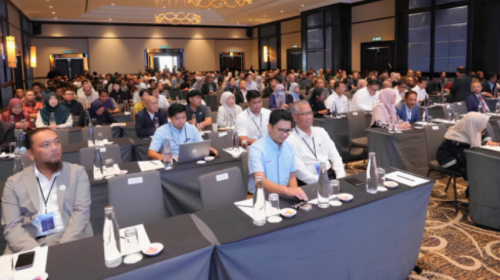
Lee was speaking at the industry pledge and appreciation ceremony organised by the Penang Skills Development Corporation (PSDC) here, recently.
The event was organised to help PSDC to meet demands for attracting talent, particularly in the electrical & electronics (E&E) field, as Penang is a key component of the global supply chain for semiconductors.
Lee elaborated on the importance of developing the right skills among youth, saying that the appetite for lifelong learning must be accompanied by acquiring knowledge.
He urged the young to acquire skills in the technology sector, in line with the rise of the fourth industrial revolution, adding that the coronavirus pandemic has hastened the process.

Daniel Bernbeck, who is the executive director of the Malaysian-German Chamber of Commerce and Industry, said that in his native country, education is driven by industry needs rather than a reliance on the government to provide training.
“Education is based on the needs of the industry. Hence, we have much hands-on learning (carried out) by the masters of our skills and crafts,” Bernbeck said, adding that this included the field of engineering.
Earlier, two technocrats spoke on how Germany has acquired its worldwide recognition for sublime skills in engineering and craftsmanship.
PSDC chief executive officer Tan Eng Tong praised Germany for its par excellence achievements in engineering, such as those in the automotive field.
Bernbeck said Germans do not believe in using the same old approach, especially when it is proven to be unworkable.
“We enable our young to be problem solvers, and by teaching them the right skills, they will in turn reward us with loyalty,” Bernbeck said.
PSDC Management Council chairman Christoph Mueller, who is healthcare provider B. Braun Group’s operations senior vice president for Asia-Pacific, echoed Bernbeck, saying that the workforce in the private sector is designed to fulfil the needs of the industries.
He said that having the right skills is a necessity and not a luxury as the world progresses.
The E&E field is a rapidly growing sector in Malaysia, particularly in Penang and neighbouring Kedah, owing to the northern region's growing importance in the global supply chain.
However, the PSDC pointed out the pushback from the youth who have shunned vocational studies and science, technology, engineering, and mathematics subjects, preferring to excel in arts.
PSDC chief operating officer Lim Wei Chen said the corporation has 800 full-time students, but there is room to fill in an additional 2,000 to 3,000 more students. – The Vibes, August 4, 2022