THE spillover of the gig economy in Southeast Asia is creating economic opportunities, but also significant inequalities and vulnerabilities for workers. While the flexibility offered by online gig platforms is attractive, it comes at the cost of limited job security, lack of social protection, and exploitation by platforms through algorithms and opaque evaluation systems.
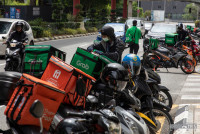
In Malaysia, around 26 percent of the workforce participates in the gig economy, primarily through online-to-offline on-demand apps like ride-hailing and food delivery. These workers are classified as independent contractors with no minimum wage, insurance, or other benefits.
Platform companies consider workers who participate in the gig labour market as independent contractors, giving them flexibility in availability. This means the employers avoid the burden of workers' economic and social security, including salary, insurance, and benefits.
For workers, they gain flexibility in terms of controlling their salary and setting free holidays under the ultimate meritocracy, where the more they work, the more they earn.
However, they do not have rights included in the labour contract, including minimum wage, insurance, and maintenance costs for assets on the job. This is particularly burdensome for gig workers who work full-time as their only source of income.
Platforms also have the right to introduce algorithms to improve labour efficiency and to select, discipline or dismiss workers under their own criteria through a mutual evaluation system with customers.
While this is important for the management of workers in delivering consumer safety and quality services under the customer-centricity of platforms, it also risks encouraging the development of platform capitalism, which can exploit workers through regulatory holes as a means of accumulating new corporate capital.
Need for better cohesion
Although platforms appear on the surface to create labour opportunities for people from different backgrounds, they risk increasing the vulnerability of workers due to structural inequalities and chronic precariousness.
The Malaysian government's response to the COVID-19 pandemic also highlighted the precariousness of gig work.
In August 2022, Malaysian food delivery riders organised a strike, dubbed the ‘Food Delivery Blackout', demanding improved working conditions, including better pay, increased social security benefits, and a better app system.
While the strike received widespread attention and resonated with broader concerns within the industry, it failed to deliver any decisive outcomes. The platform's operations continued relatively unscathed, highlighting the need for more effective organisation among gig workers.
This highlights the need for stronger, more cohesive organisation within the gig worker community, particularly in light of the limitations of both traditional resistance movements and existing associations in Malaysia.
Currently, there are several major associations, like Persatuan Penghantar P-Hailing Malaysia and Grab Drivers Malaysia Association, but participation is not mandatory. Additionally, many informal communities and drivers exist outside of these organisations.
This lack of cohesion weakens collective action and can lead to situations like the blackout, where some riders actively participate in the boycott while others continue working as usual. Without a united front, it becomes difficult to exert meaningful pressure on platforms and achieve lasting change.
Currently, there is no clear legal definition of a gig worker in Malaysia, broadly defined as a person who works on a freelance or independent contractor basis.
Malaysian on-demand app gig workers also perceive them as independent contractors with flexibility and tend to view the corporate non-interventionist system positively.
This is because the ultimate meritocratic way of working in gig work has the potential to earn more than other jobs. This would also have the potential to be the first option not only for the unemployed and vulnerable but also for younger generations, especially fresh graduates.
Seen as short-term work
In addition, ride-hailing drivers and food delivery riders in ASEAN nations and Asian developing countries also serve as a source of labour that cannot be absorbed by formal employment. However, the bold expansion of labour markets to accommodate market supply has generated important debates on social protection and inequality.
In Malaysia, policies such as pandemic unemployment and curbs on outings have reduced demand for ride-hailing drivers but have sharply increased demand for online food delivery riders. The bold hiring of platforms and government incentive policies to address this demand served as a safety net for primary workers but failed to approach their long-term job security.
In other words, this type of gig work in ASEAN countries today, particularly in Malaysia, can be seen as short-term decent work. Gig work offers flexibility as a means of reducing the stress of full-time work or earning additional income, but it would be difficult under current employment patterns and systems to give it long-term decent work.
On the other hand, ad hoc short-term government measures and regulatory changes are unlikely to lead to long-term labour market changes and empowerment of gig workers. Given the balance between the growth of the gig economy market and labour relations, excessive regulation, and repression by third parties harm both sides.
As a result, the growing resistance of gig workers to platform-led exploitative profit-making processes is virtually undeniable.
Gig workers in ASEAN countries may be able to learn from the Western gig workers' resistance movement. With an individualistic mindset, gig workers in Western countries are highly resistant to improving their working conditions, and if they do not like it, they strongly protest against the platform.
One example is the resistance of Uber drivers in the UK. In February 2021, the UK Supreme Court recognised Uber drivers as employees rather than sole proprietors. This is the result of persistent resistance by certain UK ride-hailing drivers in the courts since 2016 for their rights as employees, such as minimum wage and social security coverage.
The original platform itself is not tailored to the characteristics of Asian gig workers but is based on a Western-style platform business model represented by Uber. This misalignment is a relatively common trend in the ASEAN gig economy. To create a comfortable working environment for them in the future, effective collective action mechanisms need to be explored.
Given the collectivist nature of ASEAN gig workers, specifically those in Malaysia, it would be possible to adopt a structure whereby one organisation acts as a formal communication tool with the platform.
As a result, gig workers who have registered with the platform can mount strong resistance and boycotts through their organisations as a means of countering unfair working conditions.
Indeed, how to increase common understanding and expand solidarity in a situation of dispersed solidarity where various communities exist would play a vital role in their access to decency. – 360info, December 22, 2023
Yosuke Uchiyama is a PhD candidate at the Faculty of Arts and Social Sciences, Universiti Malaya, Malaysia. He specialises in business economics including digital economy, gig economy and sharing economy, law and economics, and transportation studies.
This article is part of a special report on the ‘Asian Gig Economy’, produced in collaboration with the Asian Research Centre – University of Indonesia.
Published under Creative Commons and in partnership with 360info.org.