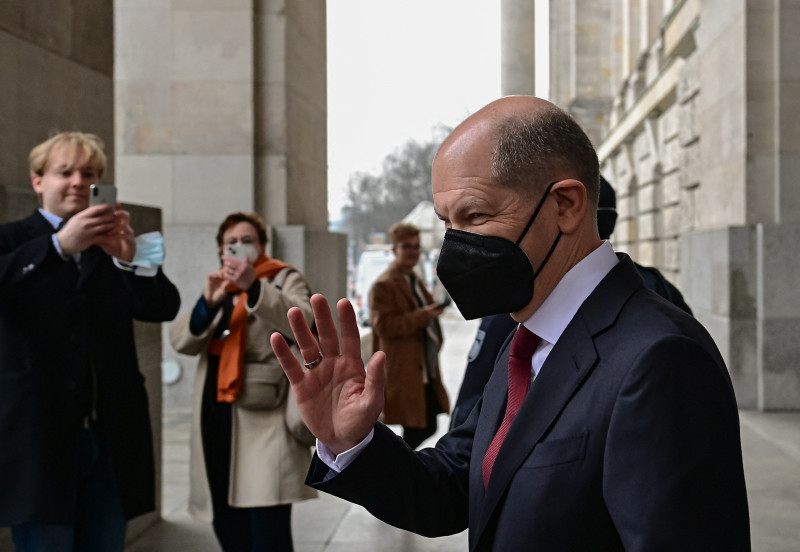
BERLIN – German Chancellor Olaf Scholz yesterday promised further measures to shield Germans from soaring inflation but also vowed not to stray from Germany’s famed fiscal discipline.
“We will do everything we can to help citizens get through these difficult times,” especially those “who have very little”, Scholz told a press conference in Berlin.
The government earlier this year unveiled a €30-billion package to help consumers beat inflation, including a fuel tax cut and a cheap public transport ticket for June, July and August.
Finance Minister Christian Lindner this week also announced tax relief worth €10 billion (RM45.5 billion) to help workers cope with rising prices.
But Scholz said the government was planning further measures to ensure that “no one is confronted with unsolvable problems”.
Scholz gave no details of the measures or when they would apply but said that “we have to put together an overall package that includes all population groups”.
Inflation in Germany reached 7.5% in July, fractionally lower than the 7.6% recorded in June, fuelled mainly by energy prices that have soared following Russia’s invasion of Ukraine.
Energy prices are expected to rise even further as the country heads into winter.
The power crunch is not only hurting consumers’ purchasing power but also German industry, much of which relies on cheap energy supplies to manufacture exports.
However, Scholz said he did not expect social tensions in Germany to escalate because of the difficult economic situation.
“I do not believe that there will be that kind of unrest in this country,” he said.
Scholz also said he planned to stick by plans to reinstate Germany’s so-called debt brake in 2023 after it was suspended for three years to cope with the impact of the coronavirus pandemic.
“We assume that we will be able to manage our vision within the financial framework that has been available to us so far,” Scholz said.
Germany’s debt brake is a rule enshrined in the constitution that limits the country’s public deficit to 0.35% of the gross domestic product.
Lindner had already last month reiterated that Germany would reinstate the debt brake in 2023, a key demand of his FDP in coalition negotiations last year with the Greens and Scholz’s SPD.
However, with Germany’s deepening economic woes, some members of the Greens and the SPD have called for the rule to be suspended for longer. – AFP, August 11, 2022