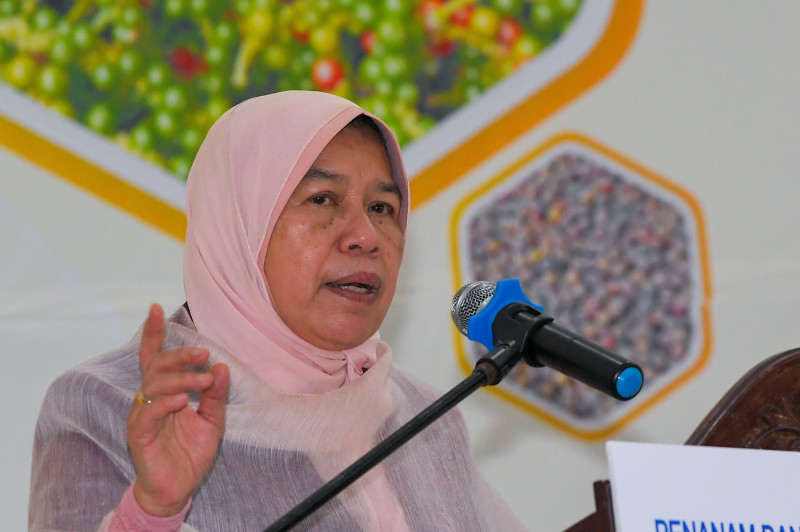
KUALA LUMPUR – Aggressive measures need to be taken to coordinate, commercialise, promote and develop the bamboo industry as it is capable of boosting the people’s incomes as well as contributing to the nation’s economy.
Plantation and Commodity Industries Minister Datuk Zuraida Kamaruddin said in 2021 Malaysia’s exports of bamboo products had increased by 1.6% to RM8.41 million from RM8.28 million in 2020, while imports stood at RM89.23 million.
She noted that the nation’s bamboo products exports are much lower compared to other countries and that Malaysia is still dependent on imported bamboo products from China, Indonesia and Vietnam, despite the local bamboo industry having great development potential.
“The industry’s progress is quite slow compared to other agro-commodities.
“But it is still not too late to take aggressive steps in terms of managing bamboo cultivation and commercialising the products as the global market has already started using bamboo products as an alternative to existing products,” she said after launching the World Bamboo Day Malaysia 2022 at the Forest Research Institute Malaysia here today.
She emphasised that a concerted effort is needed to create a structured ecosystem, estate level or corporate management to promote the bamboo industry to the next level.
“The local bamboo industry is very small and there are only 567 local bamboo growers who are directly involved in the bamboo-based industry in Malaysia, encompassing furniture, construction, textile, plantation, food, charcoal and handicraft industries,” the minister said.
Zuraida said the ministry – through the Malaysian Timber Industry Board and the Malaysian TImber Council – will continue to strengthen the local bamboo industry’s development.
“By implementing various initiatives such as research and development programmes, as well as providing continuous support, the industry is capable of optimising this raw material as an added-value alternative in the timber industry,” she said.
Malaysia has around 70 bamboo species, of which 45 are local species that can be found in the forests.
In terms of cultivation, 31% of the bamboo plantations are located in Peninsular Malaysia, 45% in Sarawak and 24% in Sabah. – Bernama, September 20, 2022
.jpeg)


.jpeg)