Business

Two-thirds M’sian business travellers still worried about health, safety

Budget, uncertainties around travel policies on second, third place in survey

Updated 3 years ago · Published on 05 Dec 2022 12:33PM

Two-thirds M’sian business travellers still worried about health, safety
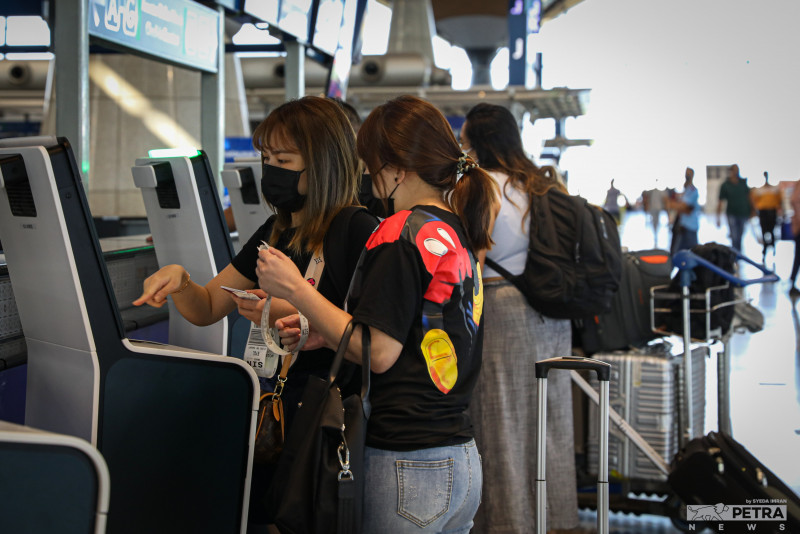
While business travel was resuming at a steady pace, the effects of the unprecedented health crisis can still be felt as health and safety threats from the Covid-19 pandemic remain the top concerns for almost two-thirds of Malaysian corporate travellers. – The Vibes file pic, December 5, 2022

KUALA LUMPUR – Health and safety threats from the Covid-19 pandemic remain the top concerns for almost two-thirds of Malaysian corporate travellers as business travel returns, according to a new survey by SAP Concur.

While business travel was resuming at a steady pace, the effects of the unprecedented health crisis can still be felt, especially in Malaysia.

“Health and safety remain as the top concerns for 72% of Malaysian business travellers against 63% in the Asia Pacific (Apac), followed by diminished travel budget (48%) and uncertainty around changing business travel policies (43%),” the integrated travel, expense and invoice management solutions provider said in a statement today.

The survey polled 100 corporate travellers in Malaysia, along with 950 from the Apac markets of China, Taiwan, Japan, Singapore, South Korea, India, Australia and New Zealand.

It revealed that Malaysian business travellers continue to expect flexible arrangements in selecting their preferred mode of accommodation (58%) and travel (51%) to protect their health and safety while travelling.

The survey also found that having more control over their trip schedule is considered to be critical for Malaysian business travellers’ well-being, as 61% expect their companies to allow them to decide how long their trip will be compared to 43% in the Apac.

Meanwhile, 61% of the Malaysian respondents also deem it essential to have the ability to book their travels directly through supplier websites to protect their health and safety and 48% expect to be able to change travel plans without repercussions.

SAP Concur South East Asia managing director, Dr Carl Jones said it was interesting that employees in the region seem to be more concerned about health and safety compared to other markets in the world.

He noted that organisations that have not put in place travel policies and technologies to safeguard employees’ health and safety, or ensure travel flexibility, would have to take the appropriate action soon. – Bernama, December 5, 2022
Related News

Community / 3w

Visit Terengganu Year 2027 - Many returning to rekindle fond memories

Malaysia / 1mth

Tajikistan eyes bigger role for Malaysia in Central Asian market

Malaysia / 1mth

Malaysians urged to rethink travel to southern Thailand after 51 violent incidents

Malaysia / 3mth

New Malaysia-Thailand border crossing: Businesses will not be affected, says tourism authority

Malaysia / 3mth

Cases of foreigners marrying locals for business licenses in Selangor getting serious

Events / 4mth

Arrivia, KrisFlyer deepen partnership with launch of cruise redemptions

Spotlight

Malaysia

Tuanku Muhriz to focus on state affairs; Will not attend Conference of Rulers meeting

Malaysia

Sarawak projects record RM15.09b revenue, budgets RM10.1b for development in 2027

Malaysia

Sultan Nazrin: Delay in environmental action places future generations at risk

Malaysia

Woman allegedly raped at KL shopping centre after being threatened with intimate video

Malaysia

Jordan’s King confers highest civilian honour on Sultan Ibrahim

Malaysia

Driver monitoring aims to stop commercial vehicle crashes before they happen

Malaysia

KTMB heritage sites set for tourism makeover, says Loke

Malaysia

Zara Qairina’s mother: No doctors recorded injuries consistent with being beaten

You may be interested

Business

Oil prices stay above US$93 as Middle East tensions put pressure on ringgit

Business

Oil prices retreat below US$104 as markets weigh Middle East risks