WHEN we venerate something too much, we put it on a pedestal, out of reach of the young, accessible only to a privileged few.
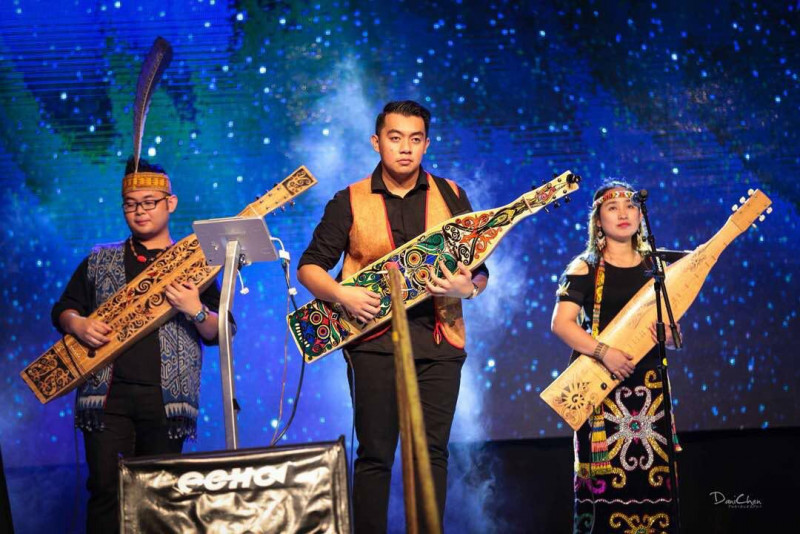
The sape, Sarawak’s most revered musical instrument originating from the upriver folks of Central Borneo, was once played to lend music during religious rituals in the aboriginal enclaves of the Orang Ulu.
When plucked and strummed, the sape exudes a haunting twang, so divine and sacred that the Orang Ulu who danced to its tune convulse into a trance.
Another legend says the sape has a mystical origin. According to the legend, a longhouse dweller whose wife was terminally ill was visited by a spirit in a dream.
According to the folklore: “The spirit instructed the villager to play the sape to heal the sick woman. But nobody had heard of the sape then, so the man pleaded with the spirit to teach him how to make one and the spirit obliged.
“The villager was directed by the spirit to look for Adau wood, from the trees that the hill myna birds used to perch. The shape of the sape appeared in his dream and he proceeded to construct the instrument.
“As he plucked the strings of the sape in his dream, the people around him and the village shaman went into a trance and danced to the tune.
“The soothing sound of the lute-like instrument healed his wife on her sickbed and she, too, began to dance with the others,” so the story goes.
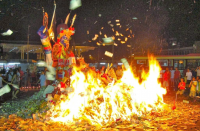
This healing rite is called 'Bali Dayung'. The music and dance genre is still performed by the Kayan and Kenyah tribes of Central Borneo, Justine Jarop, a professional sape player, told The Vibes.
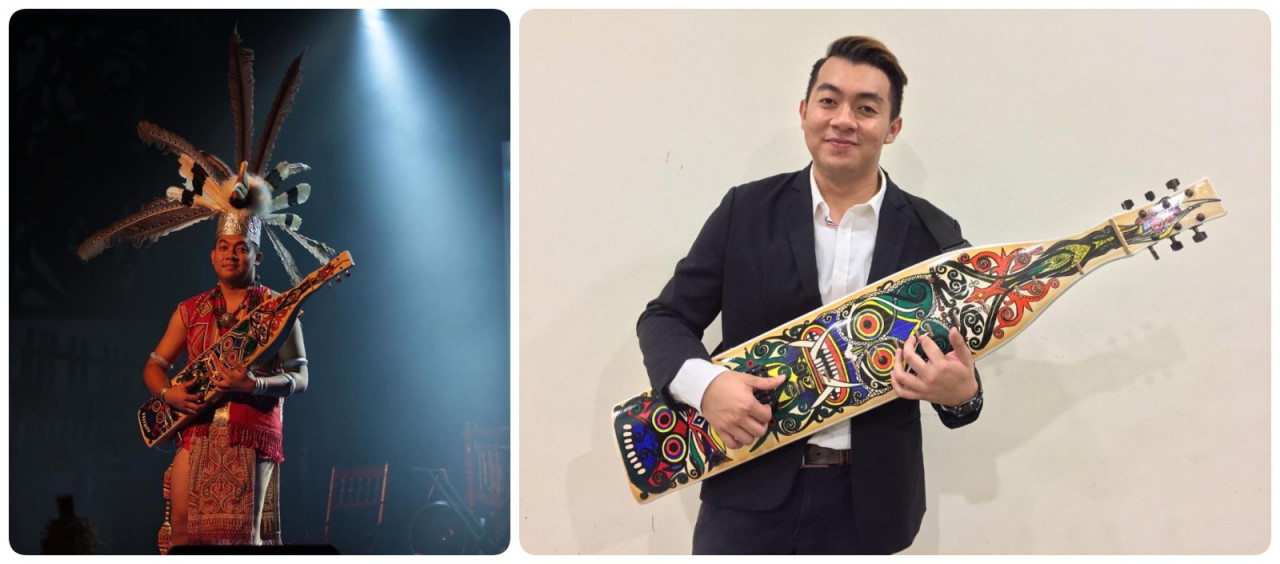
“Only the Sape Bali is used for these ceremonial and ritualistic healings," said Justine, a 23-year-old Iban millennial.
“During the ceremony, the sape player sits on the floor. Later, he stands up as he gets more animated in his mission to drive out the evil spirit, known as Udo, from the sick person,” added Justine.
Dawn of the modern sape
Over the wheels of time the sape, still primordial, has morphed in status and its role. It is no longer played just to strike a sacred note but has entered the realm of pop culture.
While the Sape Bali stays reverent, bringing benediction to the sick in the Orang Ulu longhouses, the Sape Kanjet is secular and is now touching a chord with the world.
It is showing up at the annual Rainforest Festival and more recently at the Buenos Aires Music Video Festival with Alena Murang deftly working her fingers over the frets.
Though electric sapes deliver their microtonal repertoire for modern social occasions today, the musical wooden contraption that resembles a boat to some, or a baseball bat to others, will always retain the lyrical quintessence of its indigenous pedigree.
Thomas Goh is a trainer and musician with the Kuching-based Dayak Cultural Foundation. He believed the sape had evolved in design, technology and the number of strings and their type.
But, “the sound of the sape will forever be lilting and esoteric. Even though it has undergone startling changes through a series of improvisations," he said.
It is fast gaining fans among millennials and striking a chord with mainstream pop culture.
“The original sape had rattan strings. From rattan strings it took on nylon strings and now, steel strings, which give an enhanced twang when plucked,” Goh said.
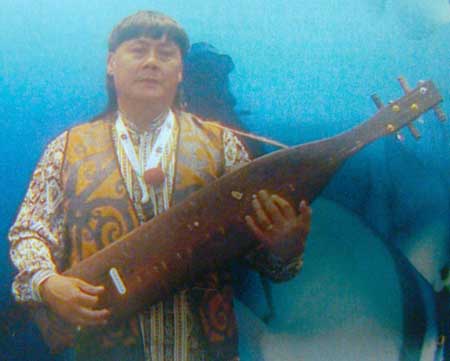
For a simple instrument, the sape's tone and tenor are complex.
“It was originally a two-stringed instrument with only three frets. It was then played to induce a trance during ceremonial healing rites. In later years, it was remodelled to become a three-, four-, five- or six-stringed instrument. It's gone on to provide music for social entertainment and leisure,” he said.
Depending on the way it is tuned and the number of strings and fret arrangement, the sape can produce different tones and notes.
“Today, I can use the sape to play ballads, hymns, folk songs, Yuletide melodies and Gospel songs. I love to play John Newton’s 'Amazing Grace' on the sape as the song’s intense sentiments resonate with the sape’s distinctive tonality.”
Goh, who is of Chinese-Iban descent, has also played the sape in Hong Kong during an event to showcase Borneo’s cultural heritage.
“I gave a rendition of an old Chinese song, ‘Wang Shi Zhi Neng Hui Wei’," said Goh. His audience, who are more familiar with the Chinese mandolin, was mesmerised by the sounds of the sape.
Justine learns to ‘sape’
Unlike Goh who learnt to play the instrument from the late sape maestro, Tusau Padan, Justine’s skills were self-taught.
“I started playing the sape from the age of 16,” said Justine, who has a degree in music.
He said he was fascinated by the melody of a sape genre called 'Dak Lasan', a tune to which his mother danced during her free time.
“I was attracted to the uniqueness of the rhythm and melody of the sape, so I bought my first sape from sape legend Mathew Ngau Jau,” he said.
Justine, who was born and educated in Kuching, had a special fondness for his longhouse located in Saratok, a four-hour drive from the capital city.
It is here, where he learnt the dos and don’ts of playing the sape.
“Even till today, the Orang Ulu folks believe that when there is a death in the longhouse, the sape must not be played or the player will become deaf. A condition that can only be cured with the sound of the gongs called tawak.”
Justine has a favourite wood-type from which the sape is carved out.
He said: “I like the original Adau wood. It has its own mellow and a rich sound. My first sape was made from this wood.
“I learnt to play the instrument by listening to traditional native songs and playing their notes ‘by ear’ on the sape.”
“There were very few sape instructors when I first engaged in sape playing as a hobbyist. But if anyone is keen to learn the skills of playing the instrument today, the Persatuan Anak Seni Sape Kuching is willing to lend a hand,” he pointed out.
Jazzing it up
According to Justine, the sape can be played as a solo instrument or with a band ensemble.
“I am playing sape with my band, ‘Senggalang Learns To Jazz (SL2J)’. We play a variety of musical genres, including jazz fusion during music festivals and corporate events.
“SL2J consists of J.S. Dean who is the main guitarist and second vocalist, Sam Mawie on the keyboard, Mono plays the bass, Barry is on drums, Adib on flute, percussion and the main vocalist while I play the sape.”
In 2018, Justine was invited to play with the 24 Seasons Drum. In 2019, he and his band played at the Rainforest World Music Festival’s 'Big Tent'. Playing at Big Tent was not only exhilarating but also a major honour and recognition, he said.
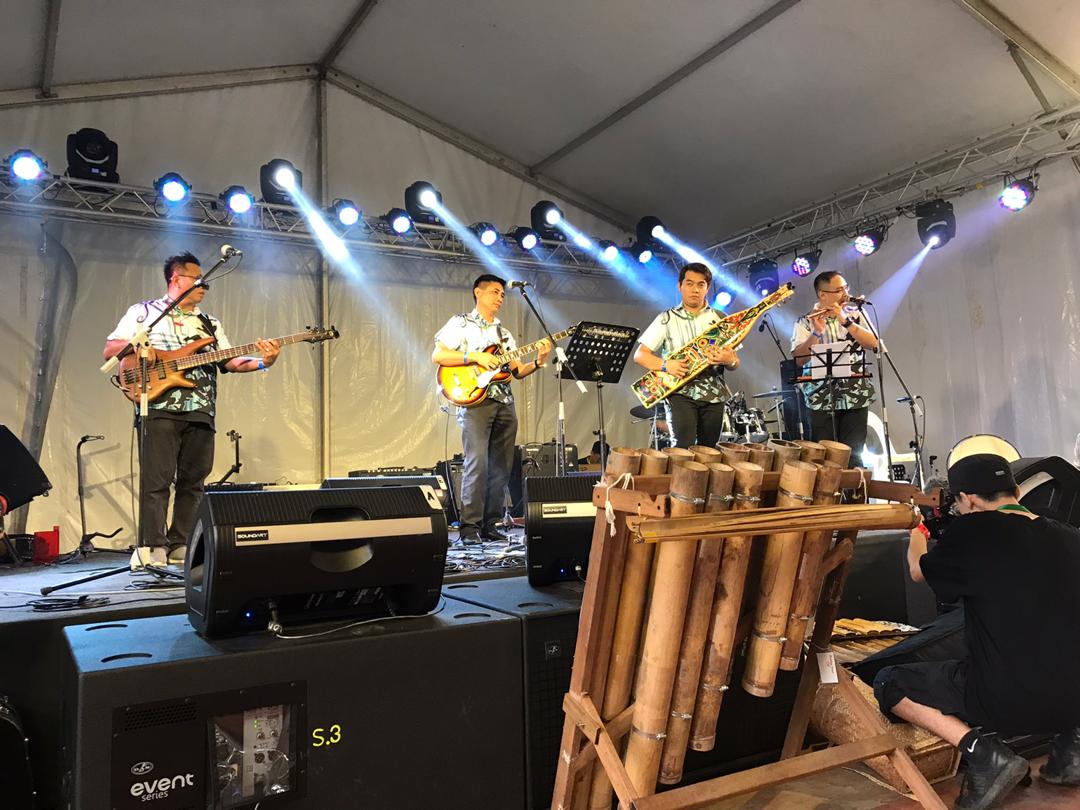
Just a few decades ago the sape was only played by a selected few. “But, today we see its presence more often than not during stage shows and gala events in Sarawak.
“I guess social media has helped to break the idea that the instrument is exclusive to the privileged few only.”
Although the native instrument is gaining popularity among the millenials like him, Justine felt that the state must promote it as a Sarawak heritage and offer it as a subject in schools.
“The current musical instrument taught in schools is the recorder. Perhaps the government can replace the recorder, as the sape is Sarawak’s very own novelty. I hope our government will take the initiative to work together with sape enthusiasts to make this dream come true.”
Apart from the sape, Justine also plays the piano, cello, guitar, clarinet and tenor saxophone.
For both Justine and Goh, the high pitch of the sape is something to marvel at – simply because it lends the right notes to heal and the right tones to entertain. It is sacrosanct as it is secular. At long last, it has come down from its high altar. – The Vibes, January 2, 2021