SEOUL – Simple, sweet, and fictionally fatal: the stallholder who makes the traditional South Korean children's treat featured in the global cultural phenomenon 'Squid Game' – and once associated with post-war poverty – has hit a real-life jackpot.
The Netflix smash hit series features a group of South Korea's most marginalised and deeply in debt, who compete in children's games for the chance of 45.6 billion won (US$38 million, about RM160 million), with lethal consequences.
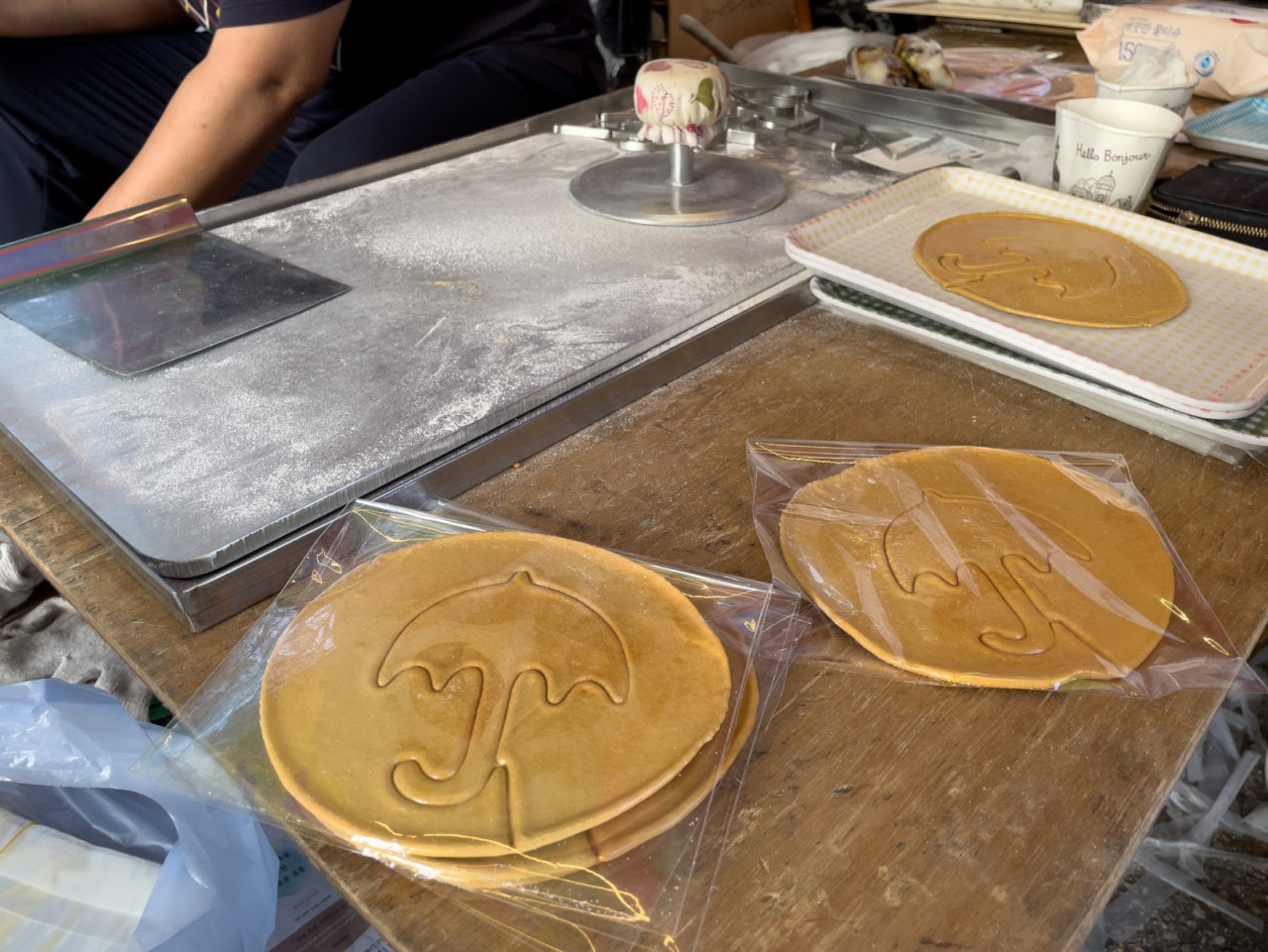
In one particular challenge, the contestants try to cut out shapes including a star and an umbrella from a crisp sugar candy called a dalgona, without it cracking – and those who fail are killed.
The life-or-death game was inspired by director Hwang Dong-hyuk's experience growing up in Seoul in the 1970s: but then, the prize for a child who successfully removed the shape was another free dalgona.
Hwang was always determined to win an extra treat and remembers employing multiple tactics in his efforts, including licking the candy to loosen the shape and using a needle heated over briquettes – techniques repeated in the show's nail-biting dalgona challenge scene.
"I would make the dalgona maker extremely perplexed by succeeding on the most difficult shape of umbrella," the director recently said in a YouTube video.
But the candy was a difficult prop to manage on set as it softens easily, especially during South Korea's humid rainy season, so Hwang and artistic director Chae Kyung-sun hired "dalgona experts" to have the candy freshly made on location.
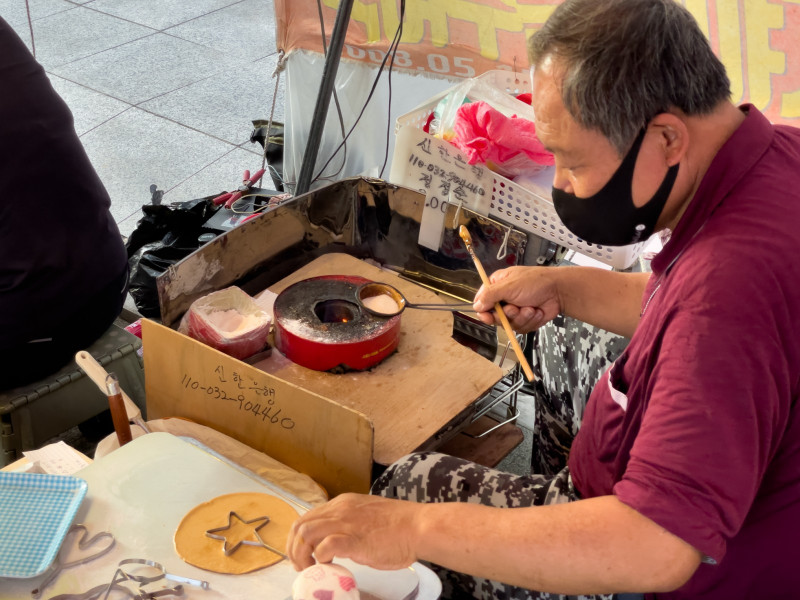
Those specialists were Lim Chang-joo and his wife Jung Jung-soon, who produced between 300 and 400 dalgonas over three days of filming.
Now, their humble roadside stall in Seoul's theatre district – little more than an umbrella, an awning and their equipment – is one of the hottest spots in the South Korean capital.
Orders for the 2,000-won (about US$1.70) sweets start piling up as soon as it opens, and before long, customers face six-hour waits, with some giving up and leaving empty-handed.
In about 90 seconds, Lim melts an individual portion of sugar above a burner, before adding baking soda, flattening it into a circle, and punching it with the customer's preferred shape.
He offers a wider range of choices than the four forms in the show – and has a newly added 'N' for Netflix.
"I never imagined it would become this popular," Lim told AFP of the series, adding that his life has now become "super hectic".
"Of course, I'm happy because my business is doing well and how dalgona has become famous in other countries.
"I hope they make and eat their own dalgonas," he added.
Financial crisis
Historians say dalgona first emerged in the 1960s when the South was still assailed by post-war poverty while desserts – such as ice cream or chocolates – were not widely available and prohibitively expensive.
Very sweet, with hints of nuts and bitterness, the candy was hugely popular, with many vendors setting up their stalls near schools.
Lim and Jung started their dalgona operation with 30,000 won after closing their tailoring business of 20 years around the time of the 1997 Asian financial crisis.
The sweet endured throughout the South's rise to become the world's 12th-largest economy, following decades of rapid economic growth during the authoritarian rule of the post-war period.
And 'Squid Game' is the latest manifestation of the ever-widening influence of the country's popular culture, epitomised by K-pop sensation BTS and the Oscar-winning movie 'Parasite'.
"South Korea has always been at the nexus of the modern and pre-modern, Western tools and Eastern ways, and preserving the past while sacrificing everything for the future," said Michael Hurt, who teaches cultural theory at the Korea National University of Arts.
"Dalgona is a nexus item in a nexus culture." – AFP, October 11, 2021